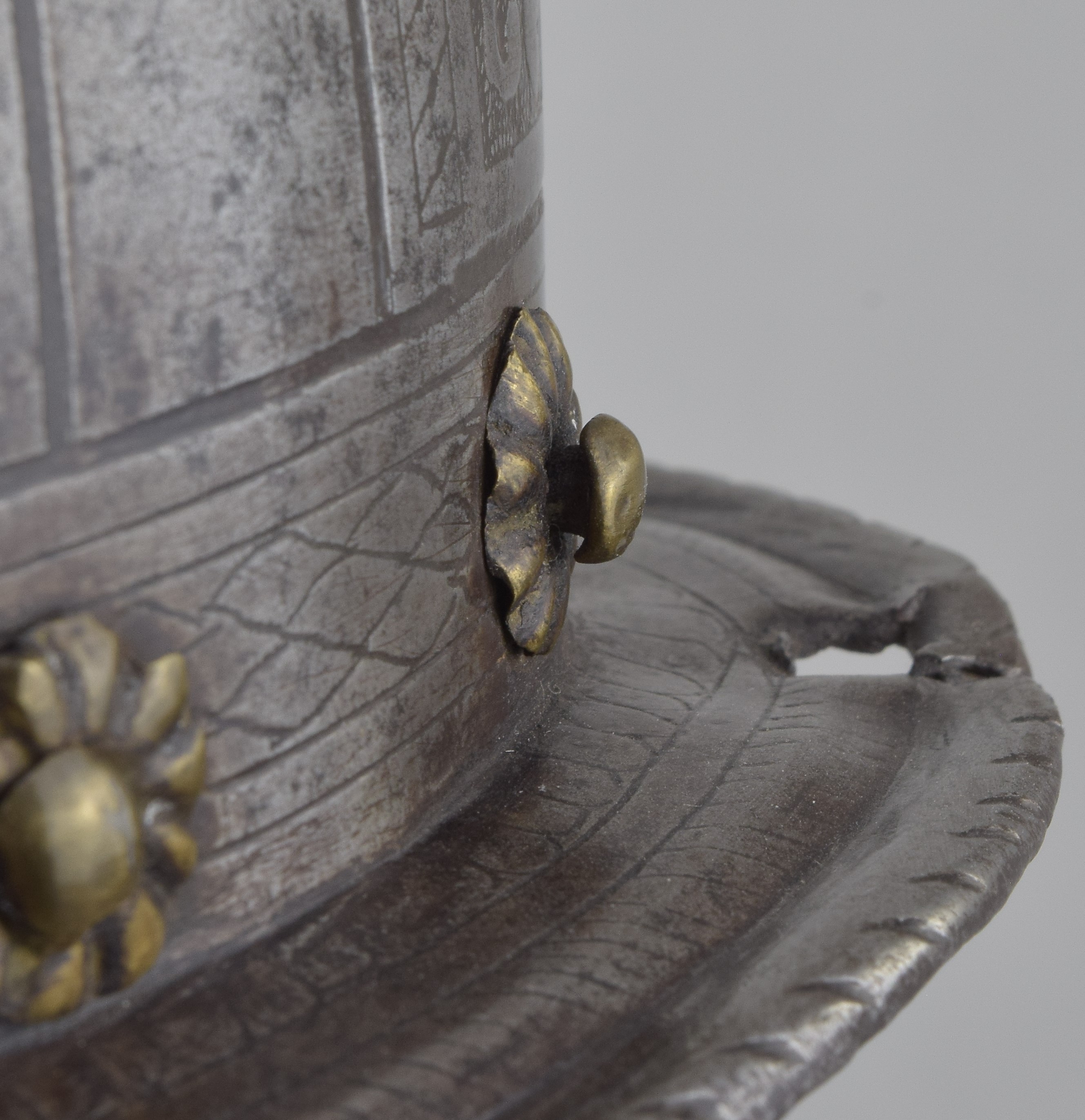
These are some quick shots of the details of rivets used in 16th c. armour. Most of these are iron rivets capped with copper-alloy (brass). The caps appear to be dapped disks and they appear to be soldered onto the rivet heads using a soft (likely lead based) solder. The rivet heads inside the caps are often very small and rough.
There are also some all iron rivets and a few pins and catches.


The rivets securing the lining strip to a late 16th c. etched cabasset.
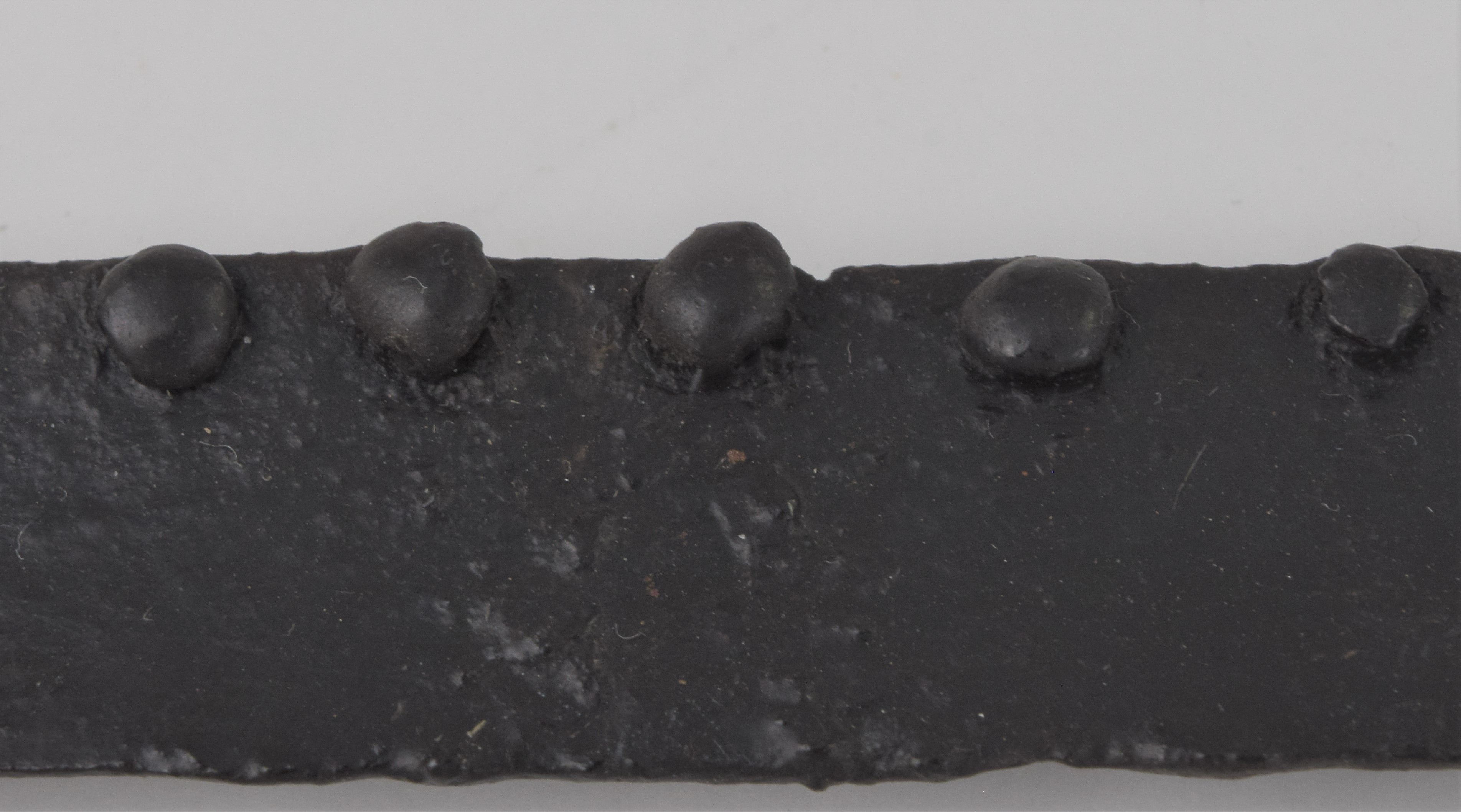
The rivets on a surviving brigandine plate.


The rivets securing the the straps that suspend tassets from a late 16th c. black and white breastplate.


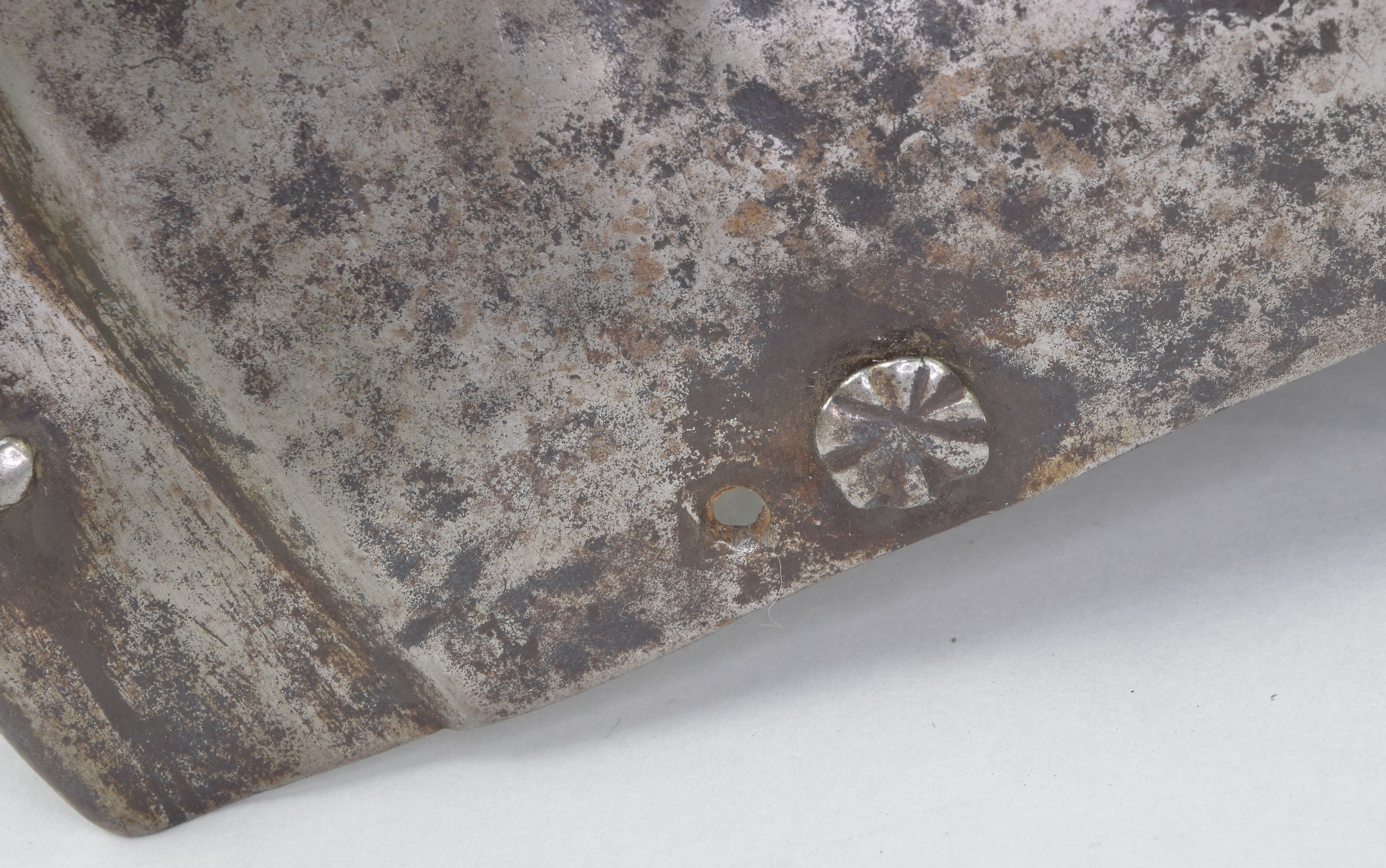
The rivets on an early 16th c. cuisse. The articulation rivets have very small heads, the straps were secured by decorated flat headed rivets.

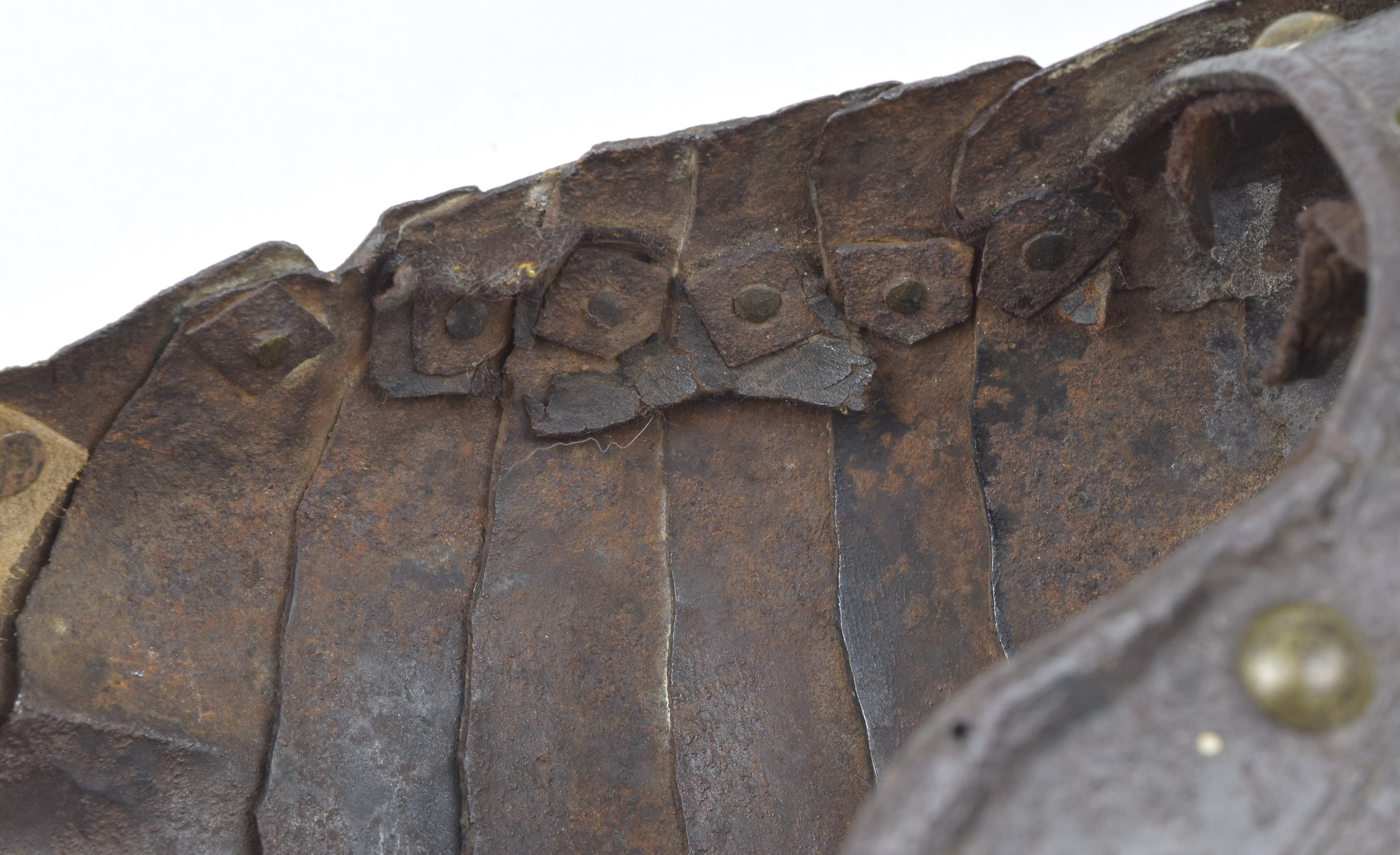
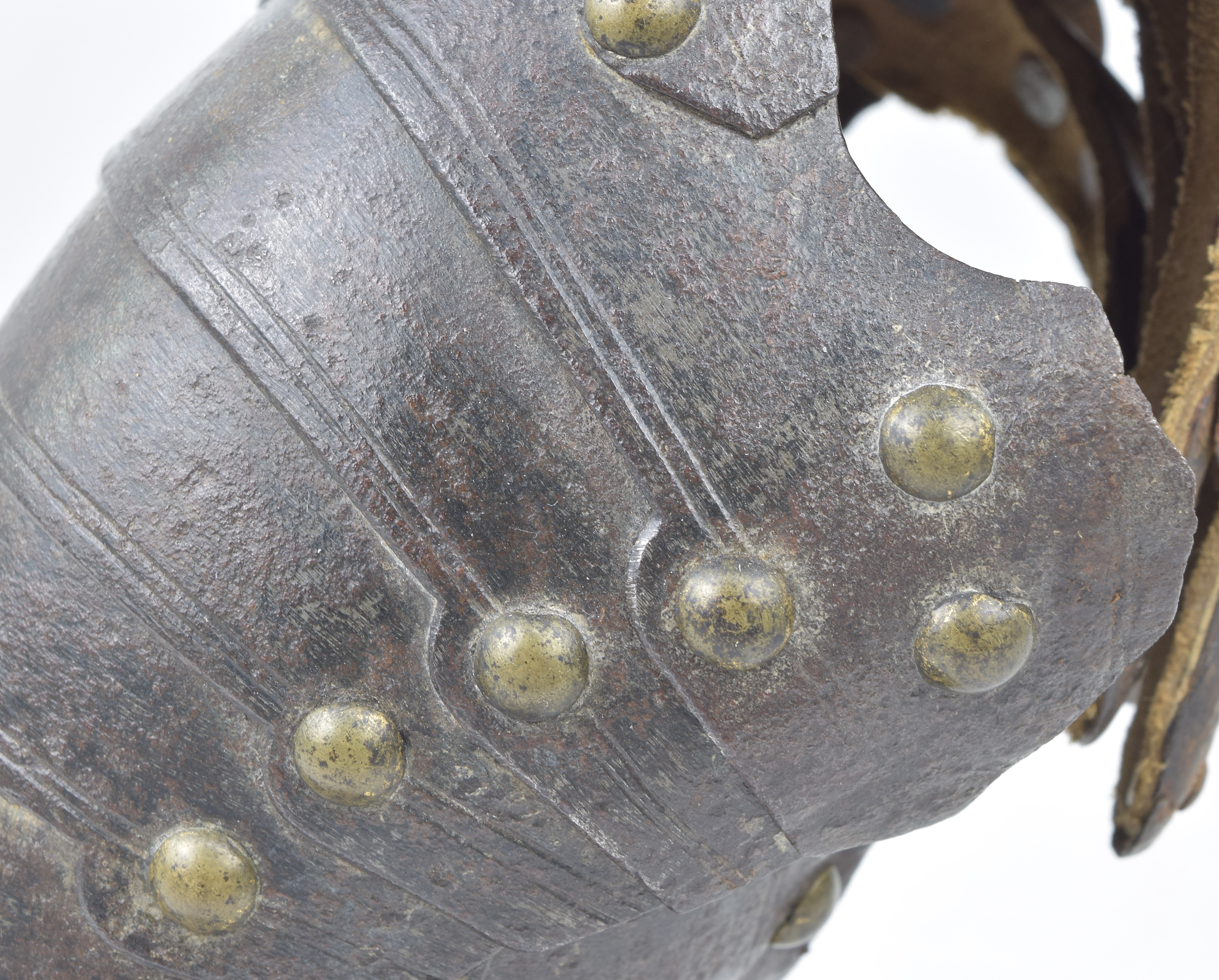
The rivets on a 17th c. Greenwich gauntlet.

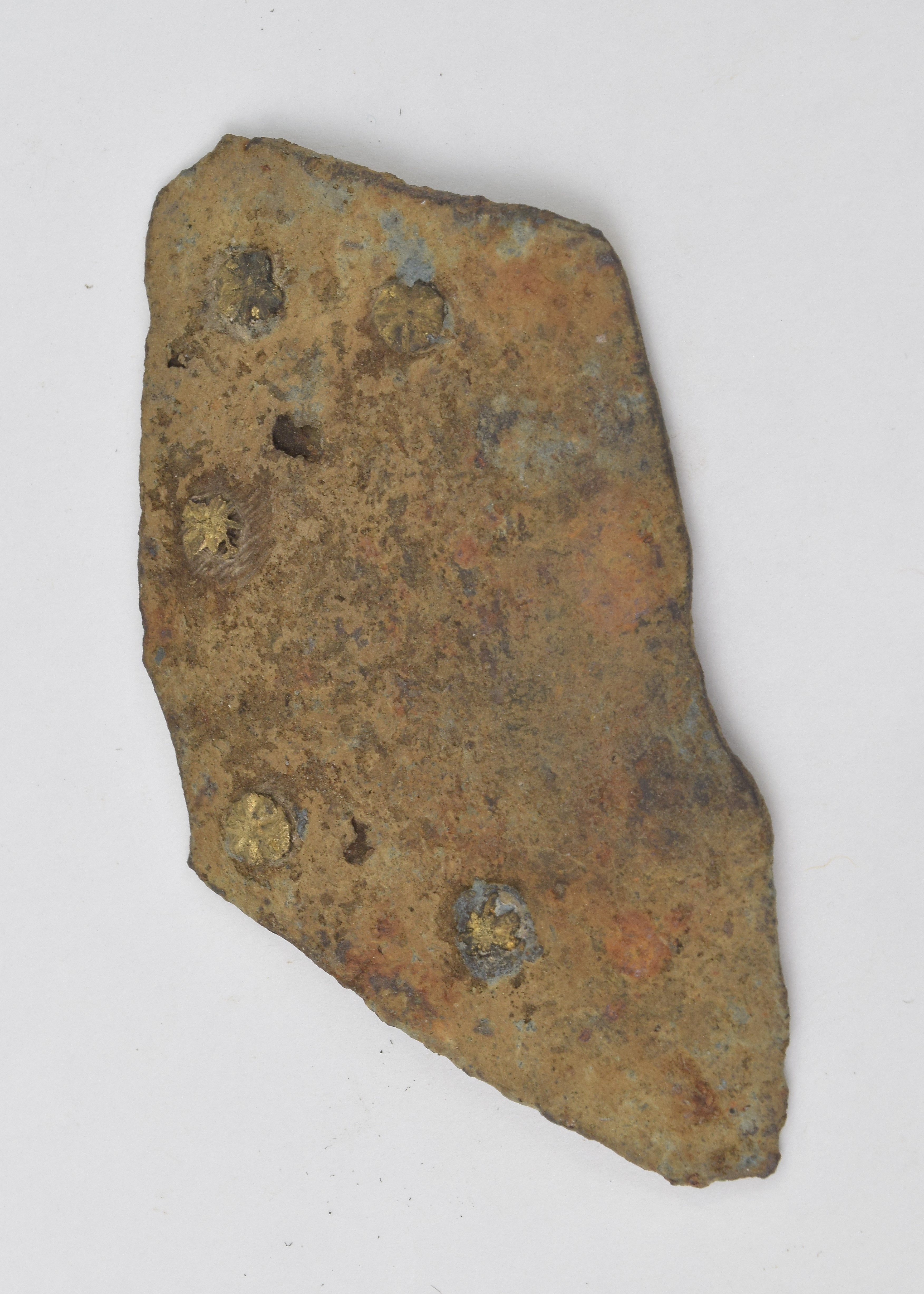
A couple of brigandine plates.


A thumb from a dueling gauntlet showing the rivets that secured it to the leather.


Rivets on a pair of mid 16th c. long tassets. These include the pins used to secure the two parts together.


Some rivets and washers removed fron a 16th c. pauldron.


Rivets, washers and connectors used on a pair of long tassets from the late 16th c.
 The rivet and washer securing a strap to the fauld lame of a late 16th c. black and white breastplate.
 The rivet and washer securing the lining to a cabasset. The cap has been lost.
 The rivet and washer securing the lining to a cabasset. The cap is still there.
 Rivets around the edge of the cuff of a late 16th/early 17th c. Augsburg gauntlet.
 The rivets securing the metacarpal plates on a late 16th/early 17th c. Augsburg gauntlets. You can see the edge of a leather strip secured under the washers on the inside that may have been used to secure the glove.
 A separate rivet from a 16th c. Italian pauldron.
 A separate rivet from a 16th c. Italian pauldron from the side.