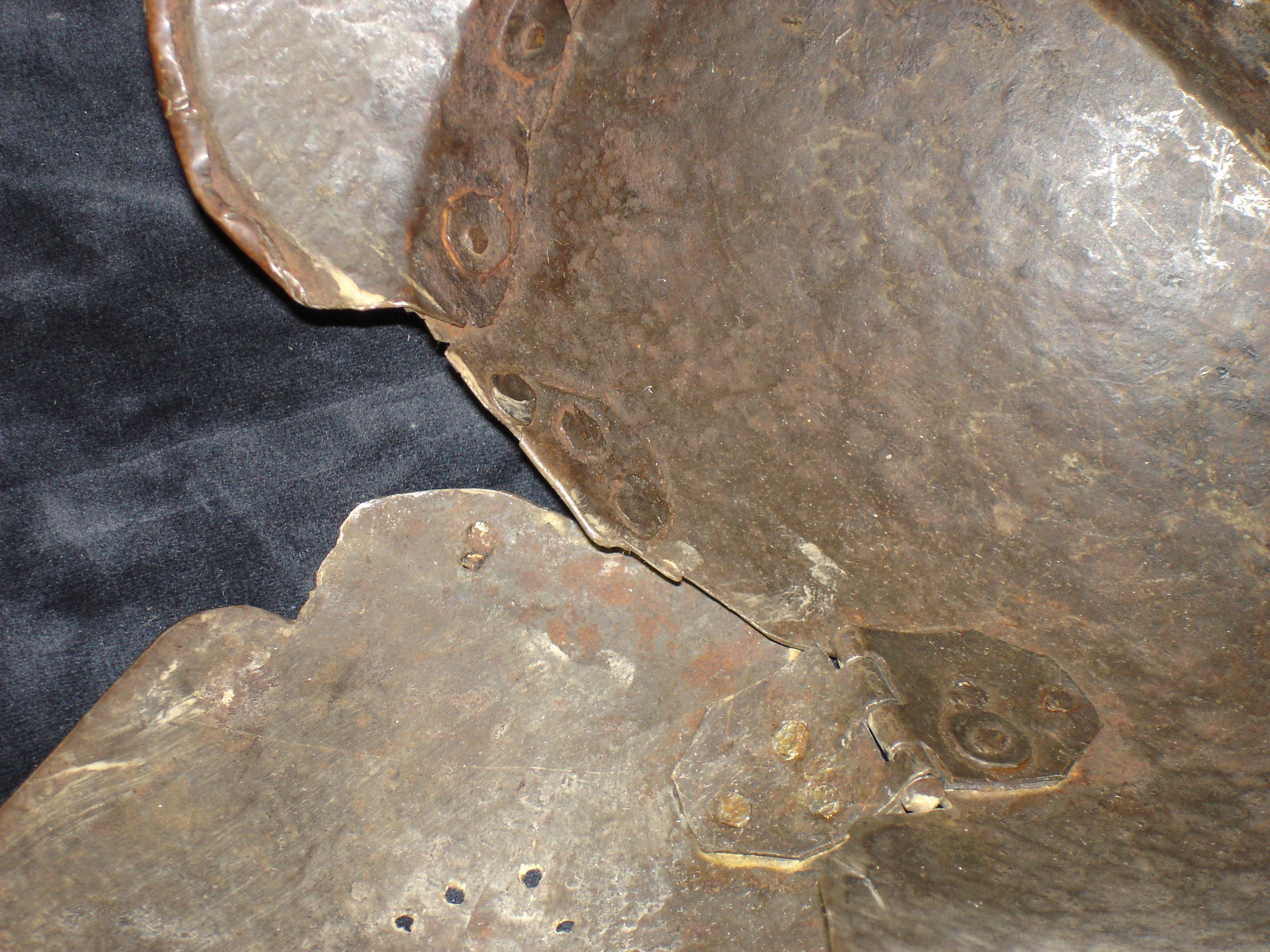
These are some quick shots of the details of patches found on European armor. These may have been made to repair oringinal issues in manufacturing, damage in the working life, or to deal with the ravages of time later. Each will be characterized in an attempt to help understand when a patch was done, why and what it can tell us.

Looking at a number of munition burgonets, it appears that the manufacturing method put a lot of stress on the area
where the cheek plates were attached. We often find cracks here. In this case the cracks got bad enough that the armourer decided to
stabilize the edge.
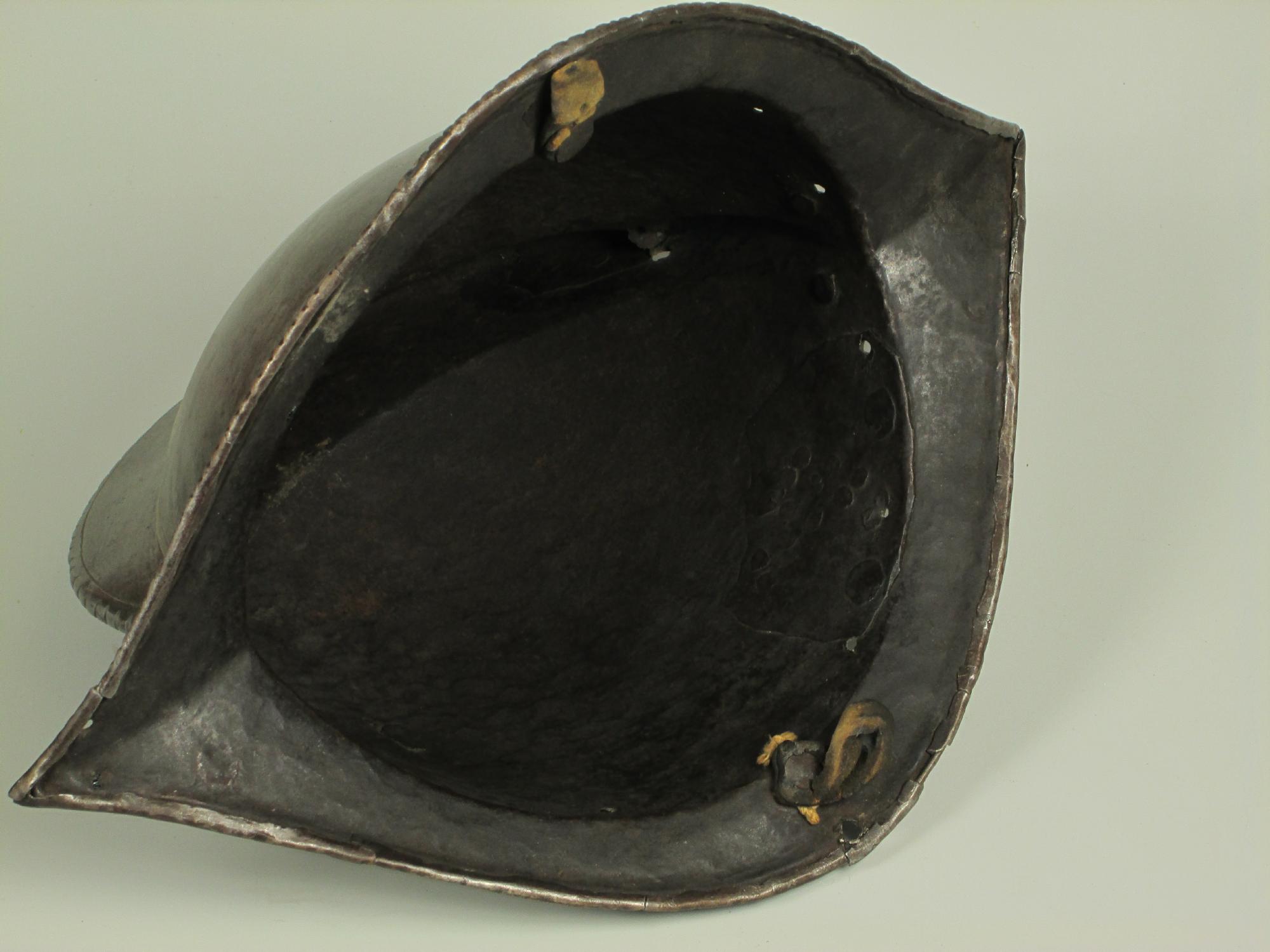
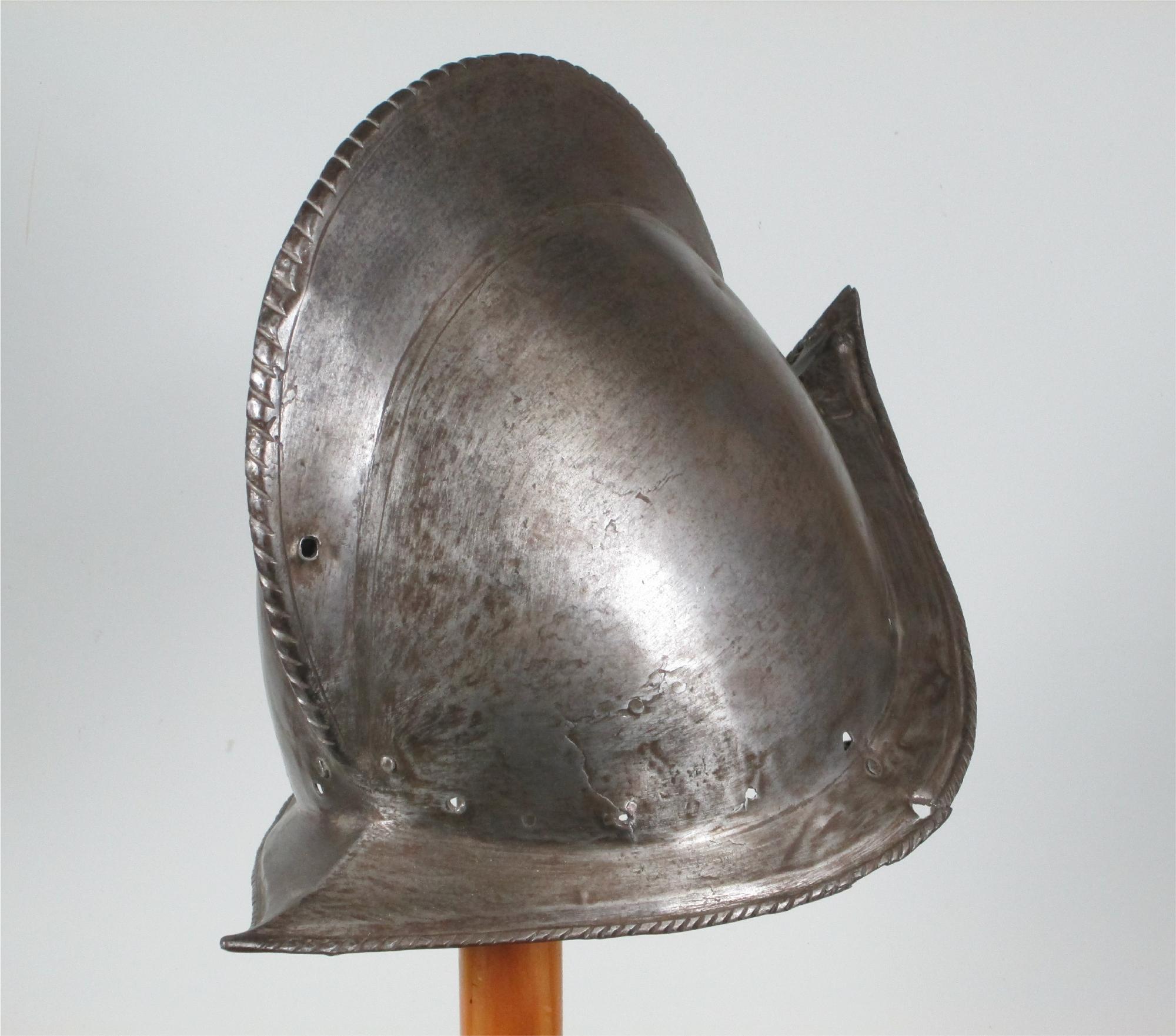
The side of this morion cracked. I don't know whether this happened during construction or as a result of damage.
Either way, someone fixed the problem with a large patch riveted into the helmet with a large number of rivets
which secure the patch and stabilize the edges of the original metal of the helmet.

This helmet was almost certainly used as a funerary achievement. When they did this, they would attach a spike to the skull of the helmet to secure a crest.
Then the piece would hang up in the church and rust away for centuries. This often resulted in damage, esp. in the upper surfaces of the piece.
In this case the hole must have gotten pretty big, and someone in the 20th c. welded in a patch to make the
piece more presentable.

This helmet has a number of patches. They are both riveted and brazed into the piece. There are cases where this type of
patch may be a working life fix (esp. with very high copper content in the braze), but these do not appear to be from that time.
These appear to be 19th or 20th c. fill and stabilization done as part of restoration of the piece for sale in the antique market.
We can see a nice example of this in the front of the crest, and other (not quite as obvious) in the chin of the bevor.
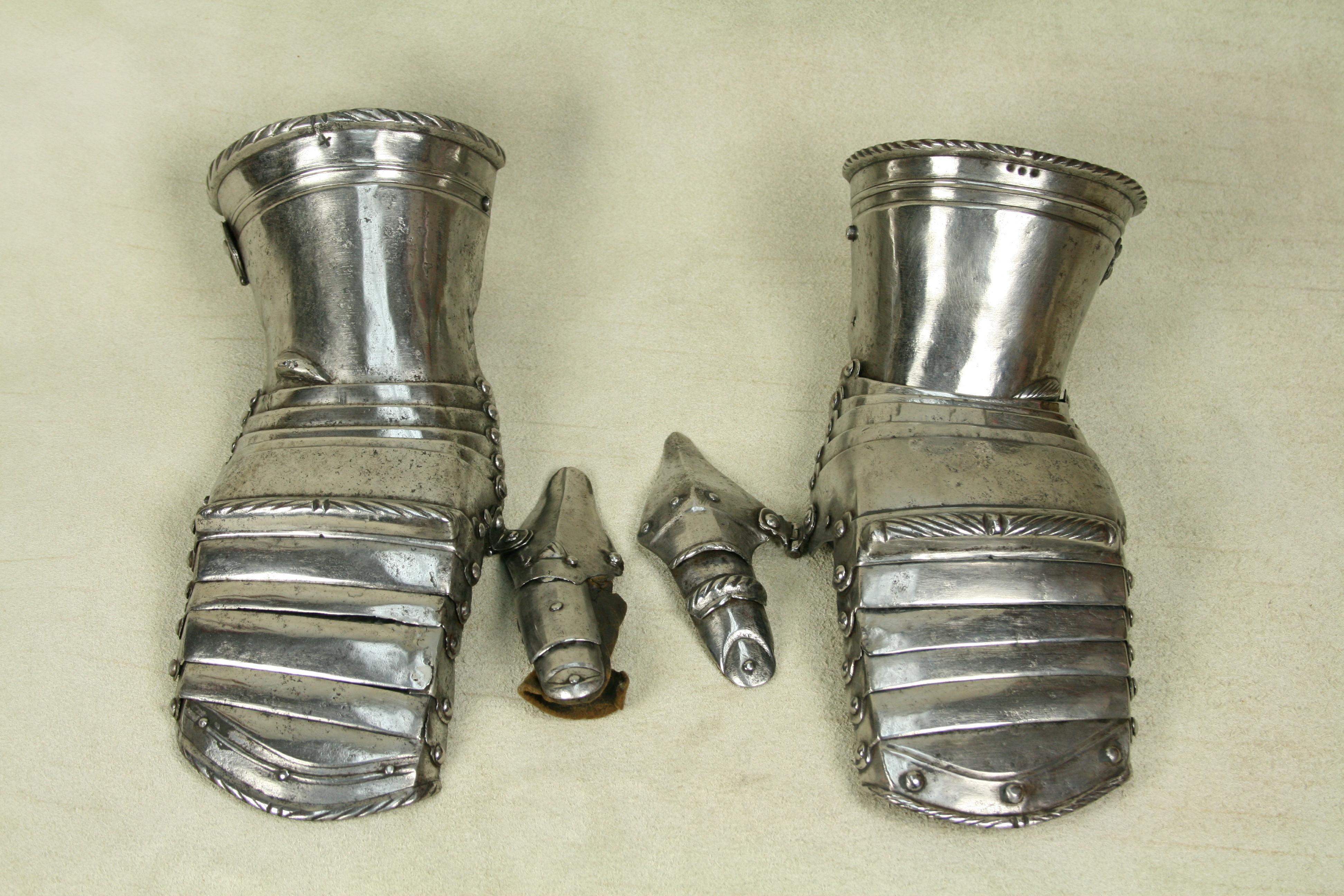
Looking closely at these gauntlets we can see that the corners at the ends of the finger plates have suffered. In some cases we see major cracks
in others we see a sort of dull appearance. The dull comes from soft metal - tin, tin/lead, or some similar solder used as a patch. This was somewhat common in the early
20th c. as a simple, low cost and low risk "repair" to make pieces look more complete and displayable.
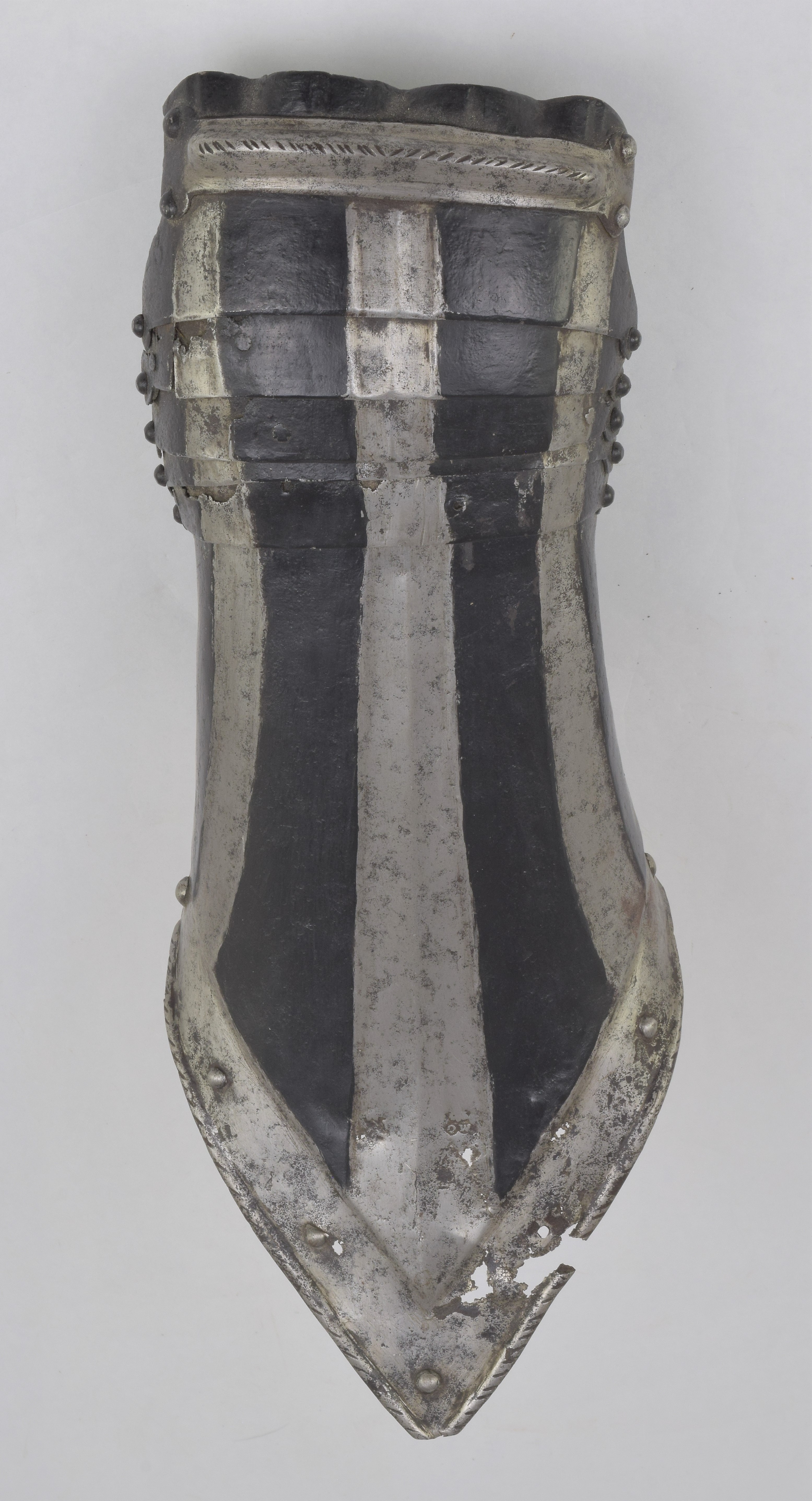
Modern riveted patches to the metacarpal plates of a gauntlet. In one case the patch secures two pieces that have separated
completely, in other cases they fill in missing areas. Similar things were done in the working life of pieces, but these
don't have the same character.
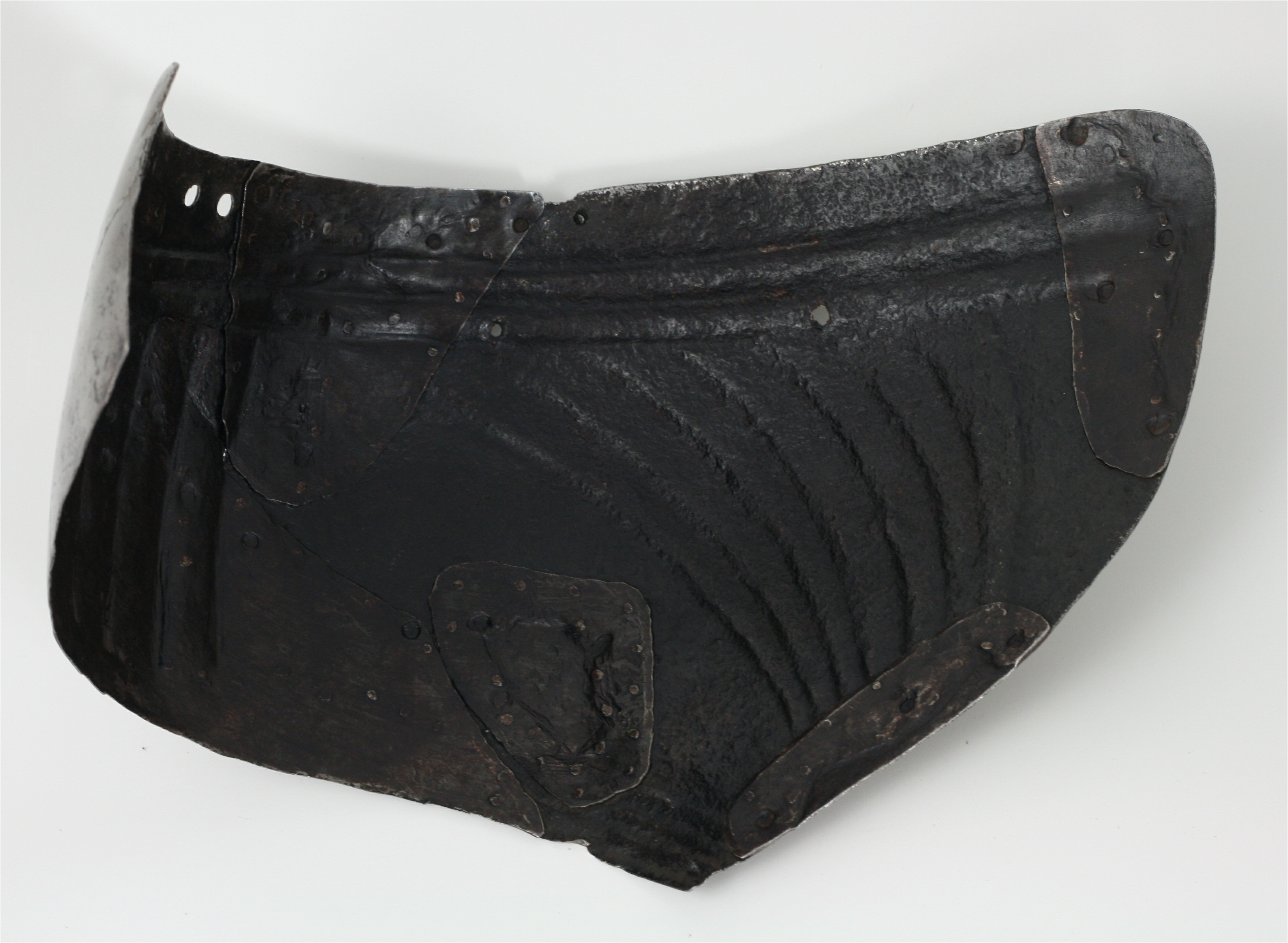

This shows how far things can be taken. This kind of thing happened when really rotted pieces were "restored" in the 19th and early 20th c. We see a lot of this in surviving
pieces from Rhodes, esp. those that went through Bachereau's hands.
This is particularly bad. In this case the patches cover a large portion of the material of the piece.
Worse yet, they don't reflect the original shape of the piece. Patches entirely re-work the shape of the portion that
would have interacted with the upper arm, and there is no way to know exactly what the original shape of the front
portion might have been.
These patches are well executed, but very thin. If you look at the inside you can see that the patches have been
embossed out to make the surface flush with the outer surface of the old material where it needs to fill a hole or gap.

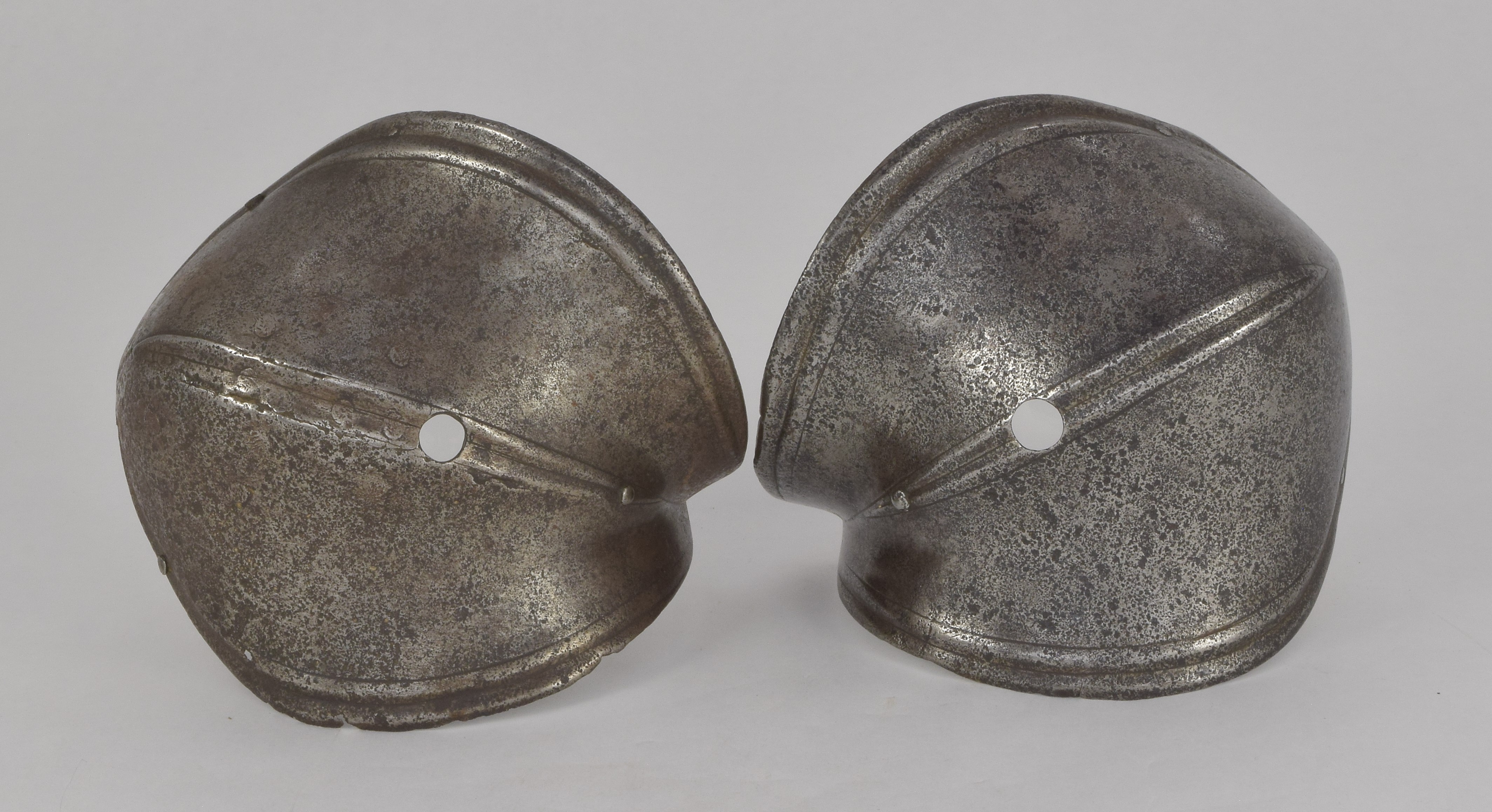
This seems to be a very nicely done modern repair. The goal was to stabilize the piece while preserving as much of the original as possible.
The center of one elbow seems to have rusted through along the flutes, so a patch was inserted to
stabilize the remaining central bit and fill the cracks.
If you have any questions, please send them to Wade Allen