
Breastplate late 17th c.
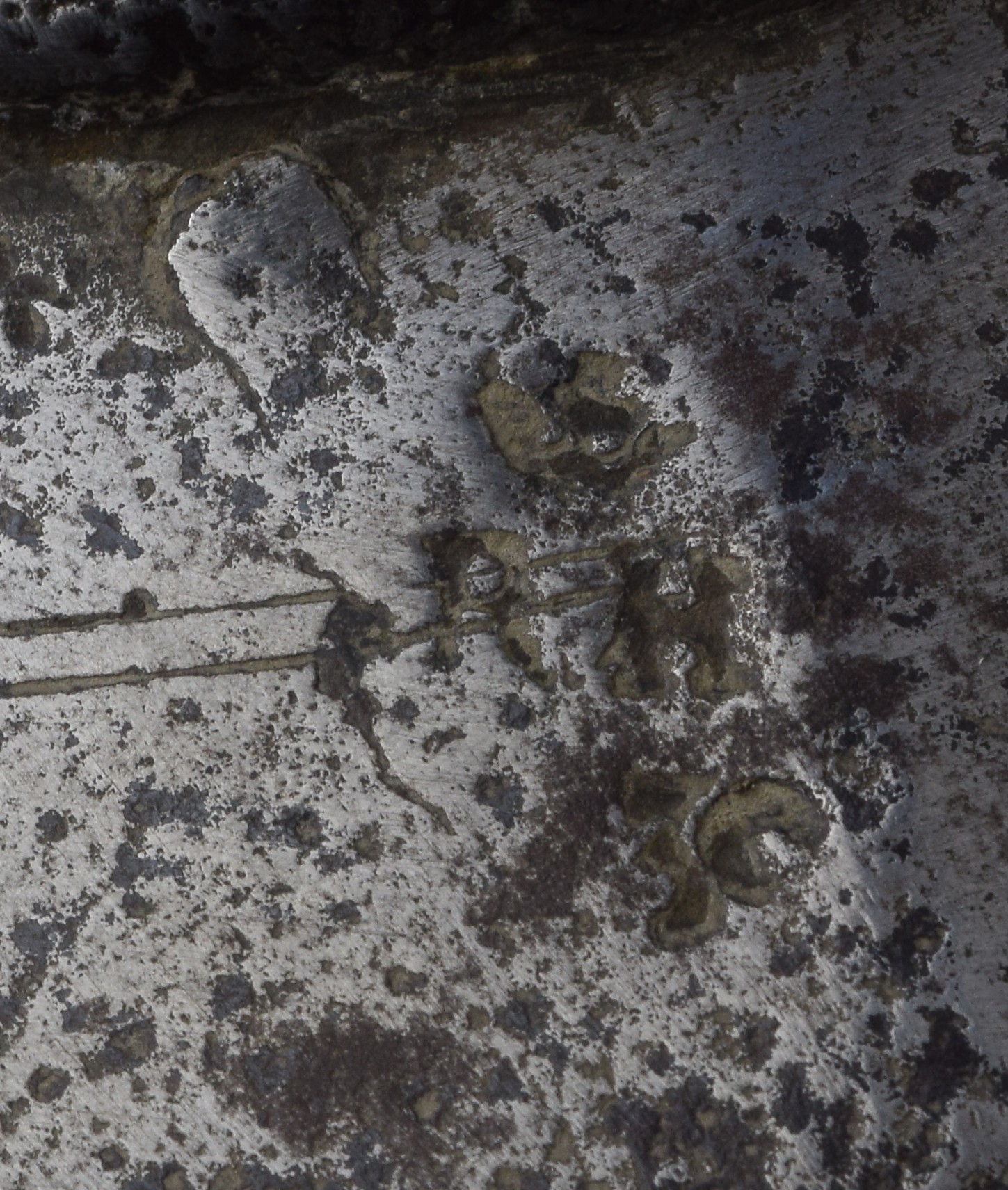
Nearly flat form with central crease. Rolls at the waist, arms and neck. The neck hole is relatively broad and not turned up to form an integral neck protection. The roll at the neck turned out, the rolls at the arms turned in and the roll at the waist turned in over a wire. Proof mark. Studs at the shoulders to secure shoulder straps. Additional pair of filled holes above the current studs. Double incised lines at the arms and neck and parallel to the center crease on each side. Line of rivets at the waist. This may have been made originally in this configuration, or it may have been adapted from a more typical breastplate with a flare at the waist. The neck line is similar to those on breastplates which are designed to be worn with a gorget. Marked near the neck with RH, 30 and a third less clear mark over the RH that appears to be the center and right arms of a crown, the left damaged by pitting. The RH mark (and possibly the crown) showing signs of a double strike. RH with a crown over it is described as the mark of Richard Holden (or Hoden) on page 44 of "The London Armourers of the 17th Century" by Thom Richardson. Atypically, there is a lot of information about him. Richard Holden was made free in 1665, indicating that this piece (if it is his) would have been made after that date. Richard Holden has been identified as the maker of the famous harquebus armour for James II made in 1686 which survives in the Royal Armouries (II. 123). Surface with heavy pitting. After aquisition very lightly cleaned to remove active rust (scalpel cleaned) and remove old varnish or wax coating.
Measurements: Weight: 9 pounds 11.2 ounces (4400g). Thickness: .195-.233 inch in the center tapering to .155 inch at the sides. [inv. num. A-383]

Civil War Cuirass circa 1650-60
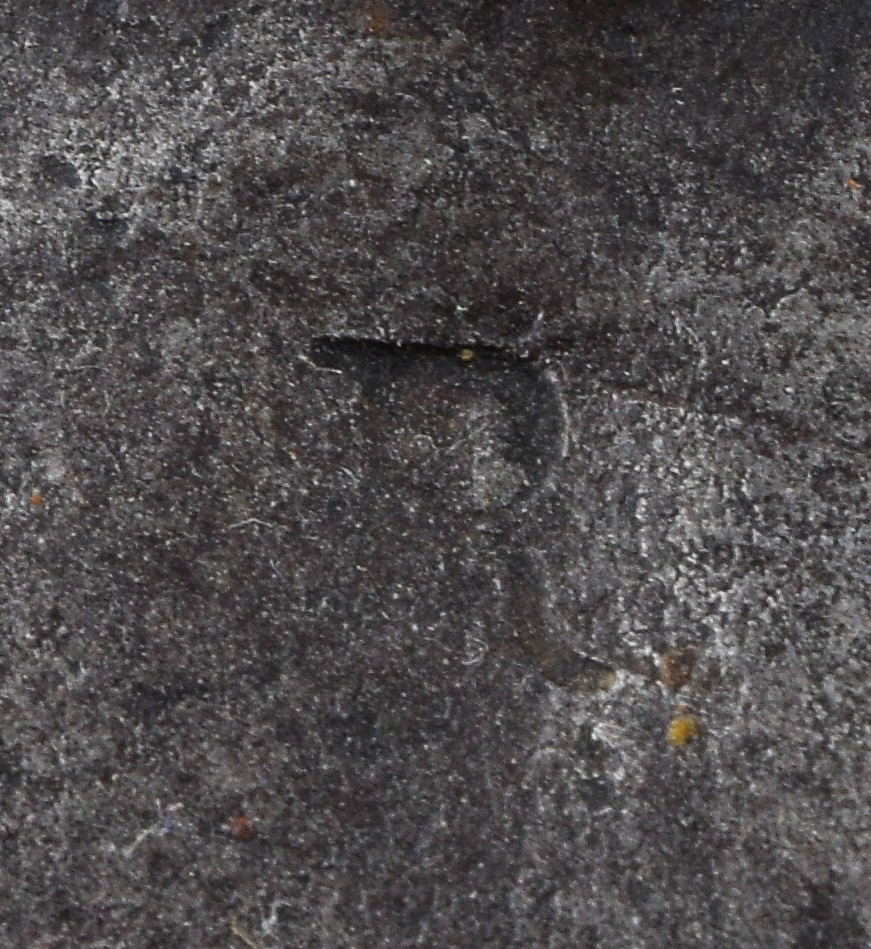
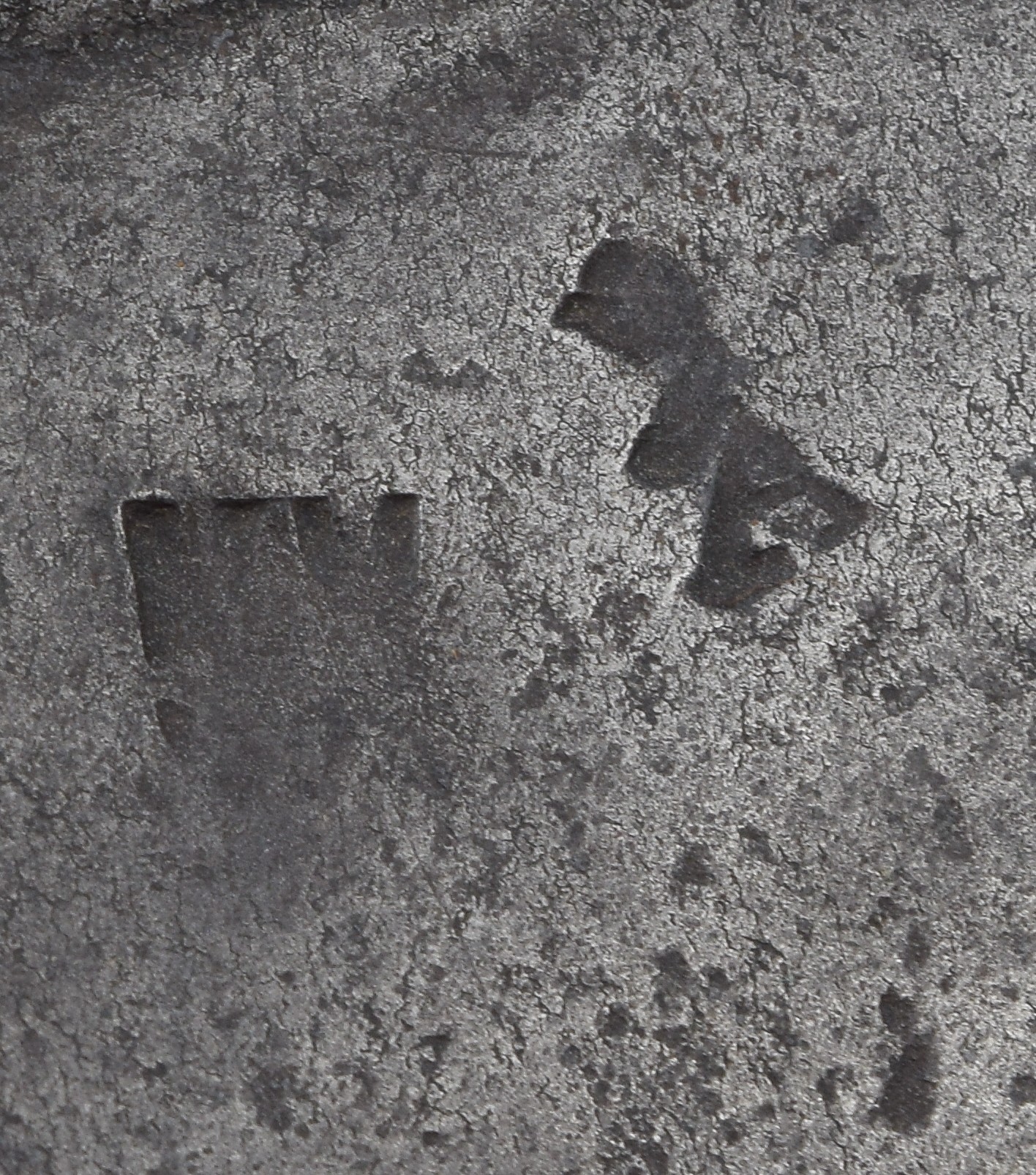
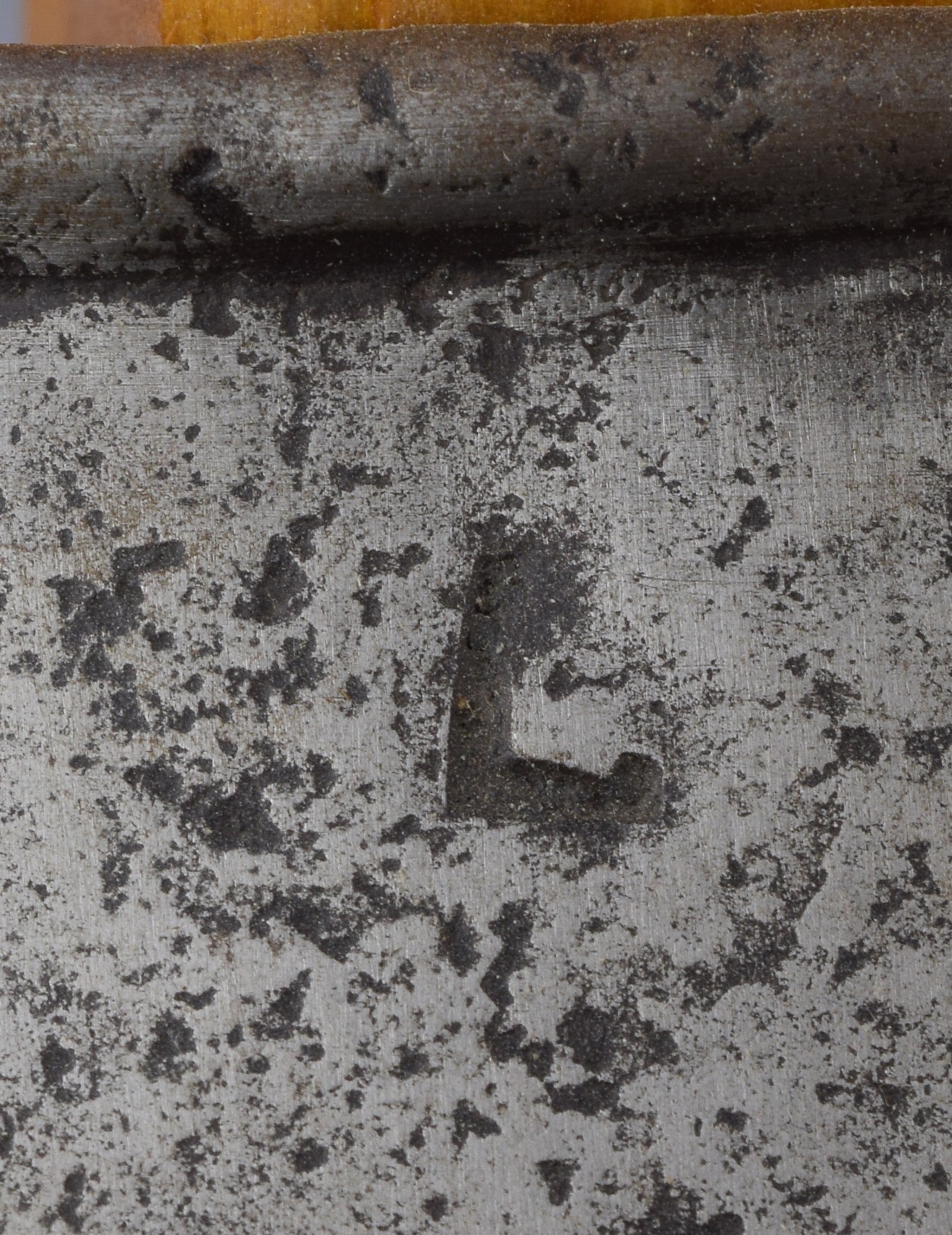
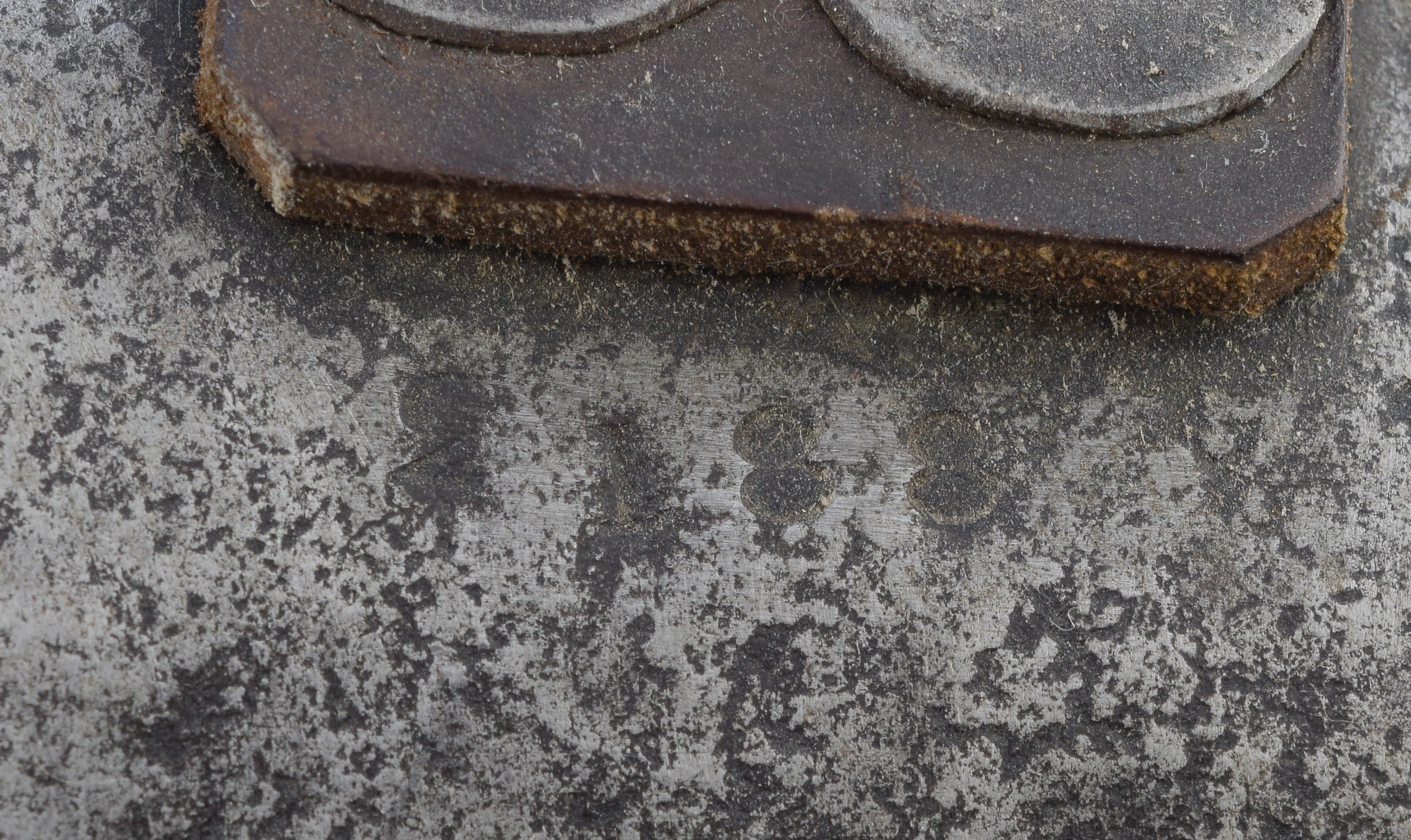
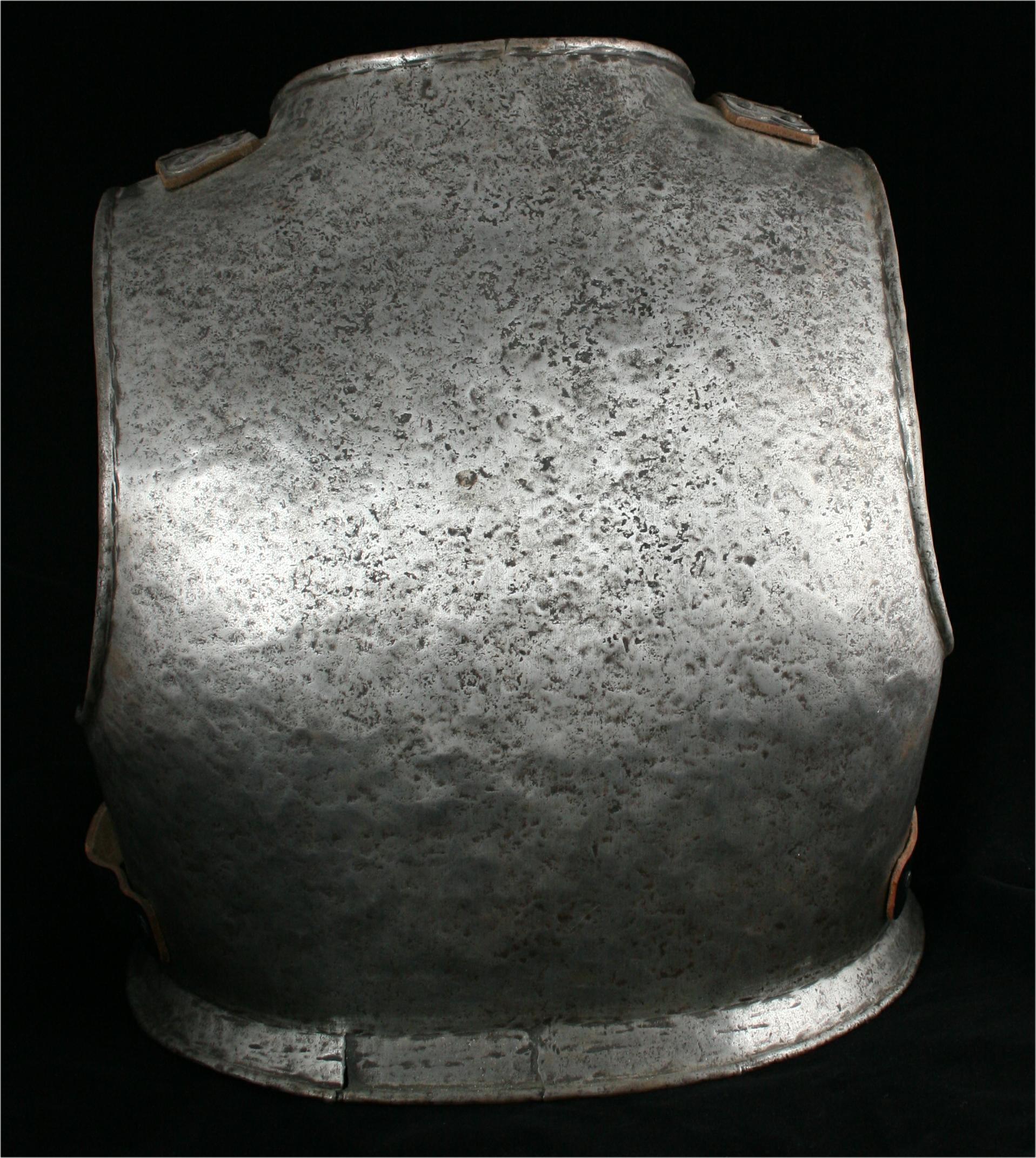
Composed of reasonably well matched breast and back plates. Breast and back rough from the hammer with inward-turned rolls at the neck and arms of the breast and neck,arms and base of the waist flare on the back. Breast with 2 proof marks, most likely pistol given the moderate weight of the breast and minimal depth of the dents. Breast with several marks. The first is the A surmounted by a helmet used by the London Armourer's company between 1650 and 1660 during the inter-regnum. The others less distinct but probably an R - attributed to Francis Rolenson/Rawlinson - to the left of the crease, the last even less distinct, possibly MM. The inside is marked twice with paint, '219' and what appears to be '9R'. Back marked with a L on the collar and the number 2188 below the right shoulder strap. The L is a common mark on English armours, but not currently attributed. The breastplate is certainly of English manufacture. The back is associated and is probably English. Shoulder plates and waist belt replaced. For more information on armours and marks of the London Armourers see The London Armourers of the 17th Century by Thom Richardson. [inv. num. A-65b]

Breastplate mid 17th c.
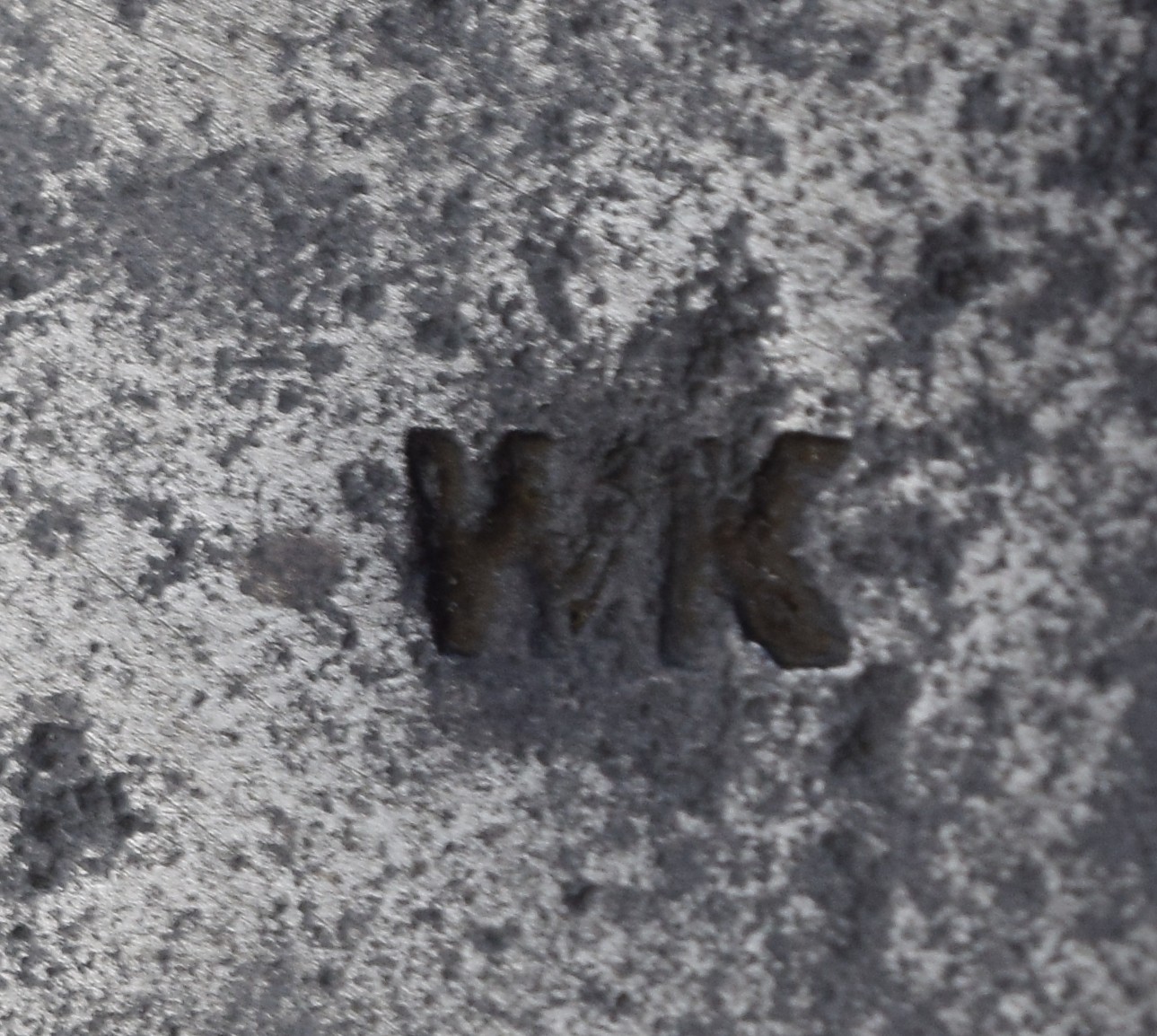
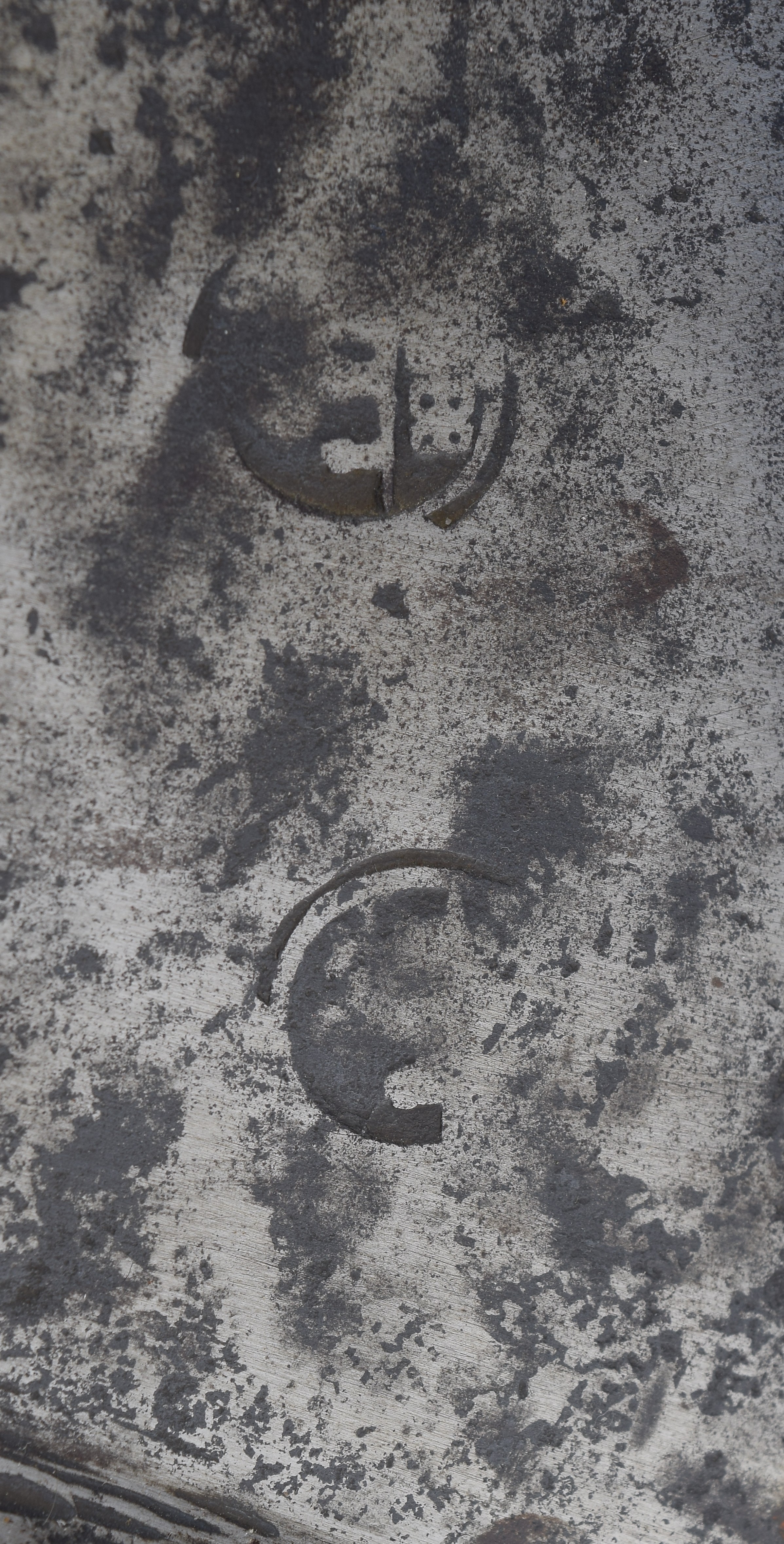
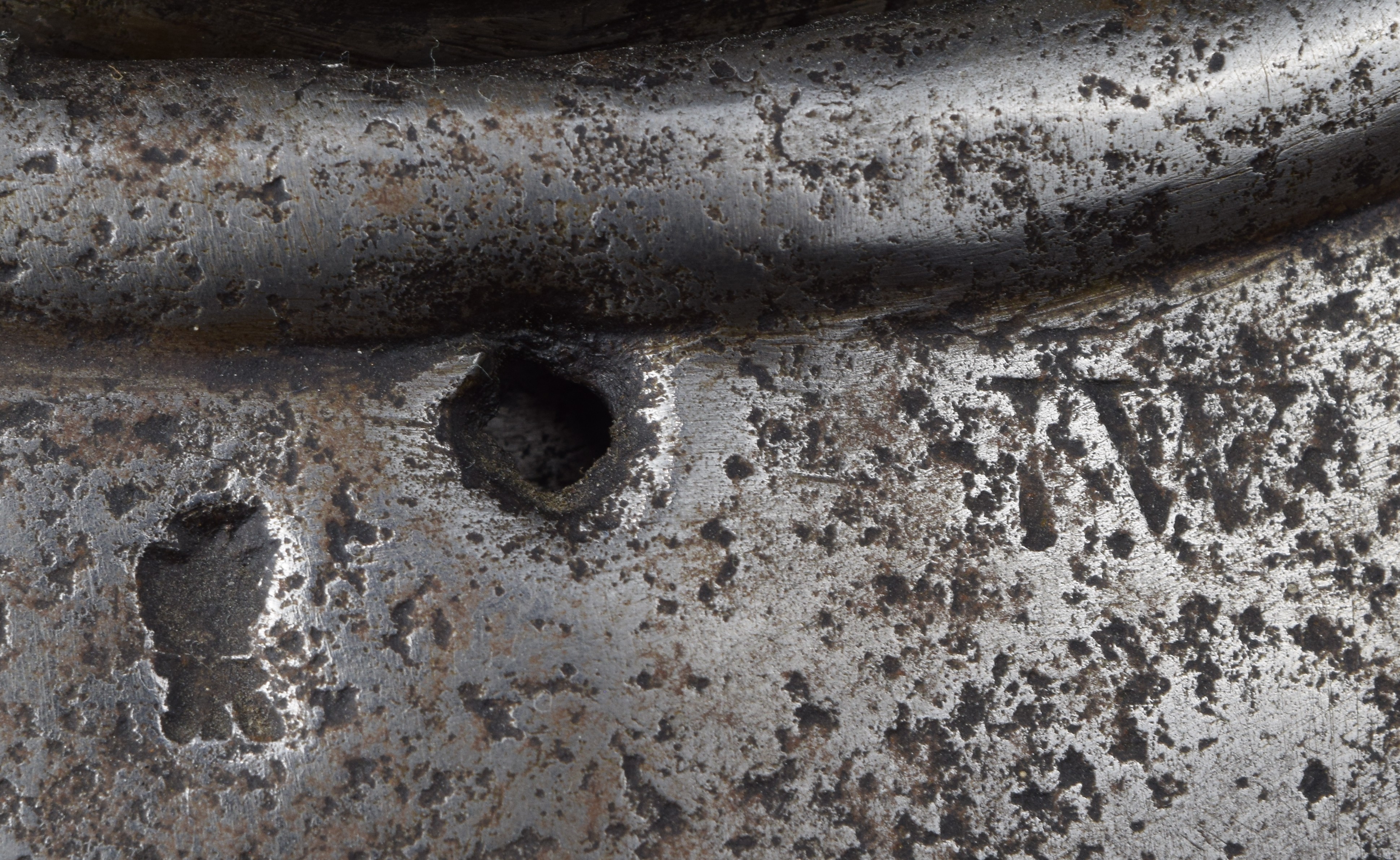
Breast with short peascod and central crease. Neck drawn up to a short integral collar. Neck and arm holes rolled. Single proof mark on the left side. Studs on each side of the chest to secure shoulder straps on the backplate. Rough from the hammer surface with small amounts of old black finish coated in modern varnish or wax (browning) with some recent oxidation. Significant signs of delamination at the sides. The surface is particularly rough, showing aggressive tool marks at the neck and waist. Marked "WK" near the neck on the right side and double marked with incomplete circular marks lower on the right center. The WK mark is described and illustrated on page 54 of "The London Armourers of the 17th Century" by Thom Richardson. It lists and illustrates the mark on harquebusier's pots (RA II.235 and IV.1603) both dated to 1650 but no maker is identified. The large circular mark appears to be a form of the mark described on page 92. It is found on a large number of pieces and Thom indicates that it appears to be a mark applied to the material on pieces intended to be shot proof. The incomplete marking is typical of this stamp - it is so large that it seems it was usually incomplete. I include an image that shows the piece half cleaned - the viewer's left side has had the varnish removed with cotton cloth and acetone and a light scrubbing with 000 steel wool. This leaves the original surface including the stable black oxide, but removes the modern discoloration and coating.
Measurements: Weight: 8 pounds 23.8 ounces (4020g). Thickness: Generally .18-.185 in the center and tapering through .175 to .150 at the edge under the arm. [inv. num. A-406]

Breastplate with tassets mid 17th c.
Low medial ridge extending to a blunt point above a wide flare at the waist to carry tassets. Pegs and hooks to engage the terminal plates of straps attached to the backplate. Struck at the neck with a crowned IR mark (James II armoury mark) and armourer's mark "IW" possibly that of Joseph Whorewood or John Wright. Marked on the interior of the waist with X I X formed by chisel marks. Tassets each of one plate embossed to simulate multiple plates. Decorated with rivets. Each secured to the breastplate by a pair of hinges. [inv. num. A-370-c]

Backplate mid 17th c.
Formed to the shoulders. Narrow flare at the waist. Rolls at the neck, arms and base of the flare. Marked with the crowned 'IR' arsenal mark of James II and 'IC' maker's mark. The maker's mark possibly that of John Collins. [inv. num. A-370-d]
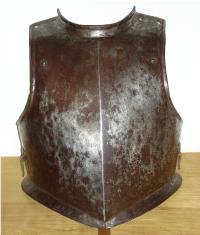
English Breastplate circa 1650
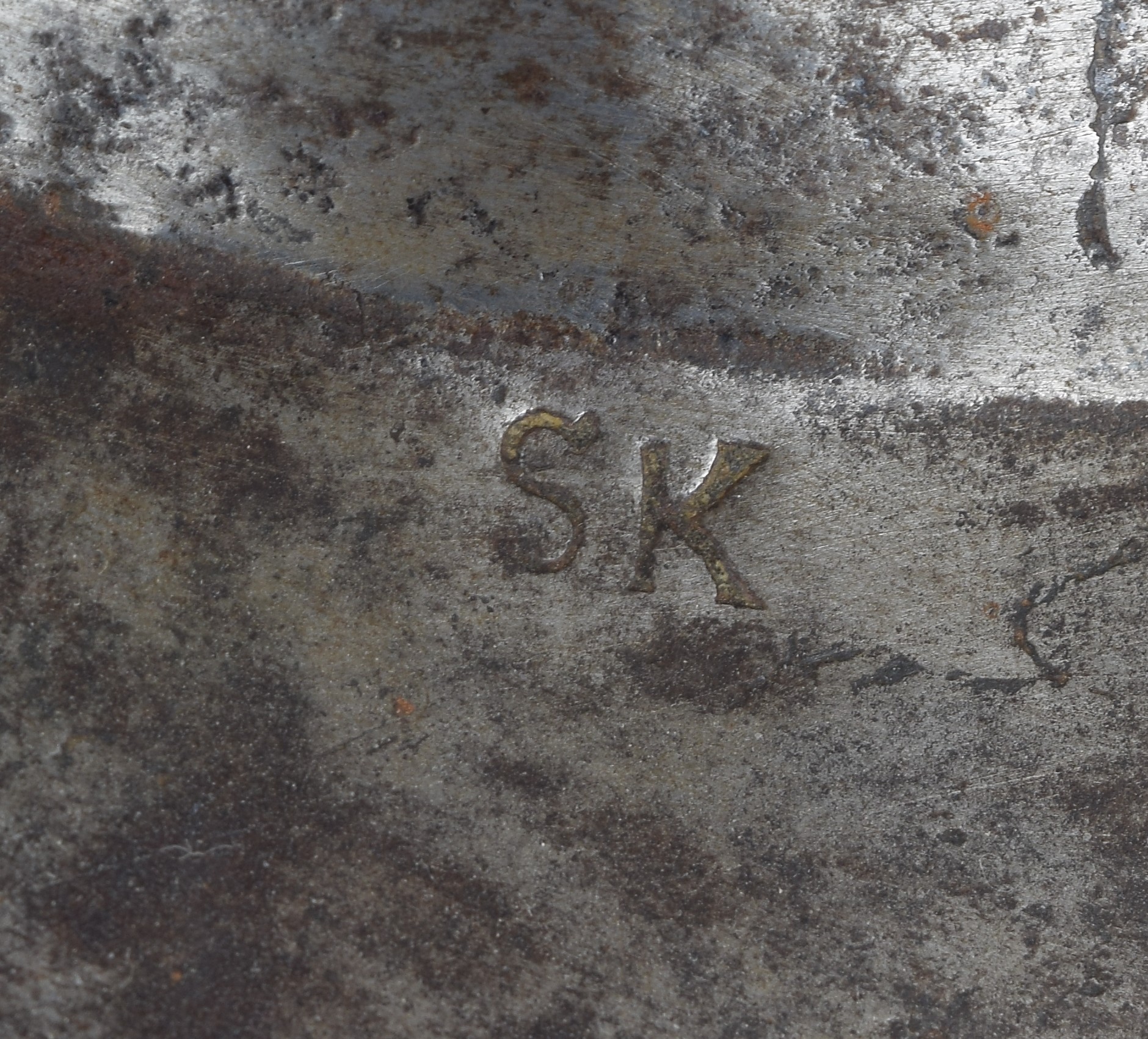
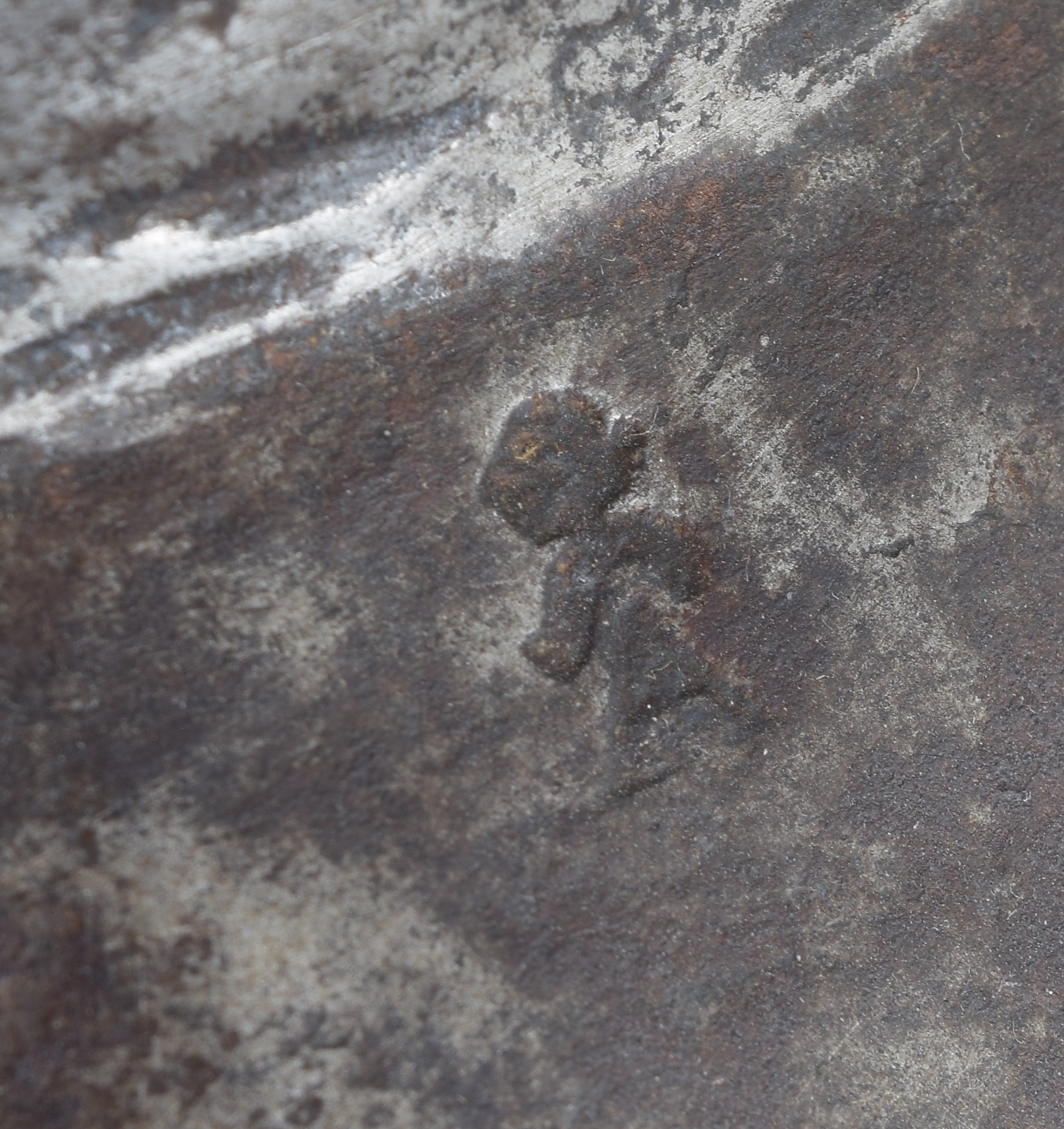
Central crease, flared bottom. Rolls at the arm holes. Neck flared to form an integral collar with rolled edge. Pins for securing shoulder straps and belt clips. By Sylvester Keene. London Armourer's company and SK mark. The central crease is very crisp and sharp. There are faint signs of a proof mark. The belt loops are forged - the upper part drawn out into a circle, the bottom slightly tapered and with a small roll at the end. The transition is not bent, you can see the thickness of the metal between the top that was drawn out sideways to form the circle and the bottom that was tapered and thinned. The inside is painted with what appear to be 2 large letters, a clear 'E' and the remains of a 'O' or 'C'. [inv. num. A-119]
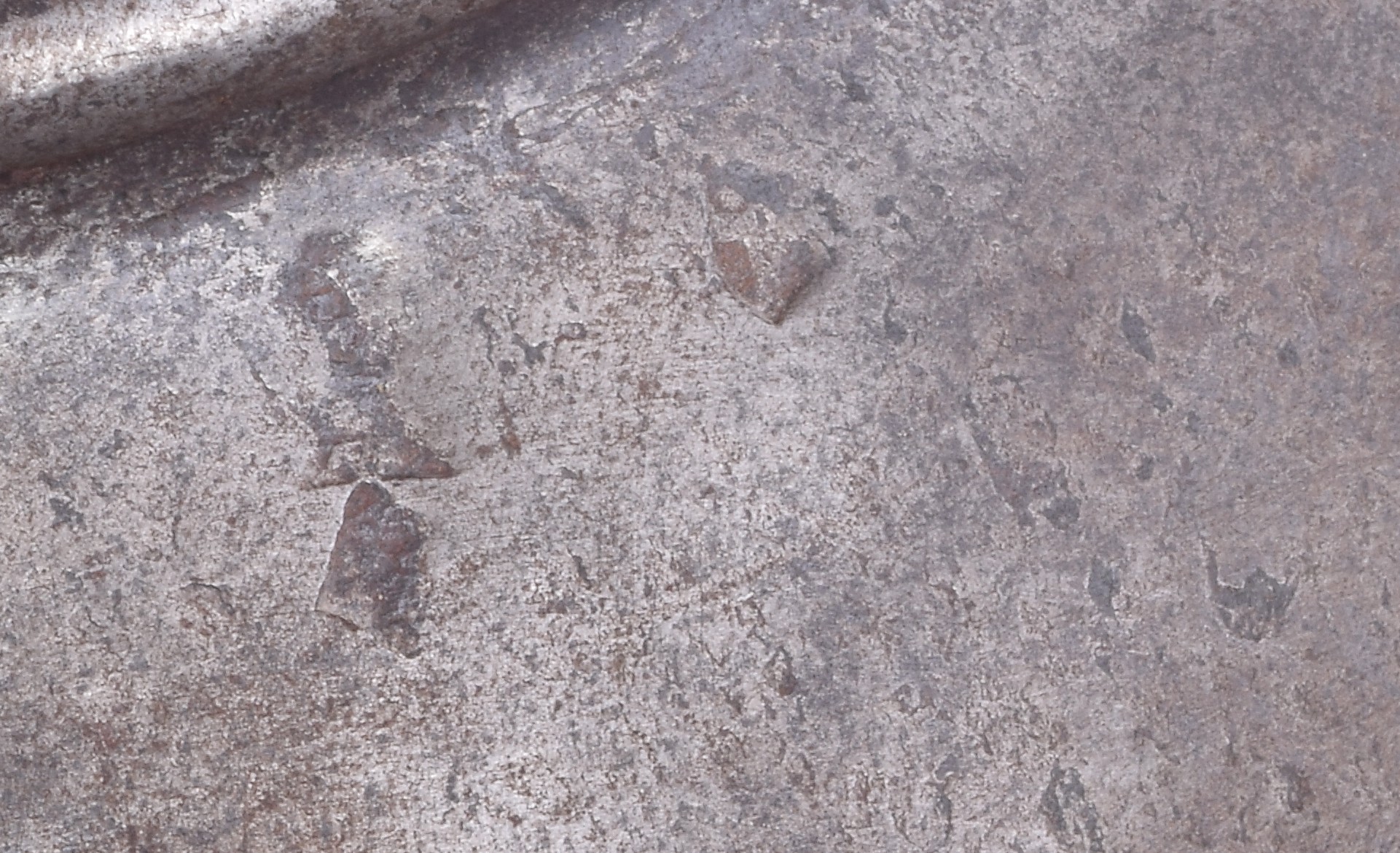
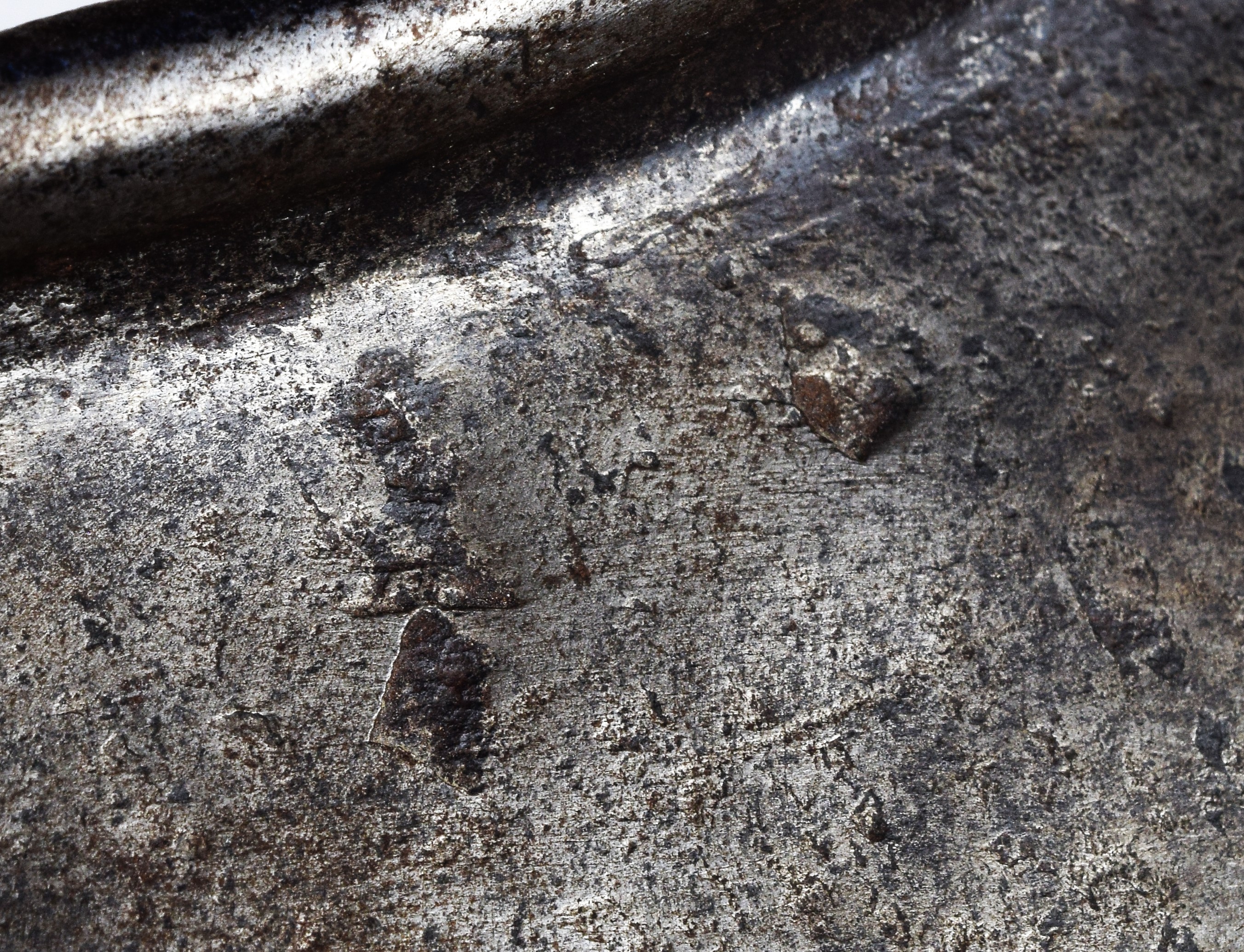

English Breastplate circa 1640-1660
Simple 17th century form with small peascod point. Neck forming a raised collar (eliminating the need for a separate gorget). Neck and arm holes bordered by an engraved line and inward-turned rolls. Flare at the waist. Signs of 3 marks near the neck. One appears to be the 'A' with something above - most likely the helmet - for the London Amour's Company. The second appears to be the cross of St. George which was used as a government acceptance mark. The third resembles a crude inverted F.
Weight 9 lbs. [inv. num. A-60]
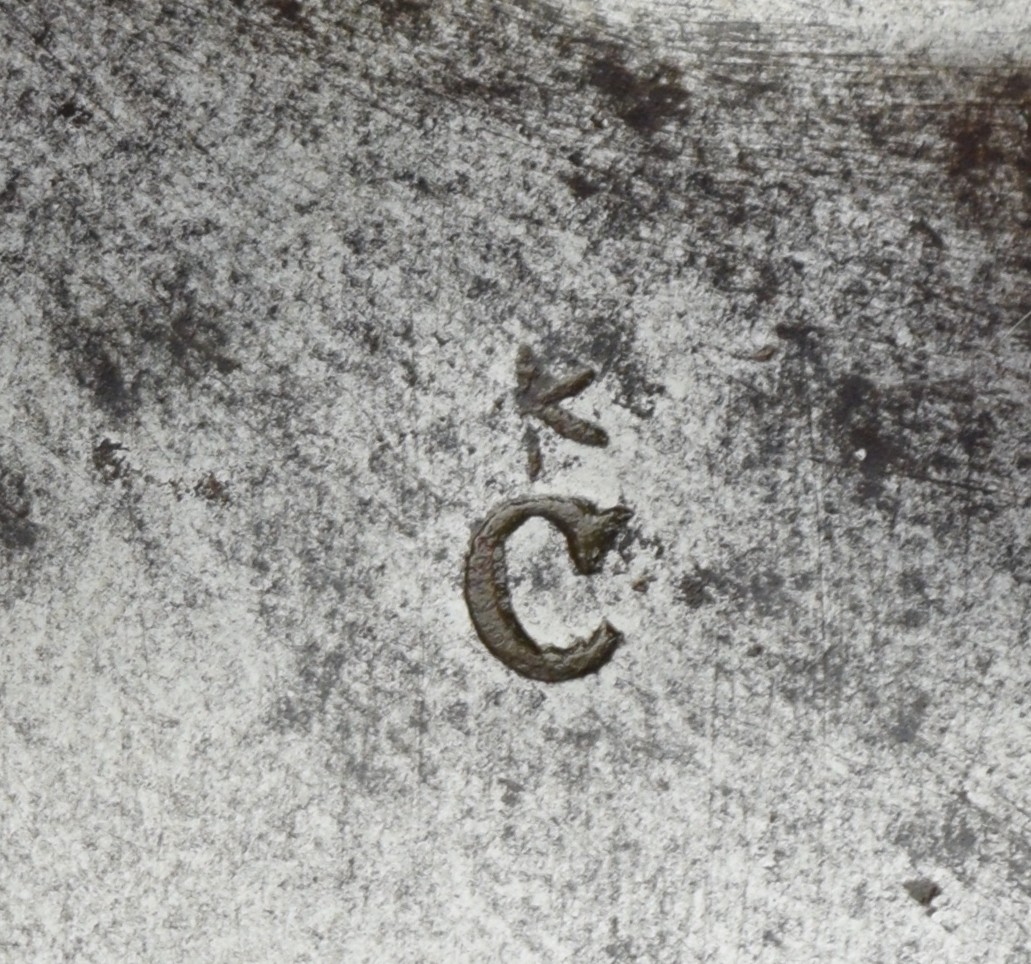

Breastplate circa 1640
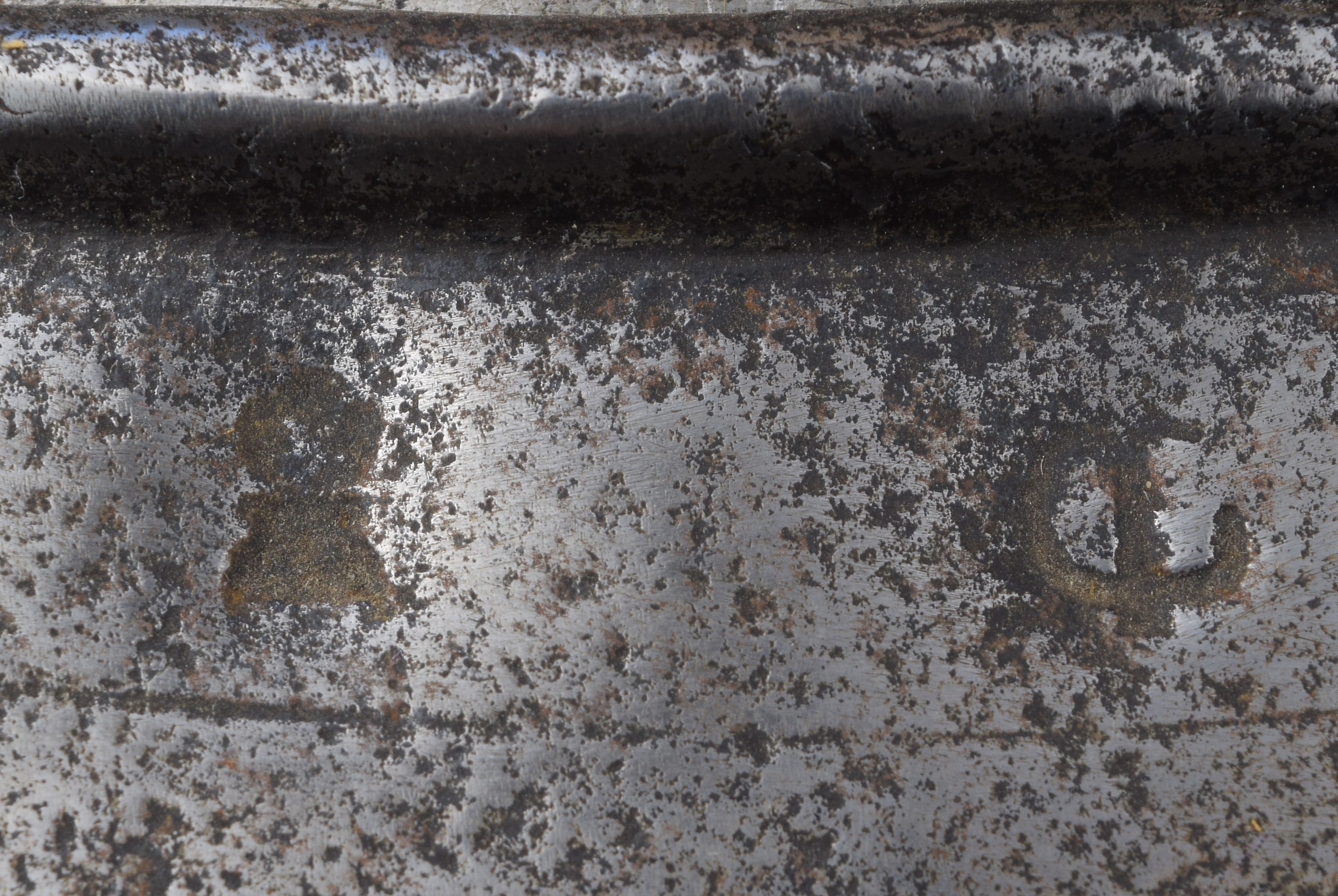
Of typical form with small peascod and central crease. Inward turned plain rolls at the arms and inward turned roll over wire at the neck. Small waist flare. Painted on the inside with a 6 in black paint. Marked on the inside with 5 triangular punches and chiseled X. Exterior originally smooth and white. Marked near the neck with a C surmounted by a star. This mark is discussed on page 31 of Thom Richardson's The London Armourers of the 17th Century. It is not explicitly identified, but several possible makers with last names starting with C are discussed on page 30. proof mark on the right side. Lightly oxidized. Earlier varnish cleaned.
Measurements: In the lower center app. .150-.170 in. thinning to .110 in places at the edges under the arms. Somewhat atypically for these late breastplates thicker near the center and thinning pretty evenly toward the edges. The thickness is a lot more even than it is on many pieces.
Weight 8 pounds 1.8 ounces (3675g). [inv. num. A-312]

Backplate mid 17th c.
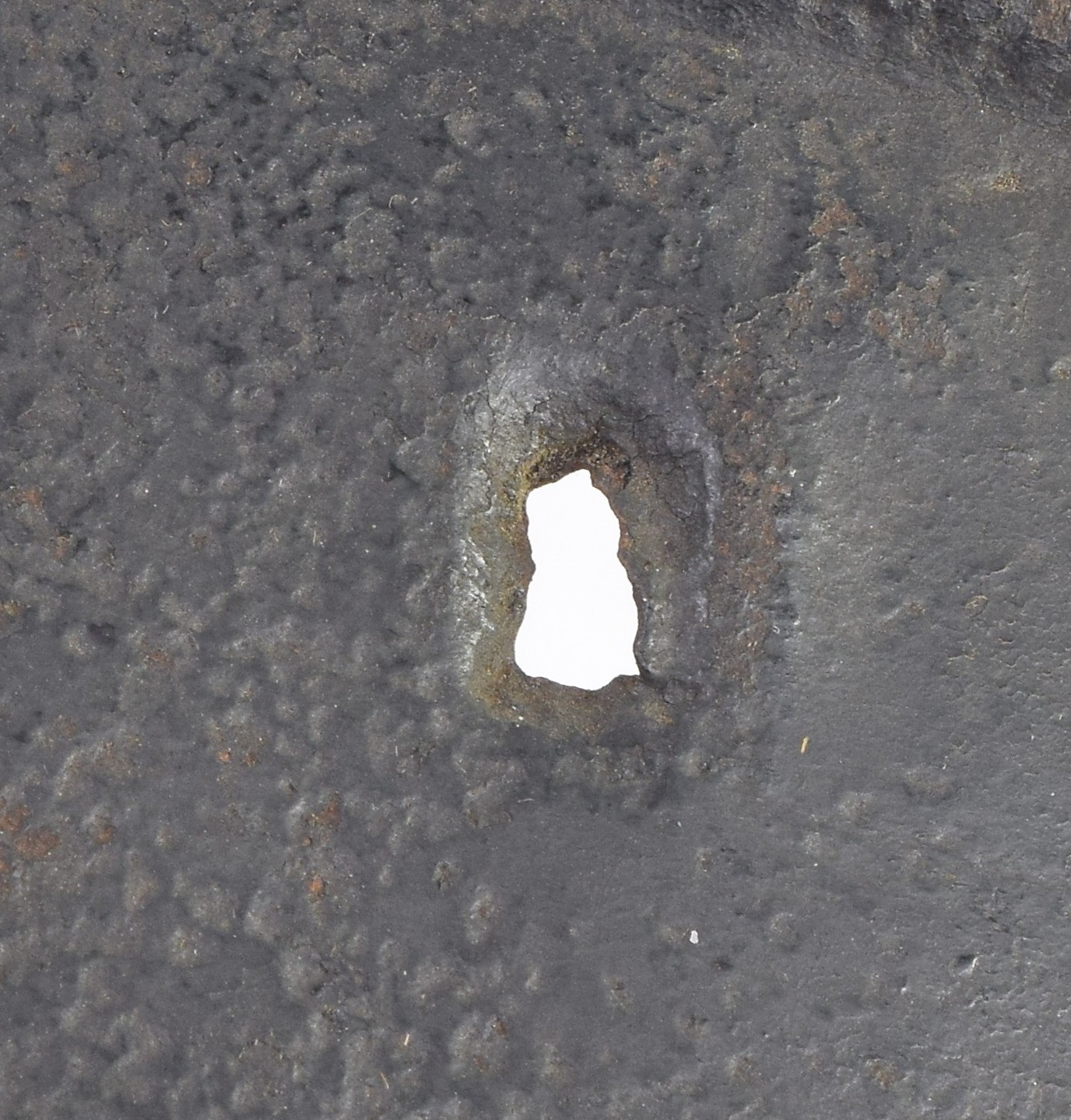
Backplate Neck drawn up to a short integral collar. Neck arm holes and waist flare rolled. Black finish over a pitted surface. Likely originally bright. There is a hole at the neck that appears to have beveled edges and mimics the shape of the James II inventory mark. These were often stamped pretty aggressively. I think that it was likely stamped very deeply on a thin piece and the mark has since been lost. [inv. num. A-407]

Pikeman's Pot mid 17th c.
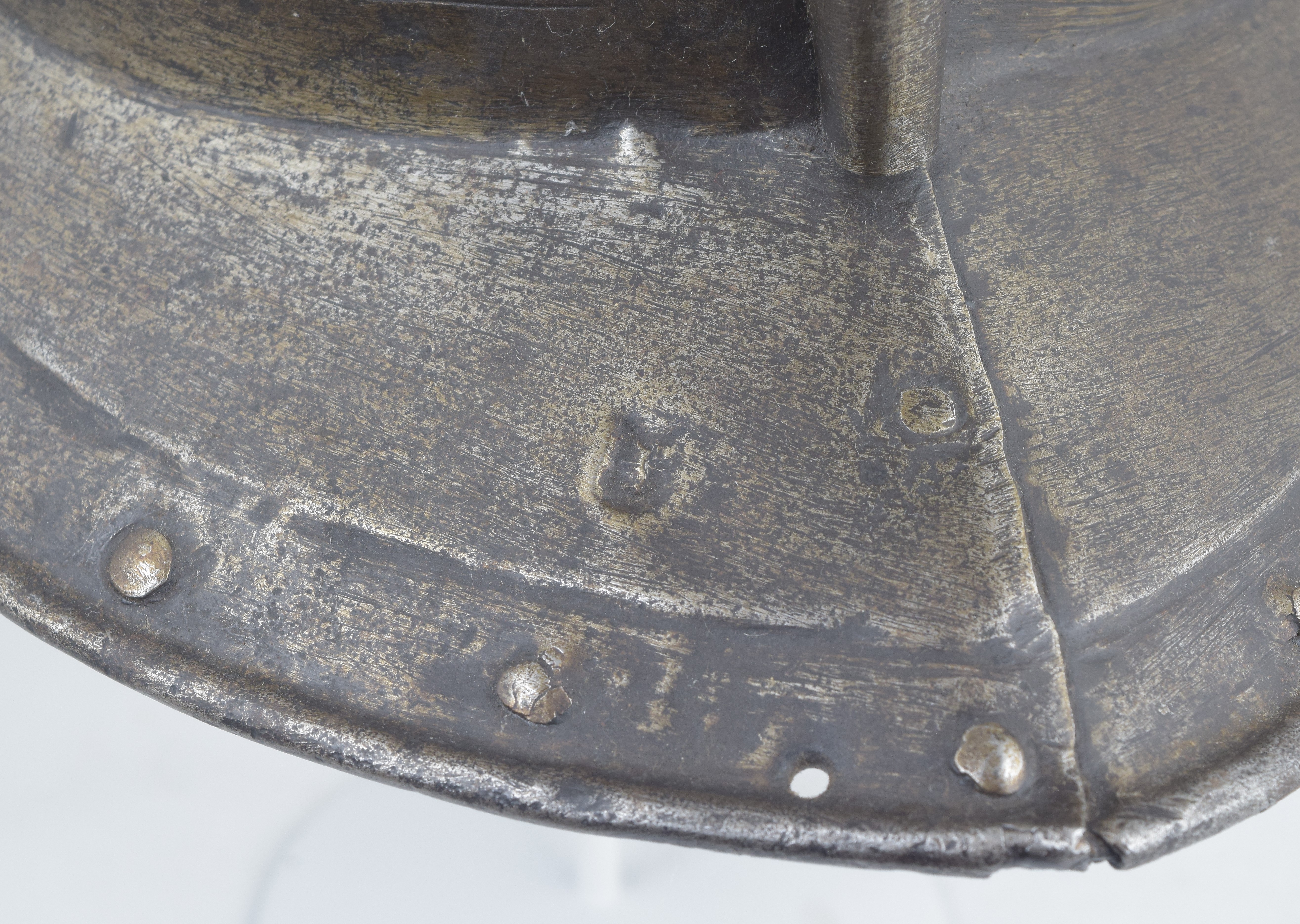
Of typical form. Two piece skull secured by a rolled seam on a short comb at the top of the skull and an overlap in the brim and base of the skull. Decorated with a double line of engraved lines above and below the rivets along the lower edge of the skull. There is a single engraved line paralleling the comb. Wide brim turned down slightly at the sides. Edge of the brim with a plain inward turned roll (over wire) and recessed border. Brim marked at the rear with a cross of St. George. This appears to be a government mark from the period of the Commonwealth. There is a line of rivets for lining strips along the base of the skull and at the edge of the brim. There is a plain iron plume holder riveted to the back of the skull. The body of the skull and brim are covered in relatively rough grind or file marks. The pattern indicates that they may be from the original "bright" finish. The brim with a some later holes. Likely covered in older varnish or other coating. [inv. num. A-370-a]


Backplate circa 1640
One piece with integral collar. Flare at the waist. Rolls at the neck, arms and waist. Remains of stamps near the neck - IW and one less clear which appears to be the crowned CR arsenal mark of Charles II. IW is recorded as registered to John Wright between 1637-1647 and also seems to have been used by Joseph Whorewood between 1648 and 1678. [inv. num. A-136]

Backplate circa 1640
One piece with integral collar. Flare at the waist. Rolls at the neck, arms and waist. Remains of stamps near the neck. [inv. num. A-135]

Pikeman's pot early 17th c.
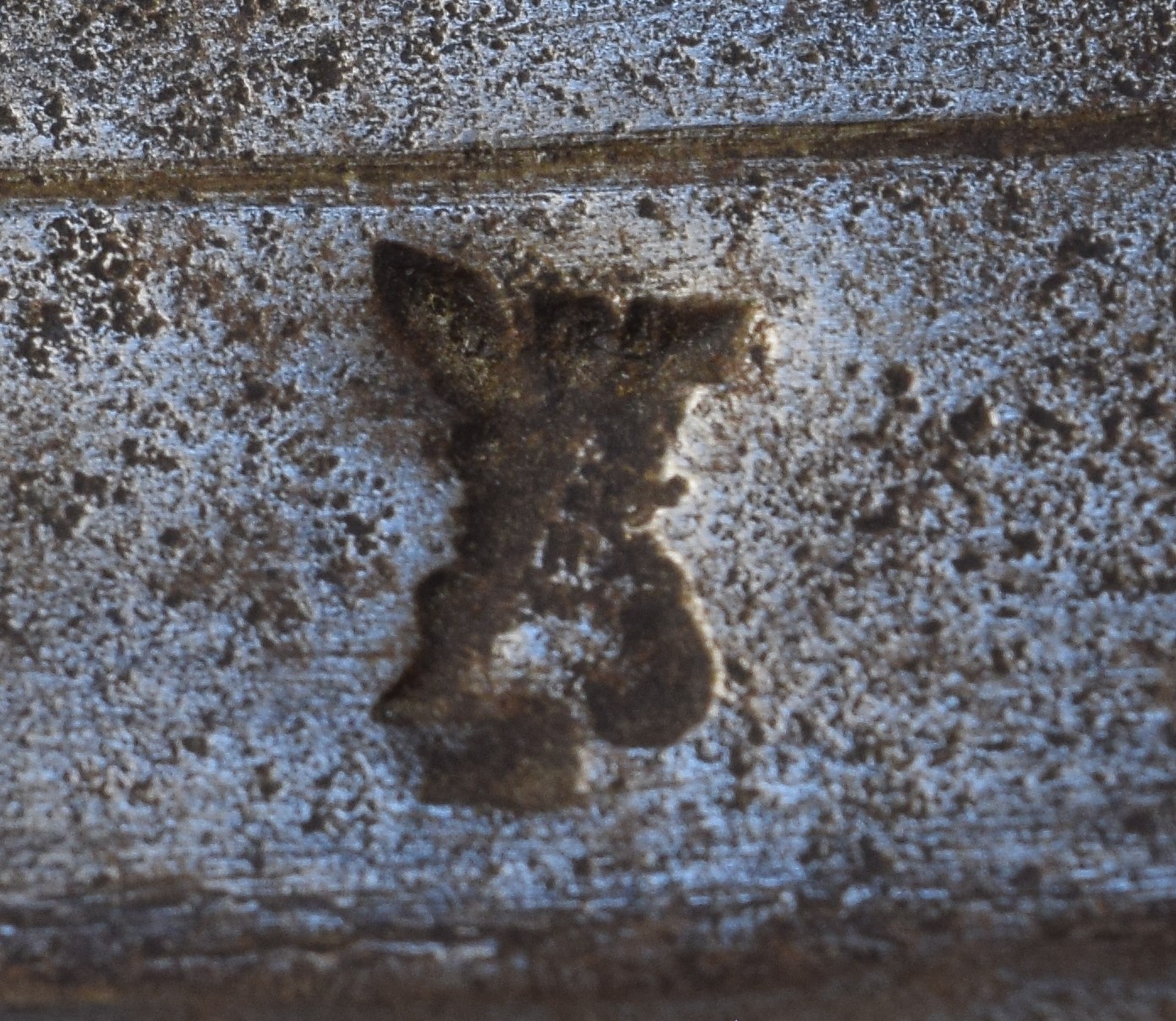
Typical two piece skull joined at a low turned comb and extended to form a downturned brim. Struck with a mark that might be a crowned A, but could also be a W with other shapes/letters/numbers below. If it is an A with a crown, it isn't the same form as the published examples. Base of skull and edge of brim with lines of rivets. Outer edge of brim with a plain inward turned roll and a parallel engraved line. Small riveted internal patch at the edge of the brim at the left rear. Overall pitted surface [inv. num. A-360]

Lobster-tailed pot circa 1650
Deep, heavy bowl formed of 2 pieces joined at the center with a flat riveted seam. The seam is inset to that the outside is flush. There is an engraved/chiseled line on the other side of the seam to simulate a central band. The bowl is rough-from-the-hammer. Pointed, hinged fall with 3 bars covering the face. Tail of one piece simulating 3 lames. The outer border of the tail has an inward-turned roll and a parallel recessed border. Lining rivets around the front edge of the bowl and along the edge of the tail. Skull marked on one side near the bottom. This mark appears to be a crowned IR, relatively illegible. This appears to be normal - see The London Armourers of the 17th Century by Thom Richardson, page 19. Cheek plates missing. The 2 piece skull and 3 bar face are typical of English armour of the period.
Measurements: bowl 8 3/4 in. front to back, 6 3/4 in. side to side, 6 in. deep at the center, bars 6 1/2 in. from the base of the brim to the bottom of the point.
Thickness: Tail .040-.050 in., Brim mainly .040-.050 in. except at the corner and pivot area where it gets much thicker - app. .090 in. The bowl varies significantly in thickness. It is generally thinner at the bottom and thicker at the top. A sampling of measurements show .070, .150, .090. It is generally around .090-.120 but it varies significantly in a small area. [inv. num. A-183]

Lobster Tailed Pot circa 1640
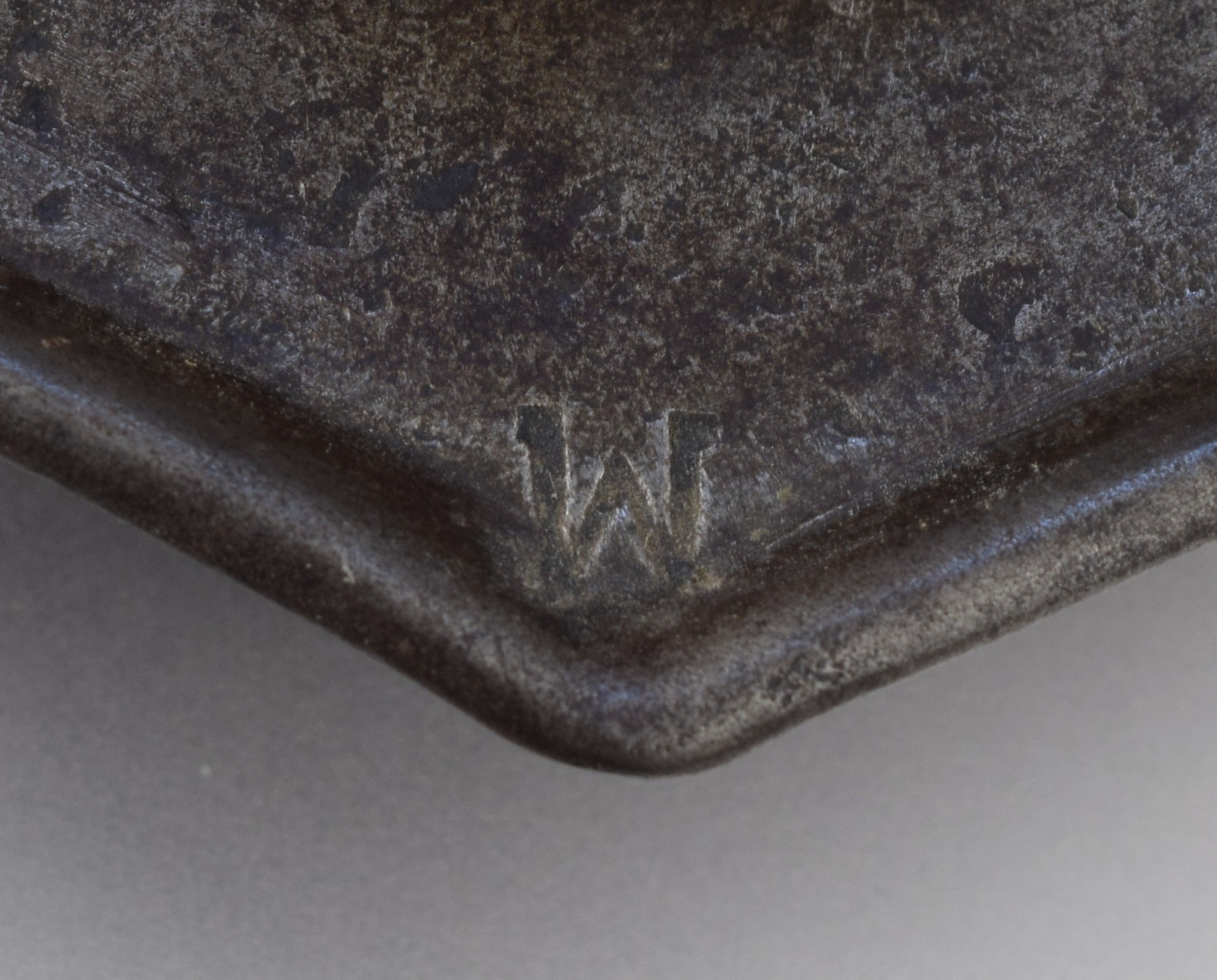
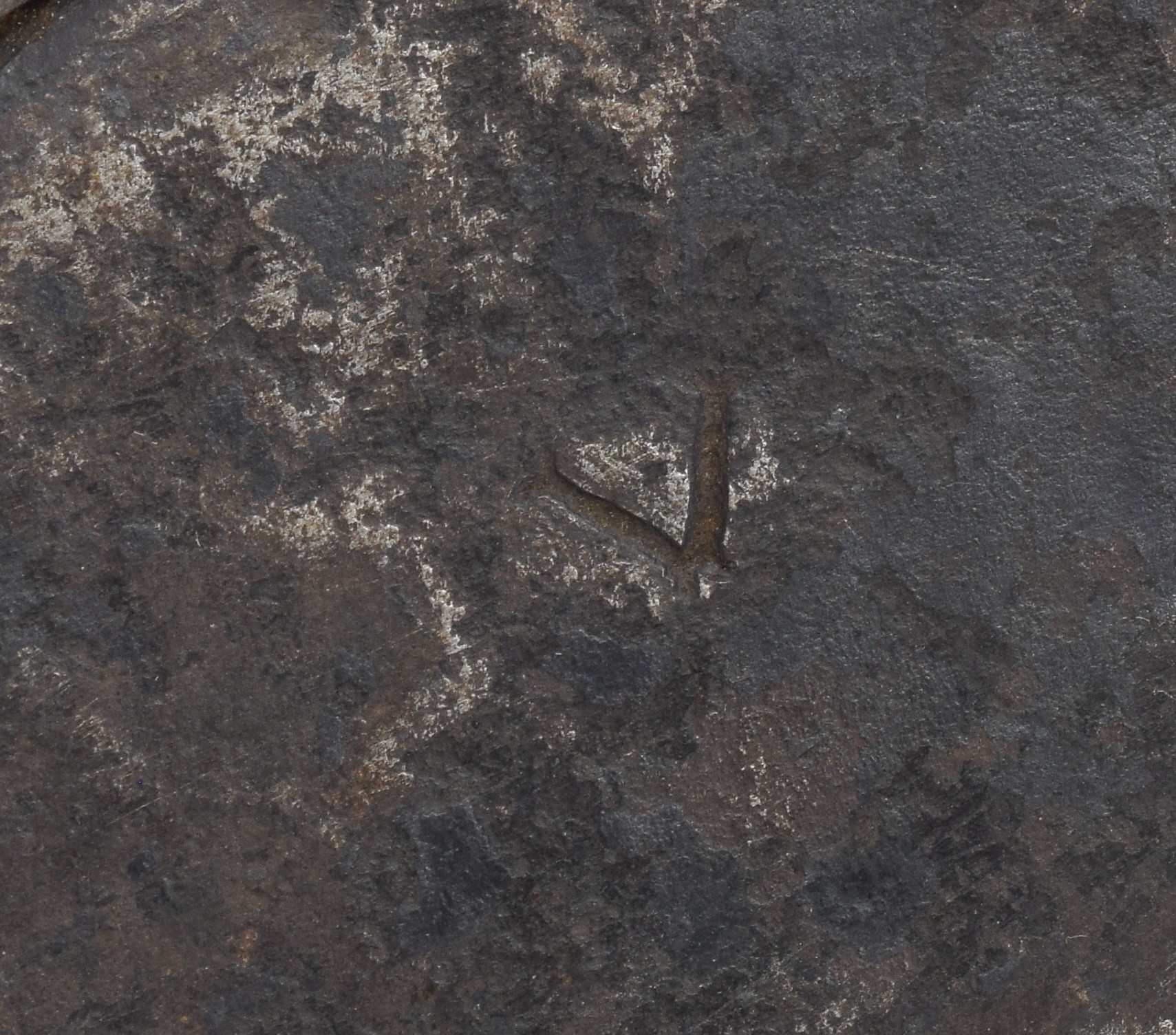
A lobster tailed pot. Helmet bowl formed in one piece with raised lines radiating from the center. Articulated tail formed of 4 plates each with rolled outer edges. Secured at the sides by articulating rivets and with the remains of a central leather. 2 cheekplaces with rolled edges and central perforation. Brim fixed to the bowl. Sliding nasal secured by a turn-screw with large flattened head. The center of the bowl has a loop secured through a round washer. Leather strips for securing the lining remain around the tail, cheek plates and bowl. The helmet is marked with an M at the point of the brim on the outside and a broad V on the inside of the brim. The marks on the helmet resemble the marks used by the London Armourer's company, but the one piece form is more typical of the continent and is possibly of German manufacture. [inv. num. A-65a]