Changes in the shapes of breastplates in the 16th century Main Page
Previous Page
Next Page
 |
 |
 |
 |
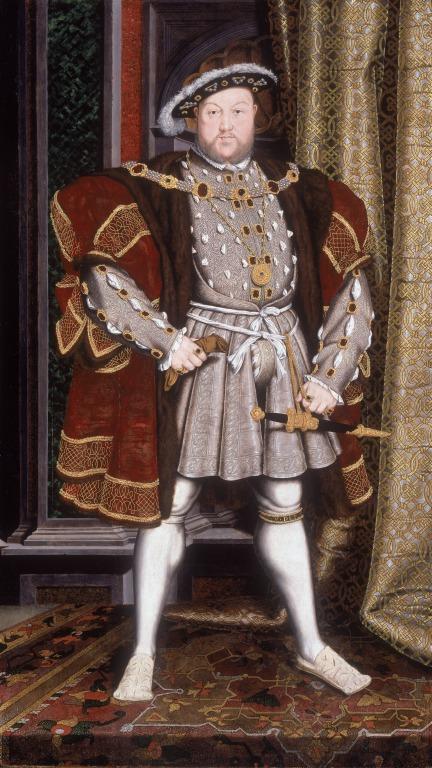
Henry VIII Hans Holbein (the Younger) workshop c. 1537 Walker Art Gallery WAG 1350 |
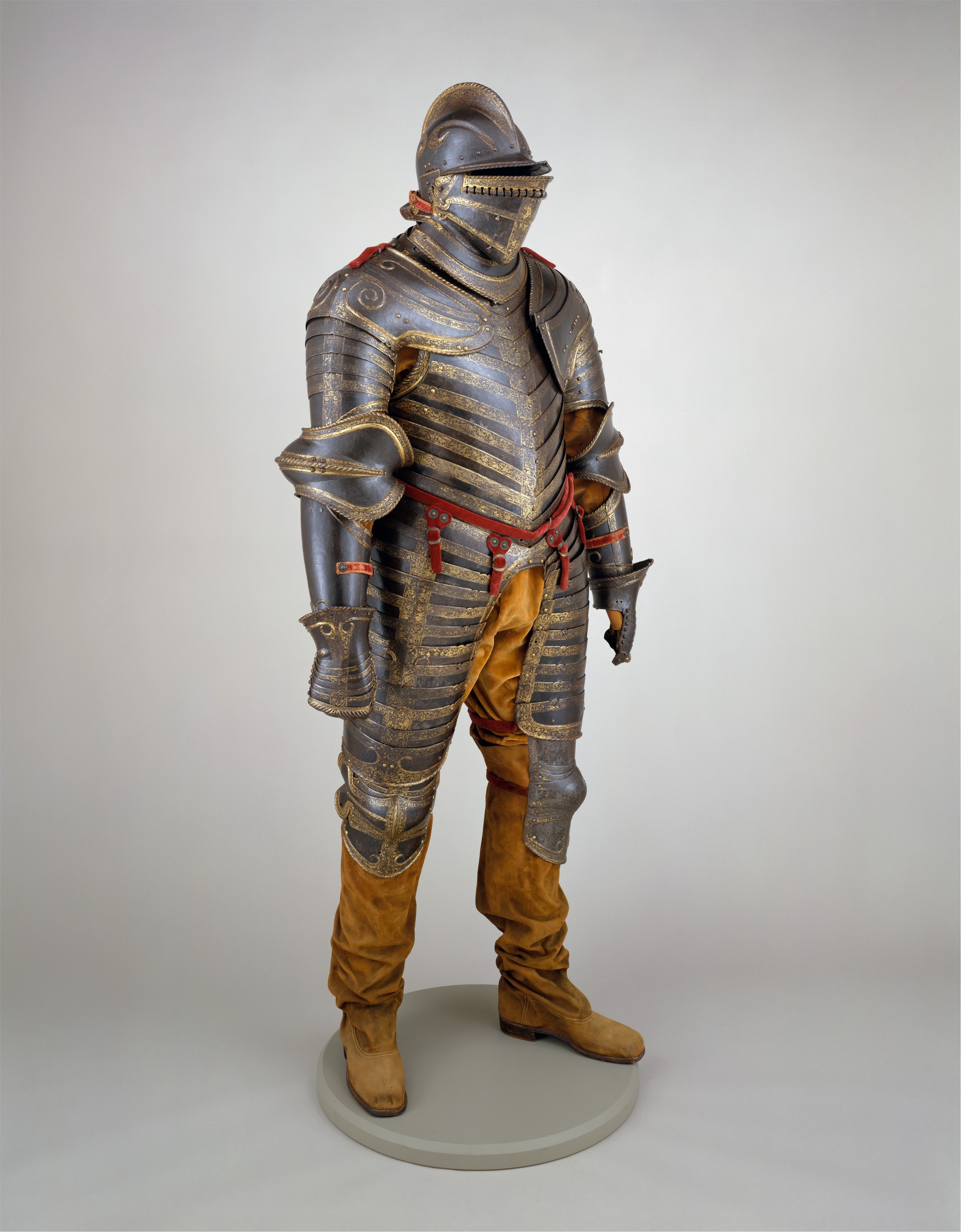
Armor made for Henry VIII Italian, Milan or Brescia c. 1544 Metropolitan Museum of Art accession number 32.130.7a-l |
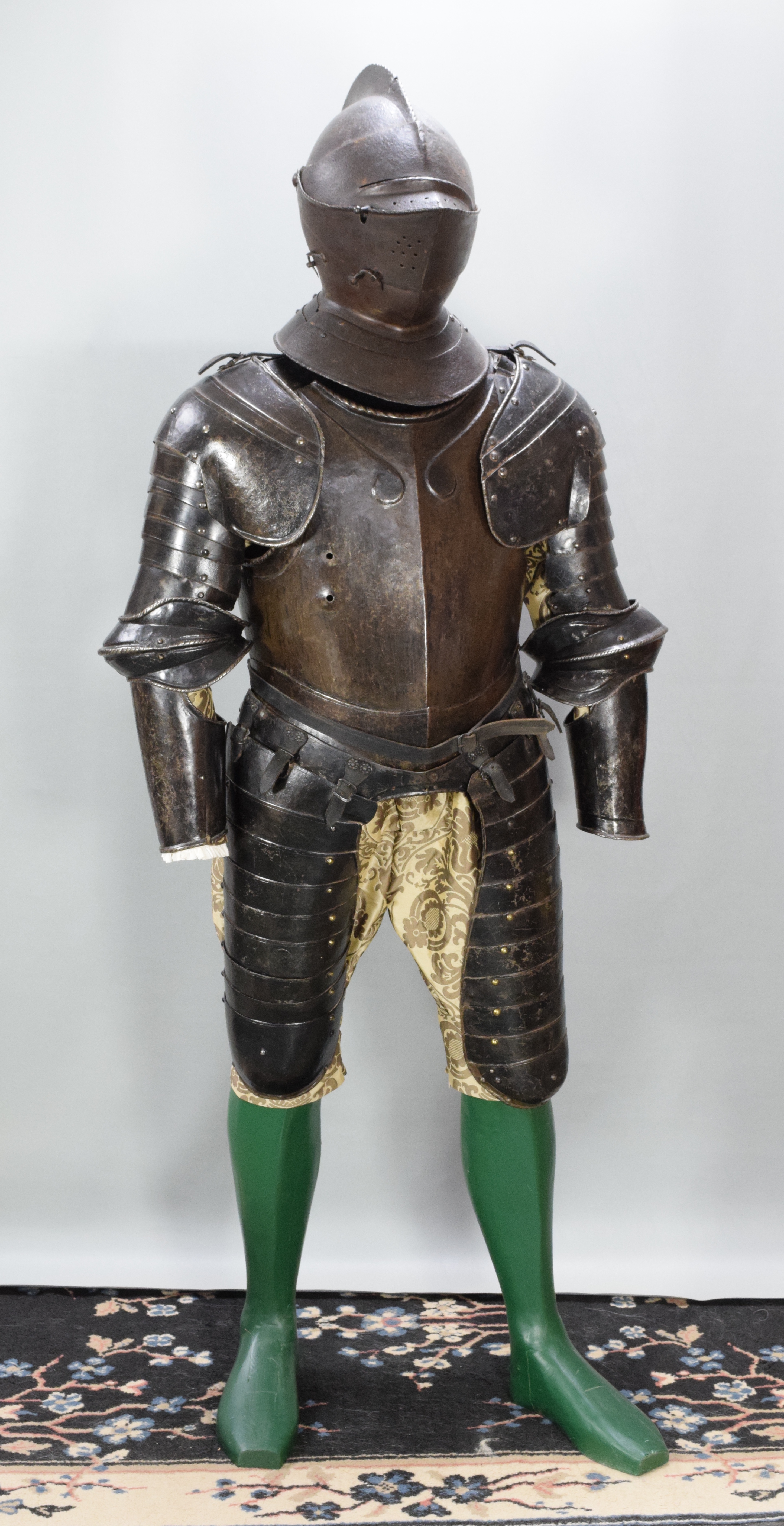
Three-quarter Armor circa 1550-60
inv. num. A-1 |
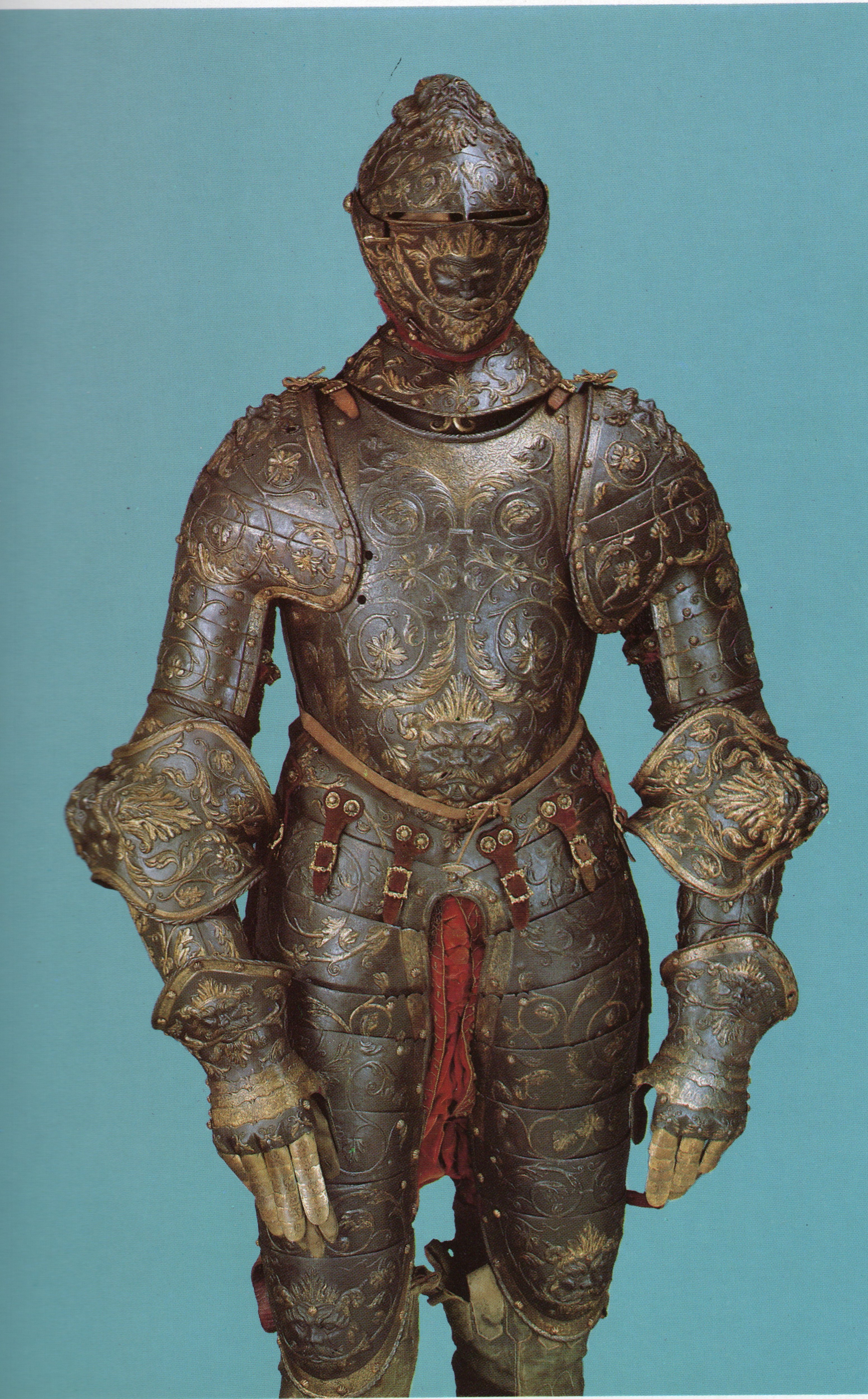
Armor for Henr II of France Sotheby's 5 May 1983 |
In the mid century we can illustrate the connection between clothing and armor in a very direct way.
On the left we see a picture of Henry VIII and arm armor made for his personal use.
On the right we see a piece from my collection and then a painting of Henri II of France.
First this lets us see three different levels of decoration on armors of similar form.
My example is about as plain as you can get. The surface was left rough from the hammer and blackened.
Henry VIII's armor is much, much nicer. The surface is still (partly) rough from the hammer and dark, but
the remainder is etched and gilt and the surface is more even and would have been heat blued.
Henri II's armor takes this to the next level entirely. Technically the surface is still black and rough from the hammer,
but it was embossed by one of the best embossers of the time and gilt.
My parallel example is not nearly as nice as the armors of either of the Henrys, but it illustrates the same atypical form that was used for
a very short period in the mid century.
This is the one time where the waist of the cuirass dips down below the natural waist of the wearer
(all the way around, not just in the center front).
In order for this to work, the waist has to be made wider and there is usually some mobility provided in the waist of the
armor to allow for some movement by the wearer that would not otherwise be possible.