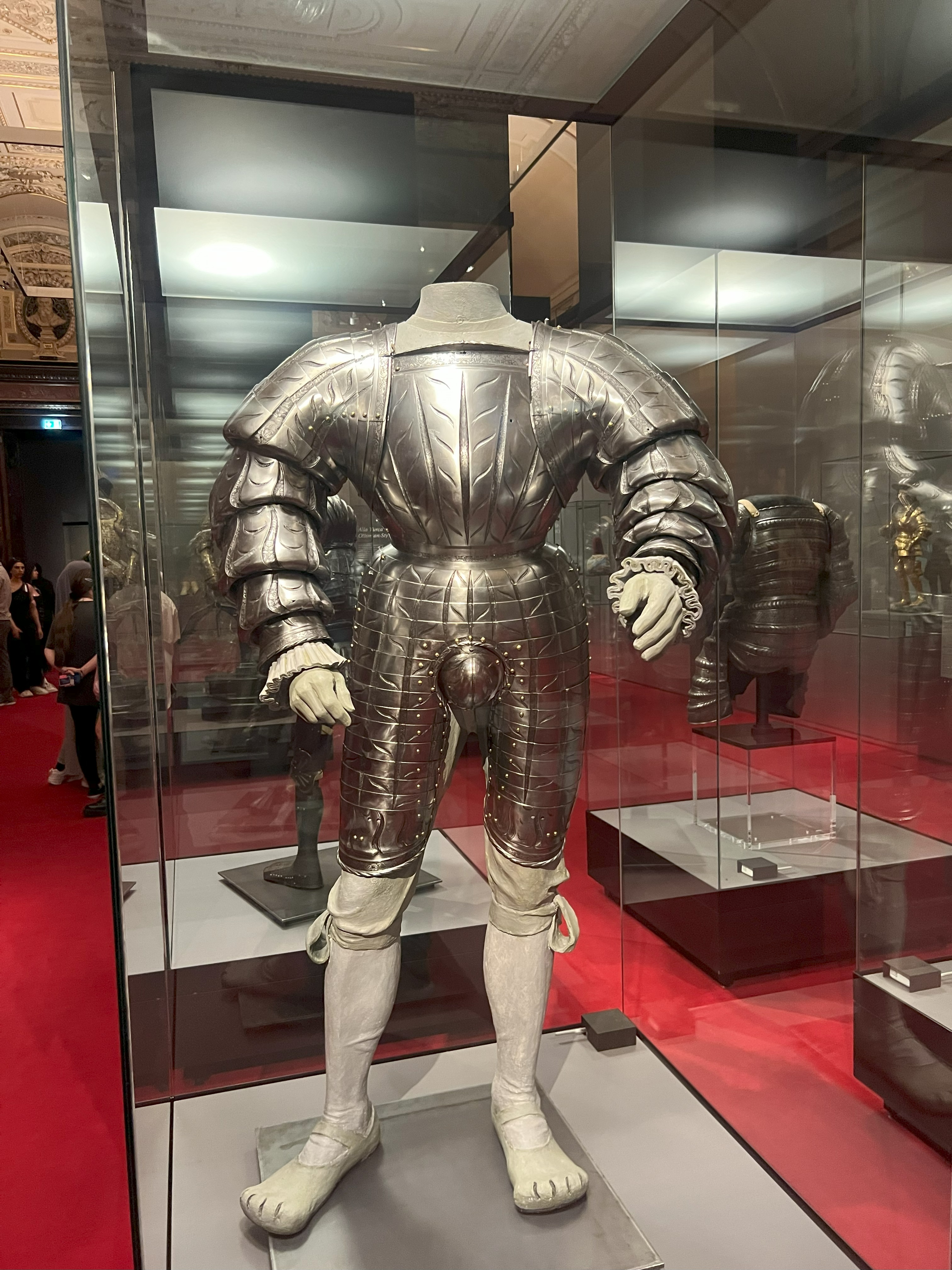

Amor of Wilhelm von Rogendorf c. 1525
KHM A374 - S.227. Photograph by Tom Biliter.
Bottom plates from a pair of German Tassets circa 1520-30
inv. num. A-29
Changes in the shapes of breastplates in the 16th century Main Page Next Page
| |
|
Amor of Wilhelm von Rogendorf c. 1525 KHM A374 - S.227. Photograph by Tom Biliter. |
Bottom plates from a pair of German Tassets circa 1520-30 inv. num. A-29 |
This is the famous Rogendorf armor which is displayed in the KHM in Vienna. This is probably what leaps to mind when someone talks about armor mimicing fashion. It shows what we often think of as a "parade" armor that might have been built purely for decorative use.
In fact, this was a perfectly useable armor which provided protection - and for that use it included "exchange pieces" for the arms and legs that have the same decorative scheme, but where the form of the armor is much more similar to the typical armor in use at the time. Alan Williams has performed analysis of some of the elements of the arm armor and determined that they are built from a heat treated medium carbon steel - very much the "cutting edge" of good armor for actual use in warfare. The tasset terminal plates we see on the right are decorated in a similar fashion. When you look at them closely, you can see that the decoration would not significantly affect the protective quality of the pieces. The embossing is formed in low relief. The lines accent the shapes and make it look deep and crisp, but the surface is actually smooth and it would not catch weapons or interfere with the movement of the plates.
I mention this to help our understanding of armor style, this type of armor is not the subject of this discussion. Instead we will be looking at normal armor that most people would see as armor for use in battle, and include lower end pieces for use by ordinary soldiers or men at arms.