The art of making a stand.
To me it's very important to display armour on a stand that follows the human anatomy.
If you do not feel that there's a person inside the armour when displayed, you loose much of the point of armour.
It is made to fit and protect a body! Unfortunately there is still a lot of poor display at museums and collections today.
I think its so much easier to relate to an armour, if you feel like it is a person, it catches your interest in a totally different way!!
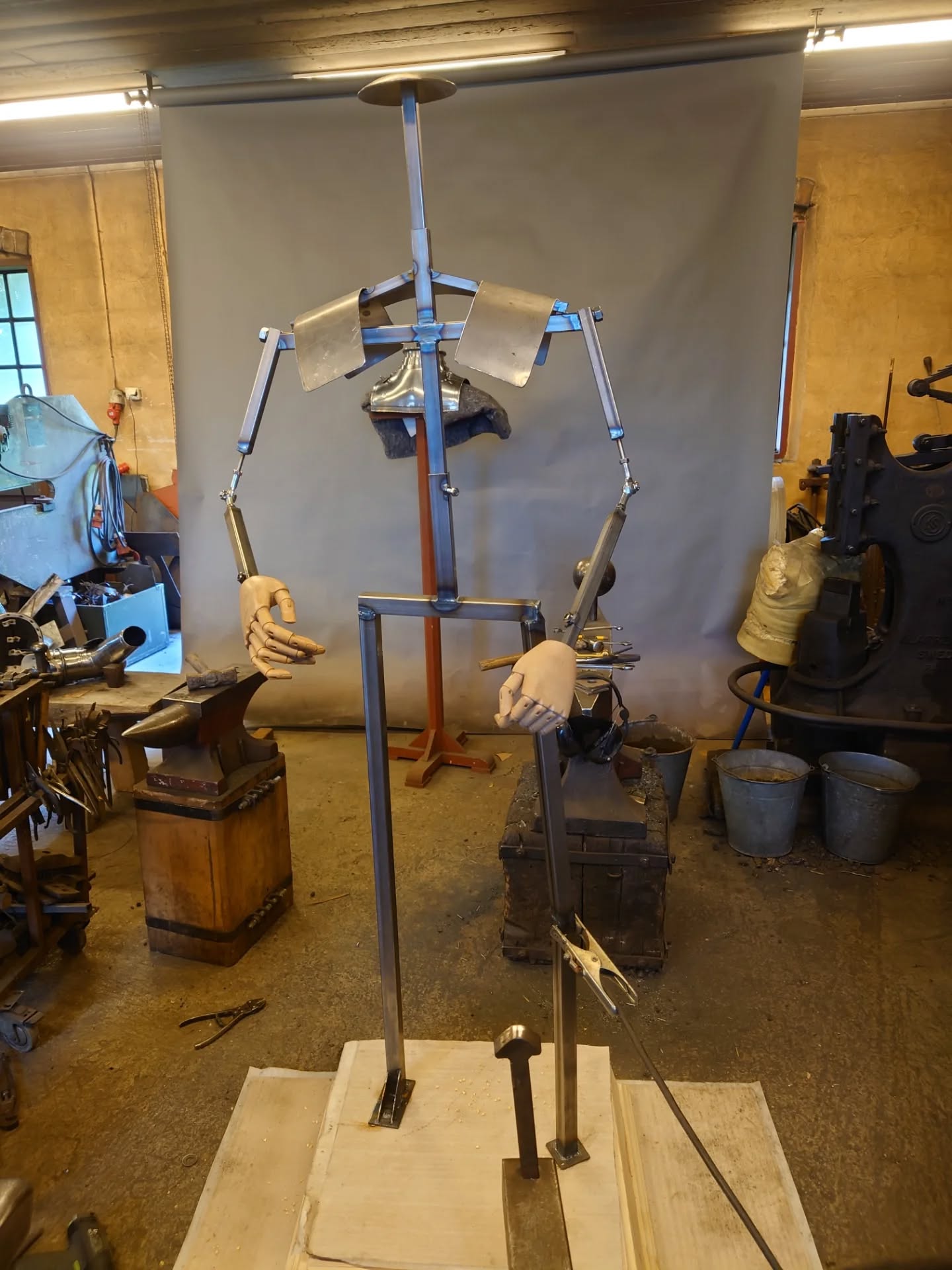
I use a steel frame, with adjustable shoulder, elbow and hand joints.
Legs, from just beneath the knee and up to the waist are cast from a real human body.
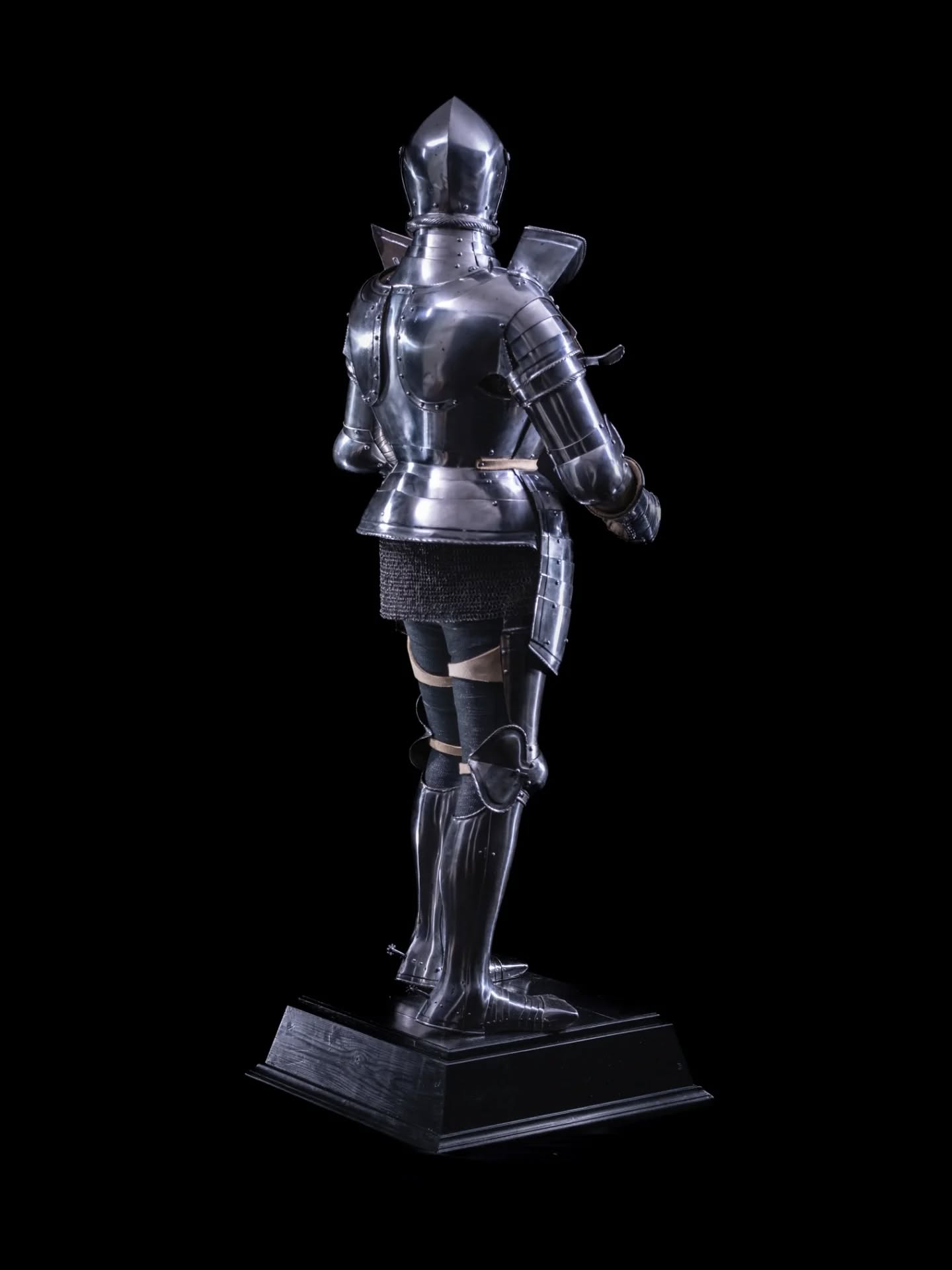
This armour is made by me 2023 for @mylifeinarmour first picture by @bjornfalkevik. All other pictures copyright Albert Collins 2025.
Albert Collins
The stand and Armour
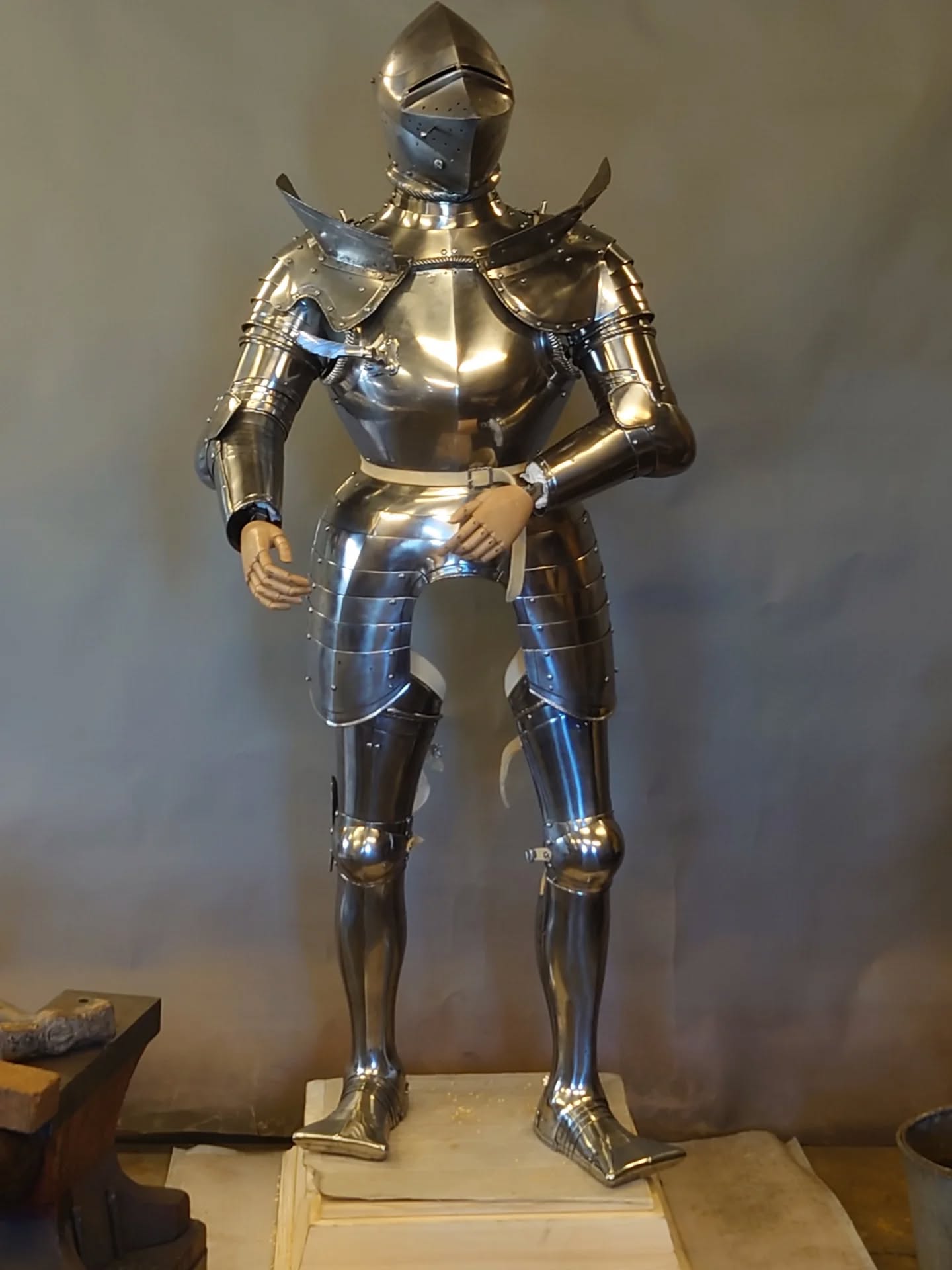
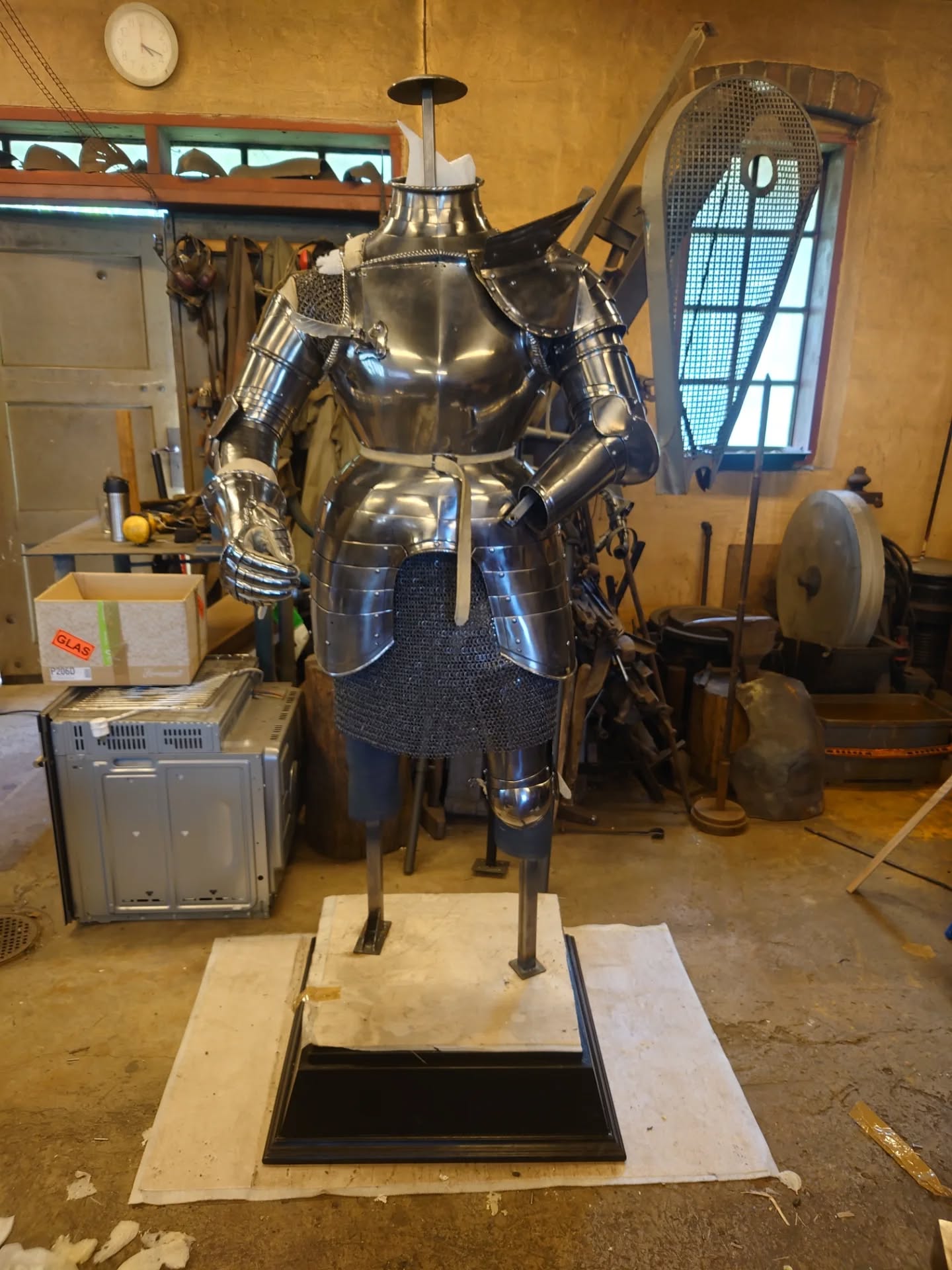
This shows the armour on the stand in its final form. It presents the amour in a natural pose and fills in the gaps left in the armour so that it appears as it would when worn by a person.
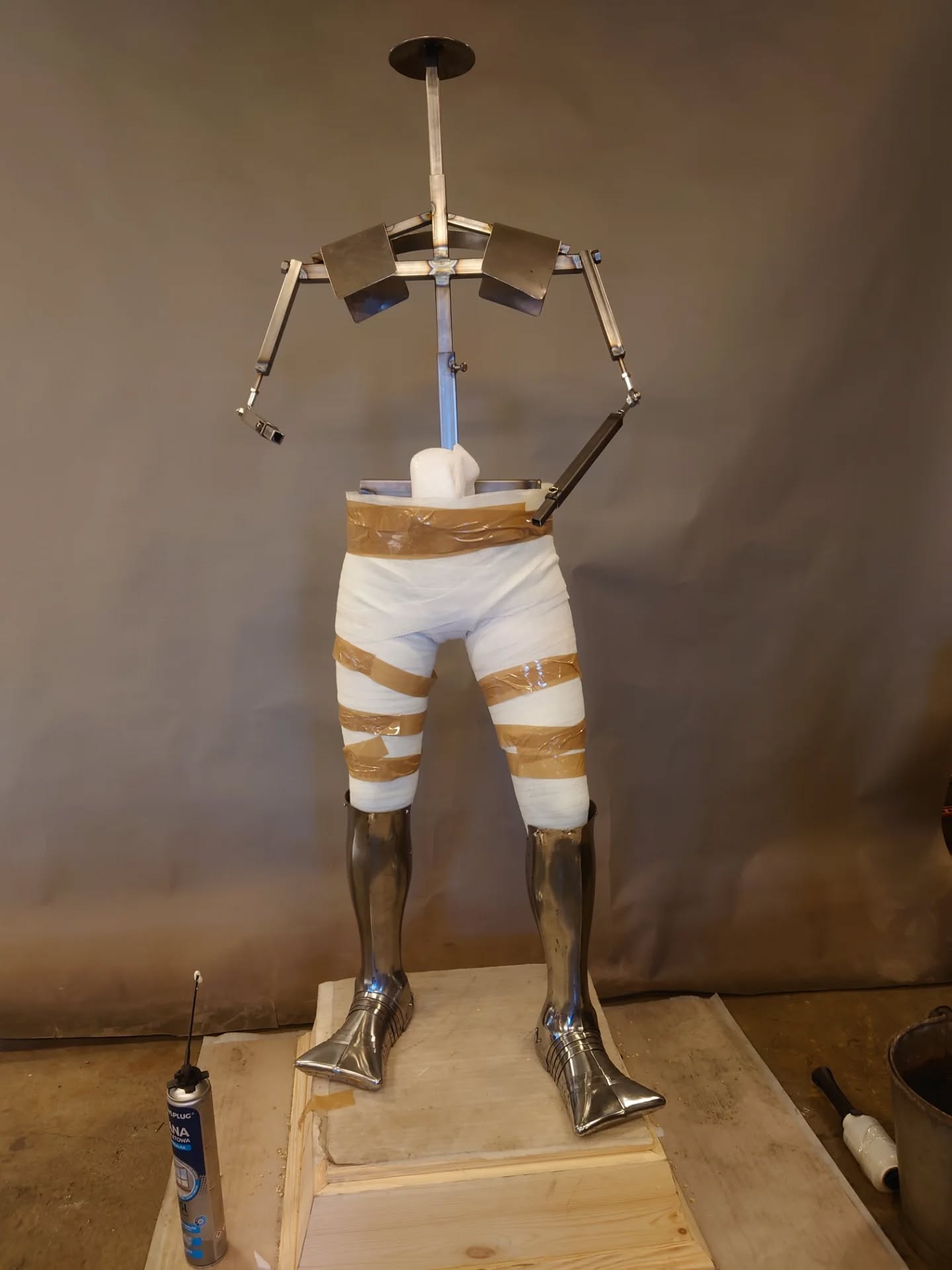
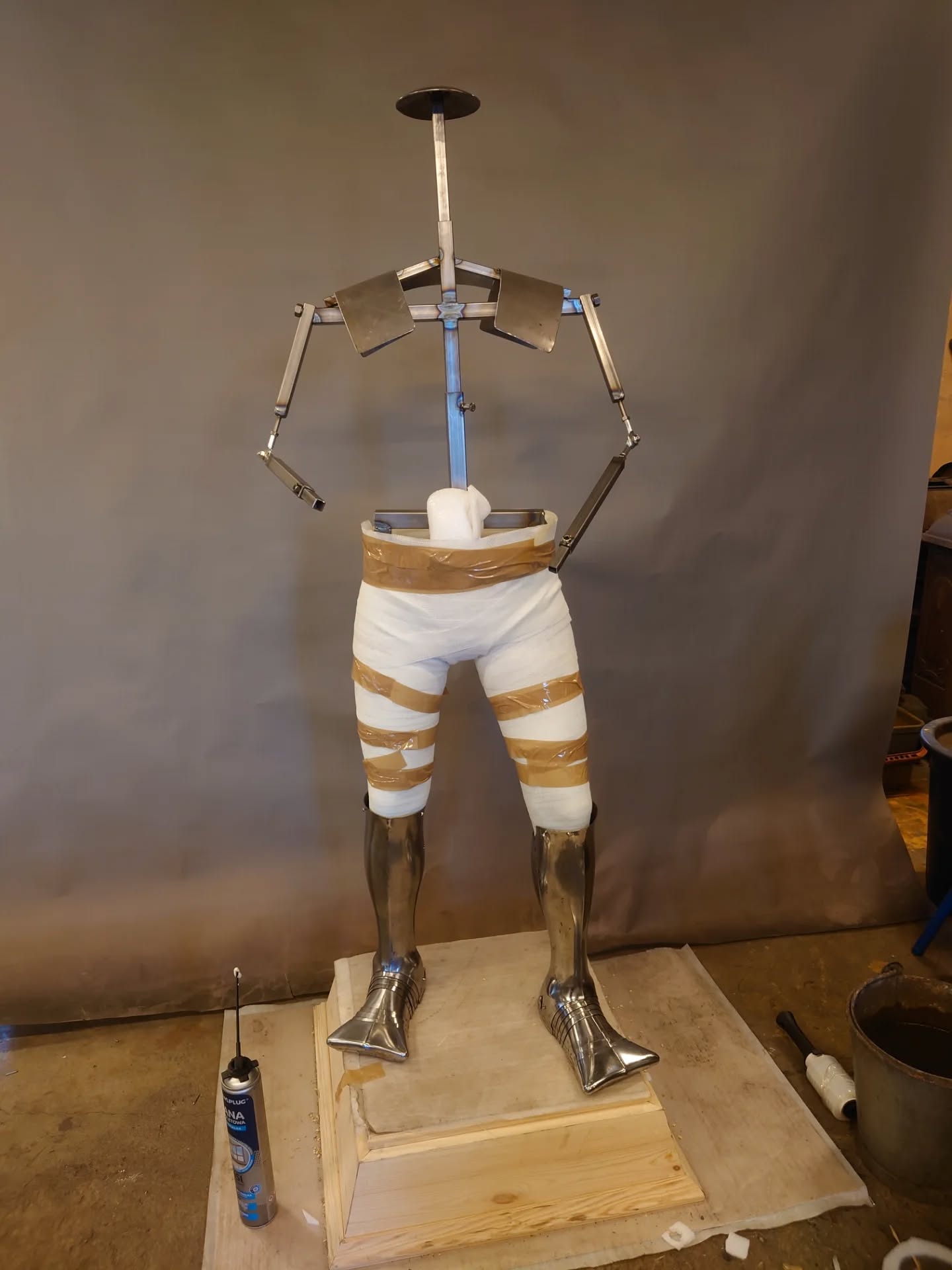
This shows the metal armature that supports the weight of the armour.
It is constructed of 25mm (app. 1" for those of us in non-metric land) square tubing, threaded rod, and fittings to allow for some adjustment and posing.
Adding artist model hands allows the gauntlets to be supported nicely and posed.
The legs are solid to provide strength. this works because adjustments can be done in the body, neck and arms.
The frame is secured to a weighted base, providing a solid mount that won't tip.
Most of the nuts and bolts are M10 (app. 3/8"), the base is secured by M16 (app. 5/8") bolts.
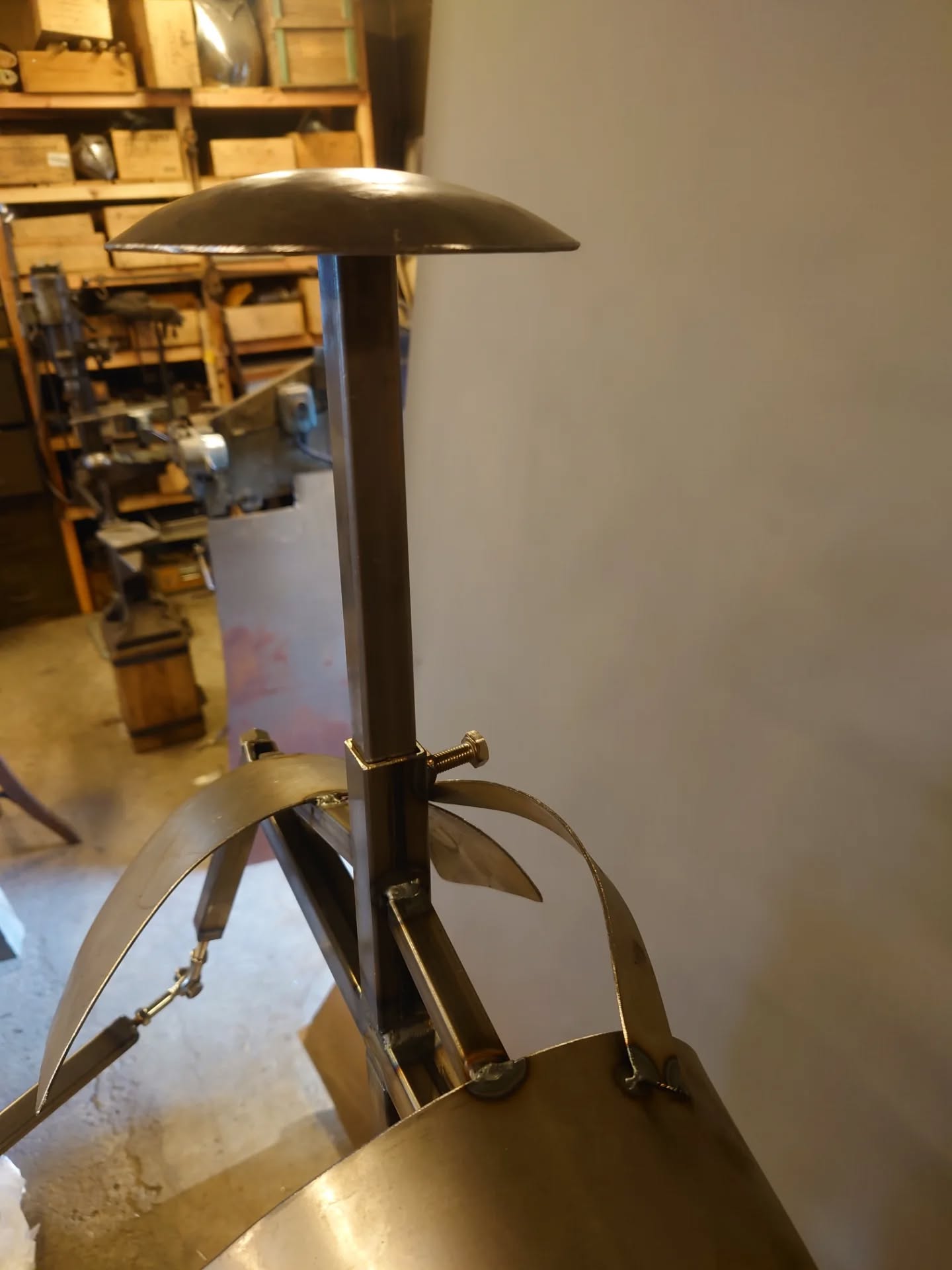
Starting from the top, we need a way to support the helmet. This needs to have a large enough surface to
protect the lining and allow the helmet to sit naturally as it would on a head. It should also properly mimic
the height of the person's head and neck.
The head has a large formed cap of sheet metal mimicing the top of the head and is secured to the body with
telescoping square tubing. This allows the height to be adjusted to achieve the right final look.
Moving on down, the shoulders need to support most of the weight of the armour and hold it in the right position.
The structure of the shoulder combines a horizontal member for strength and an angled member to properly mimic the angle of the body. This is supplemented with a curved piece over the shoulder to support the gorget in the proper position. The arm is secured to the shoulder with a bolt and nut to allow the angle to be adjusted.
Much of the natural feel of an armour comes from the position of the arms. If they just hang down, the piece feels lifeless.
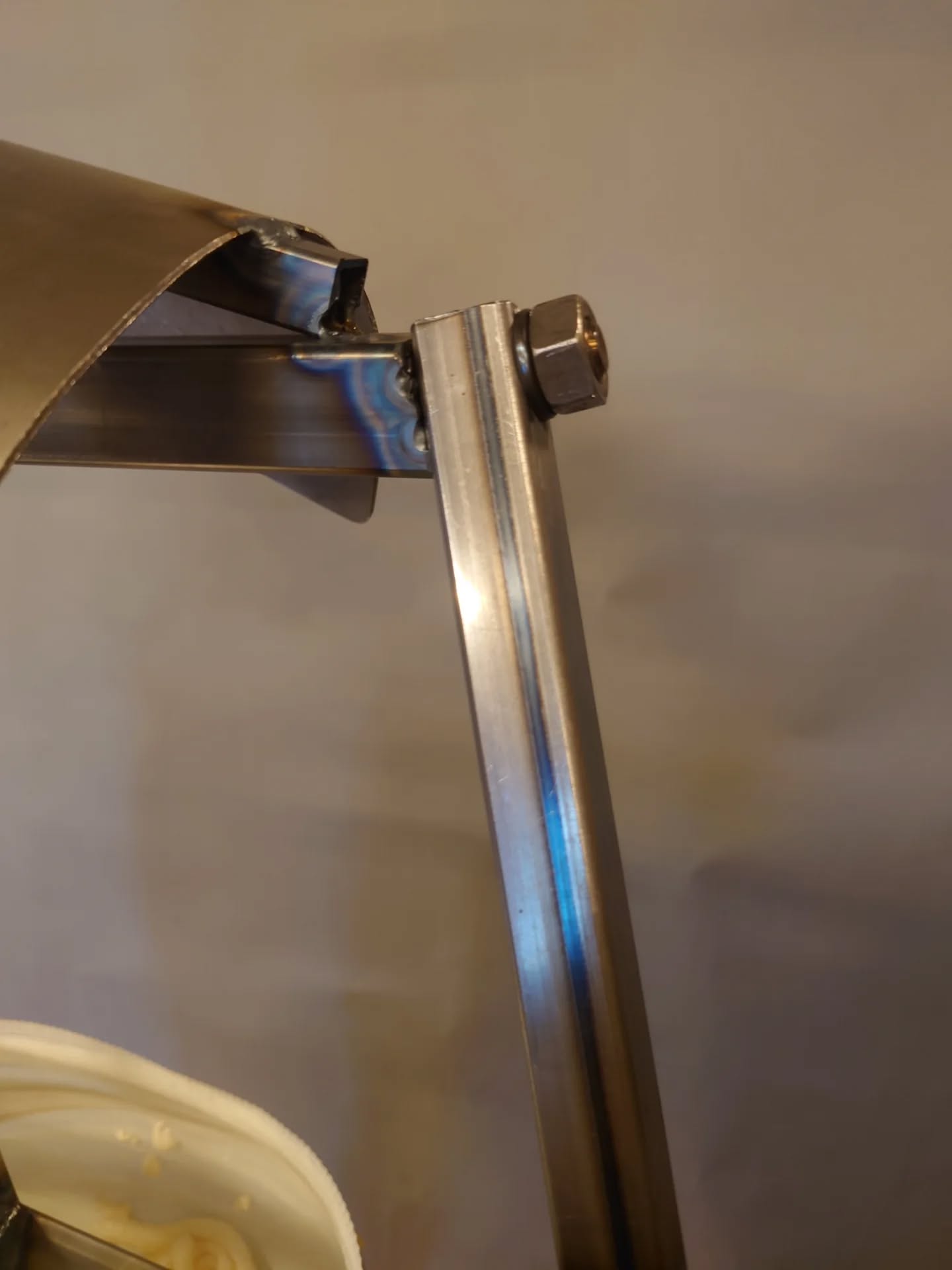
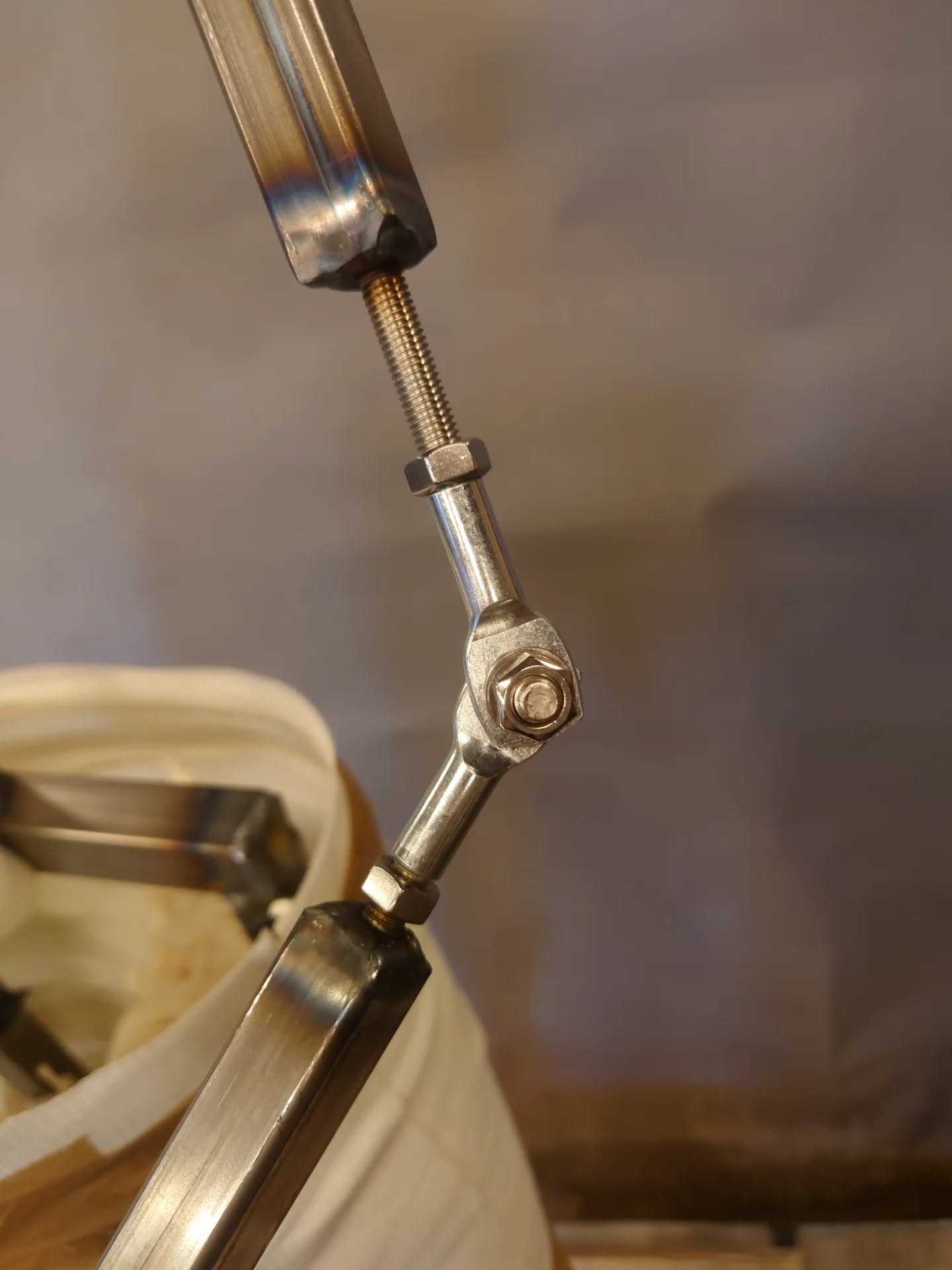
The structure of the elbow allows the length of the upper and fore arm to be adjusted, the arm to twist and the angle of the elbow to be posed.
There is a M10 (3/8" is similar) nut welded inside the tubing which allows the hangers to be adjusted. There is an addition nut
used to lock the length and rotation into place.
The elbow joint itself is built from 2 "Machine Screw-Style Hangers"
For those of us in the US, you can find some of these here
This gets us a feel for the overall effect - how the stand can support the armour, how it can be posed and set to the right size for this armour.
This shows the armour displayed temporarily on the base frame. This would allow us to look inside and inspect the interior of the legs, tassets and cuirass. Some museum mounts aim for this aesthetic.
The armour is still a set of pieces hanging in air. Specifically all of the gaps at the crotch and waist are emphasized, so this doesn't yet look like a person is wearing it. Filling this in completes the illusion.
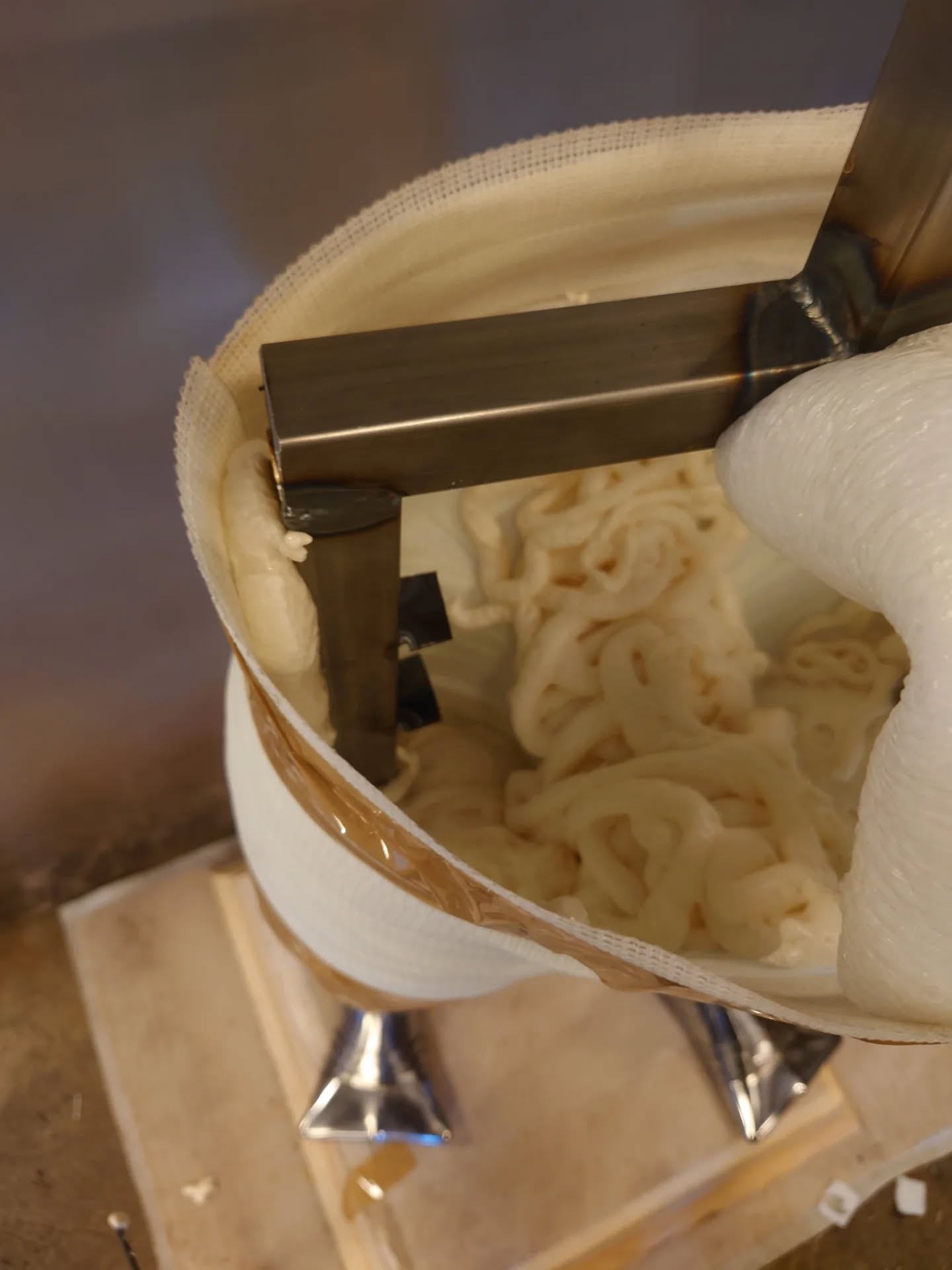
Adding fiberglass tape models of the hips, thighs and knees and filling them with foam to maintain position and shape fills in the areas which are not covered by the armour.
The suit partially mounted, showing how the filled out portions interact with the bare frame portions.
Some of the armour mounted on the stand, other parts of the stand still showing.
The fiberglass parts have been painted black. If you don't look too closely, this looks like fabric hose.
And, once again, The stand and Armour
This shows the armour on the stand in its final form. It presents the amour in a natural pose and fills in the gaps left in the armour so that it appears as it would when worn by a person.