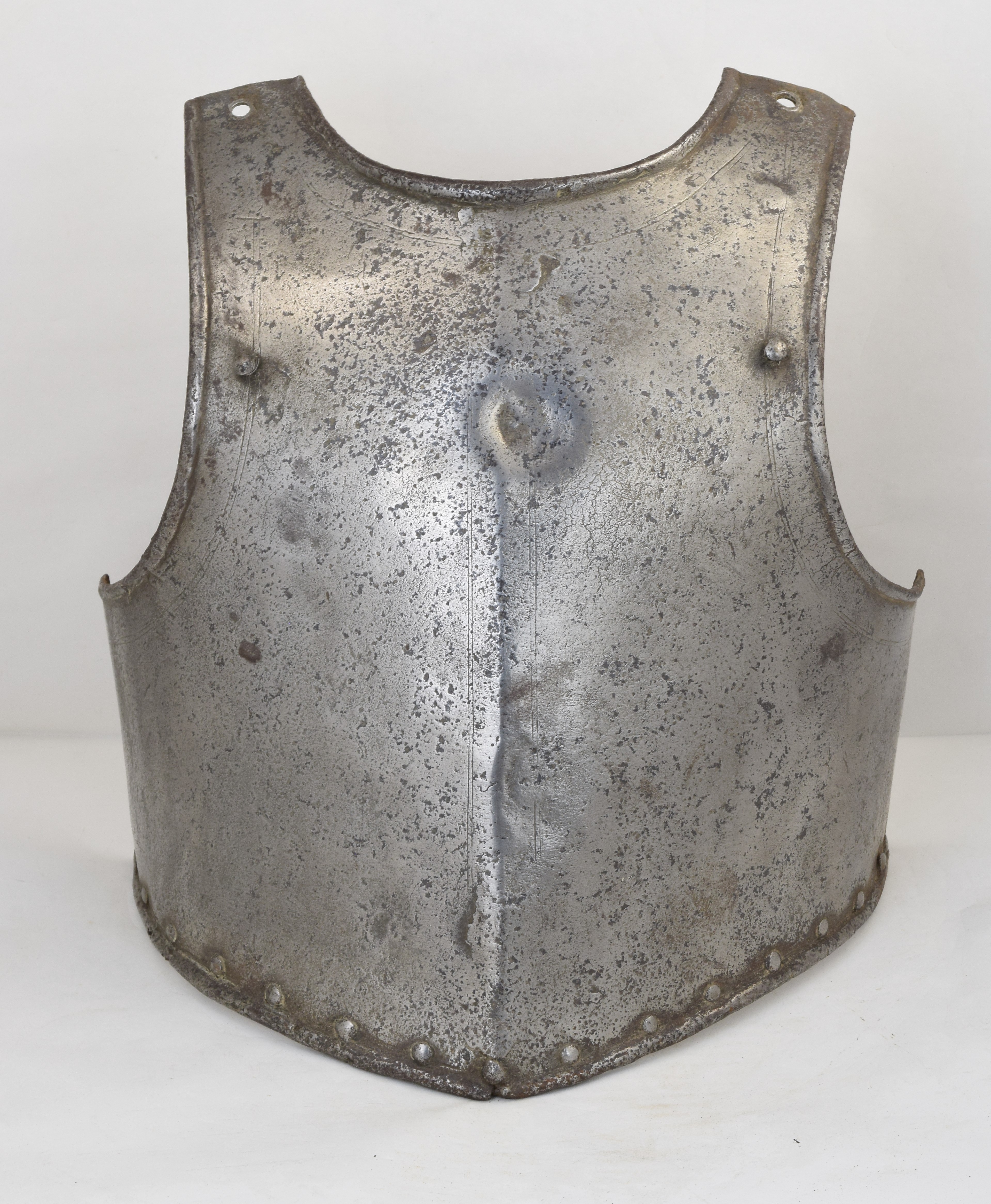
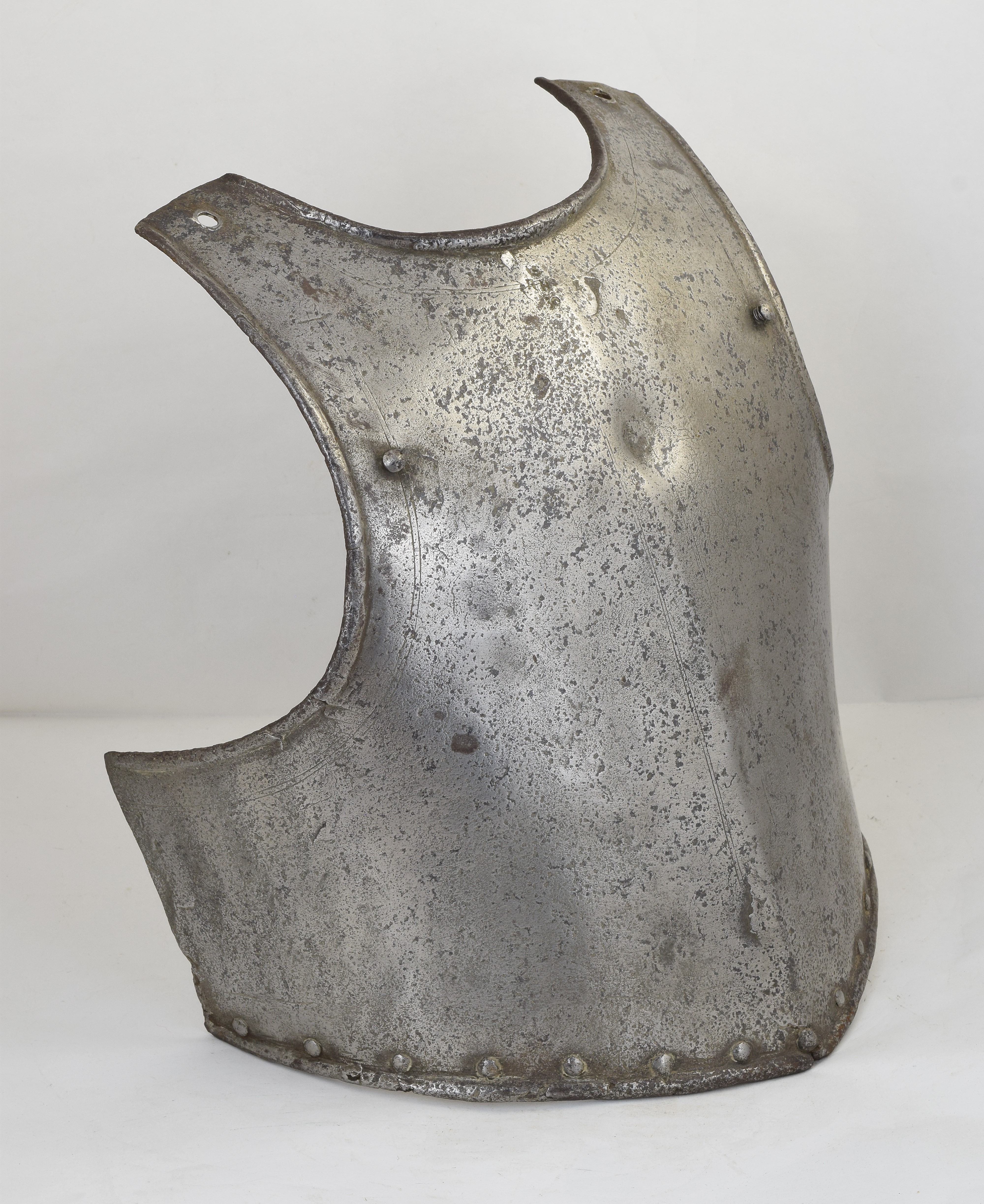
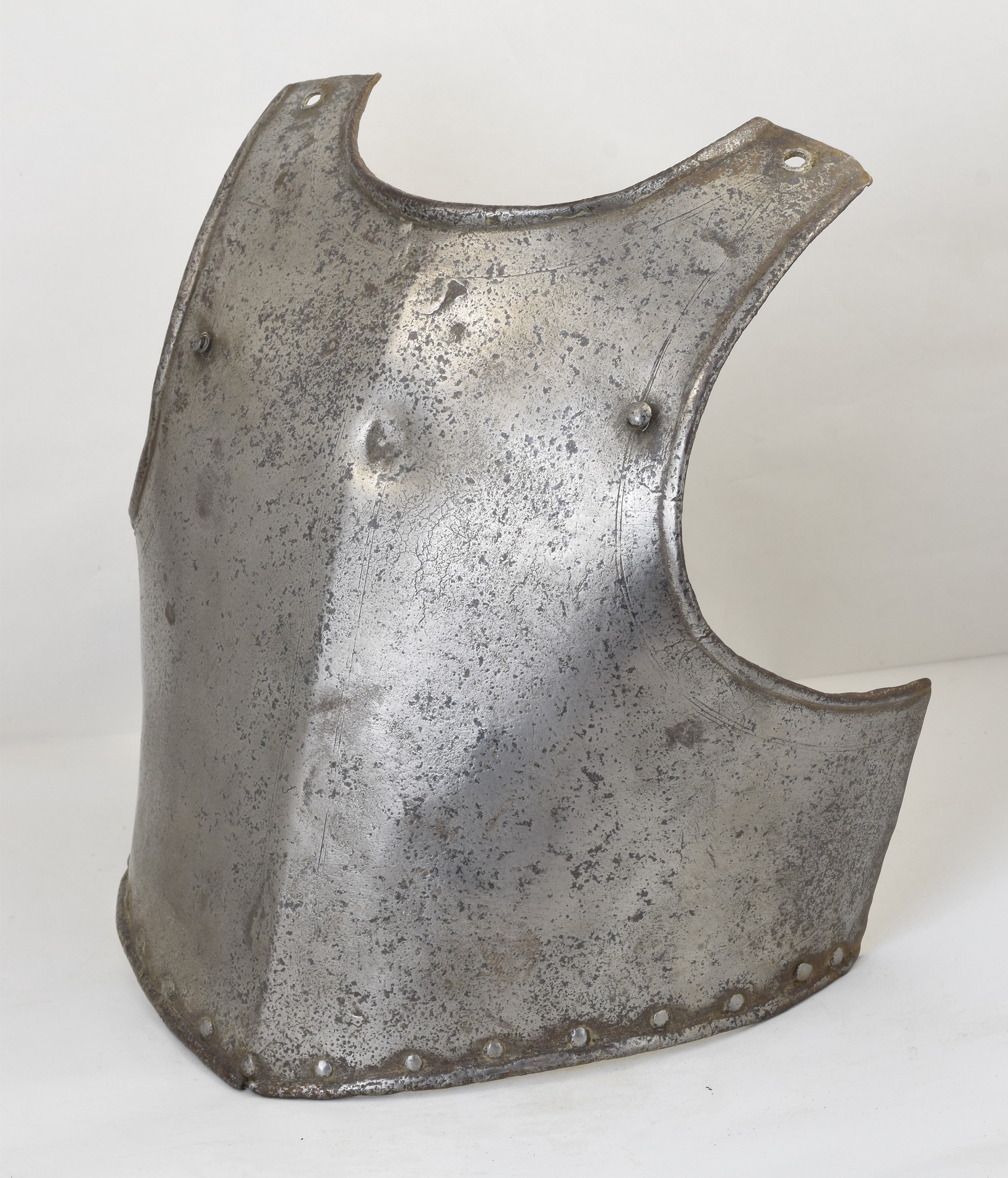
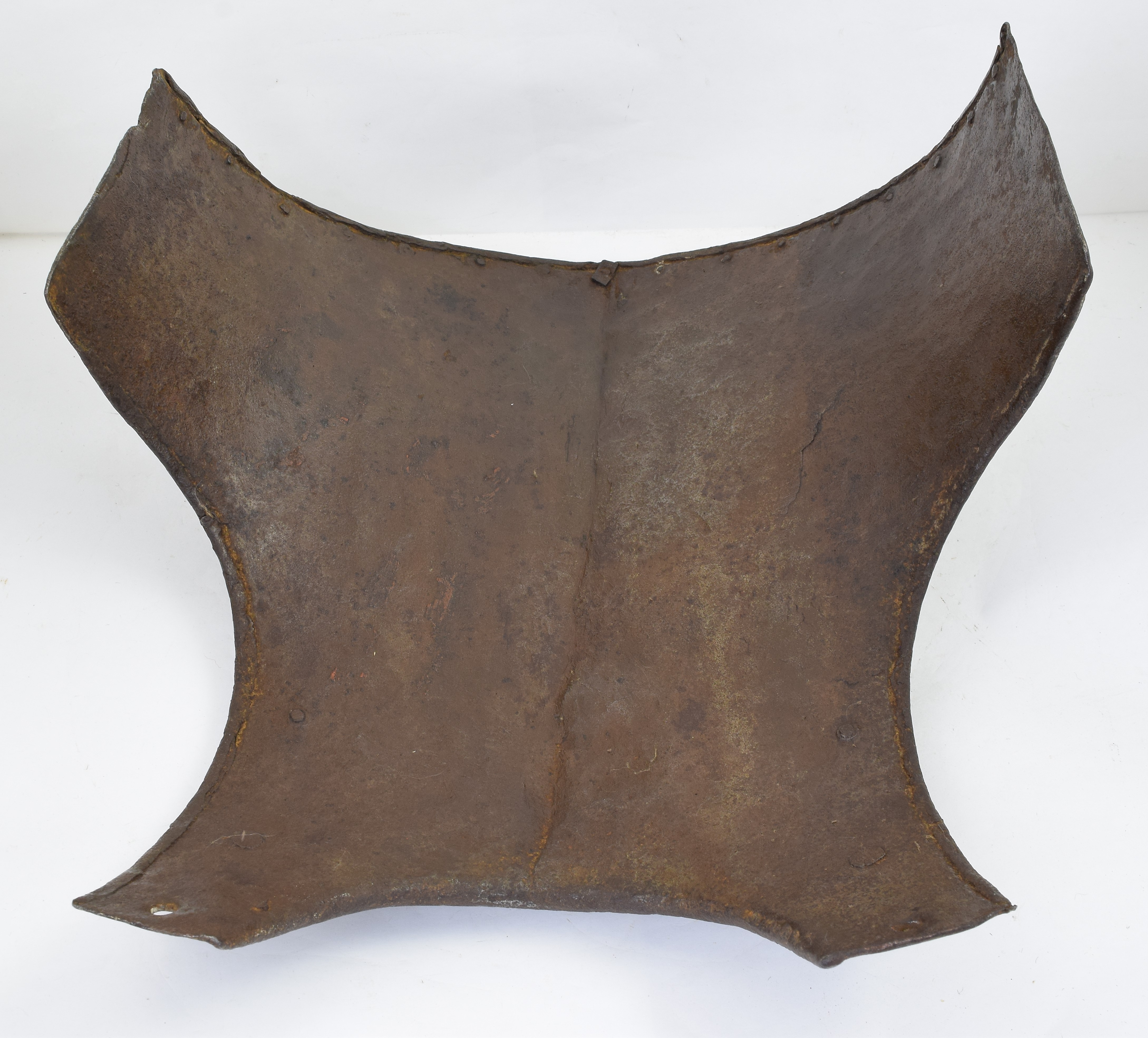
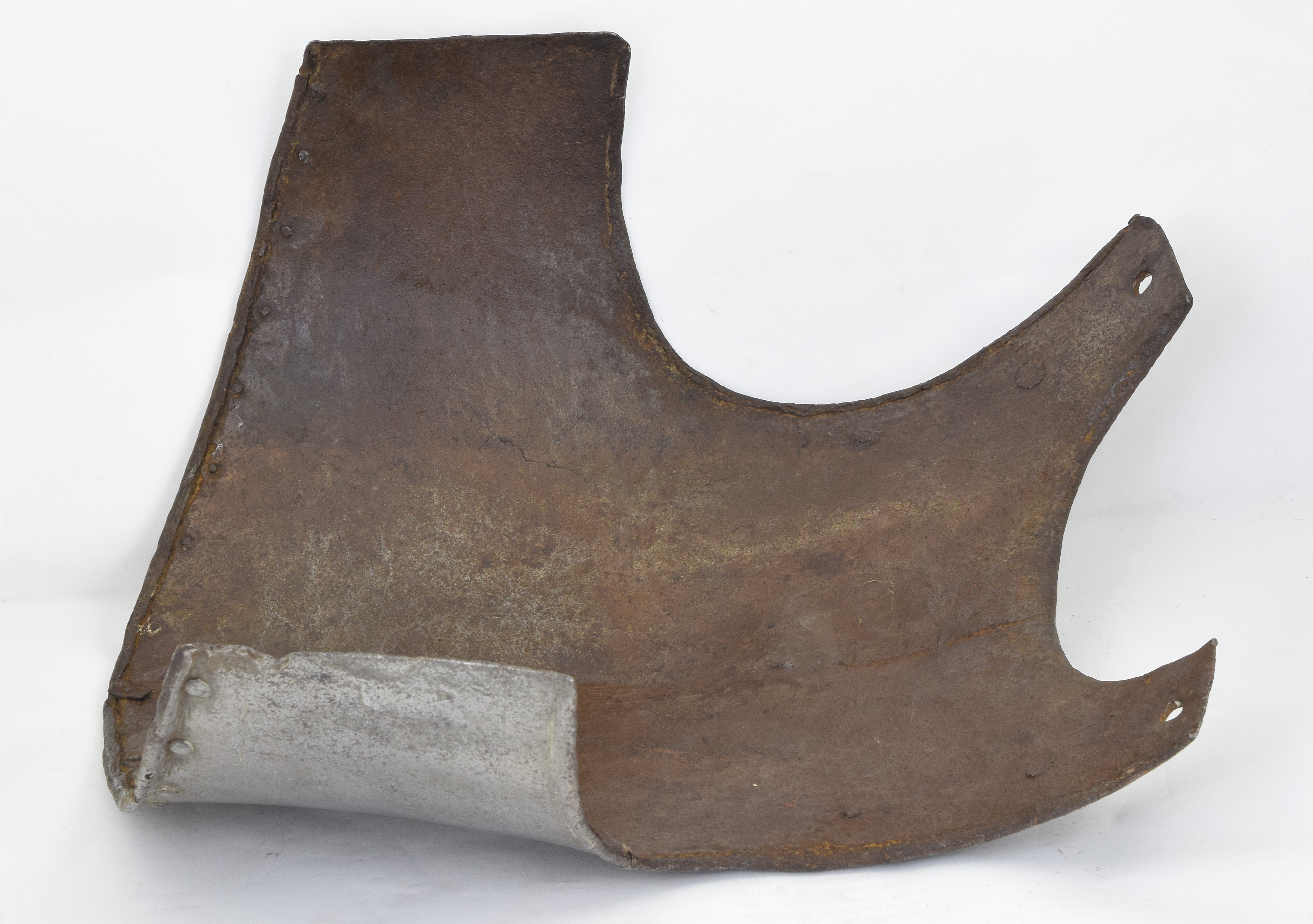
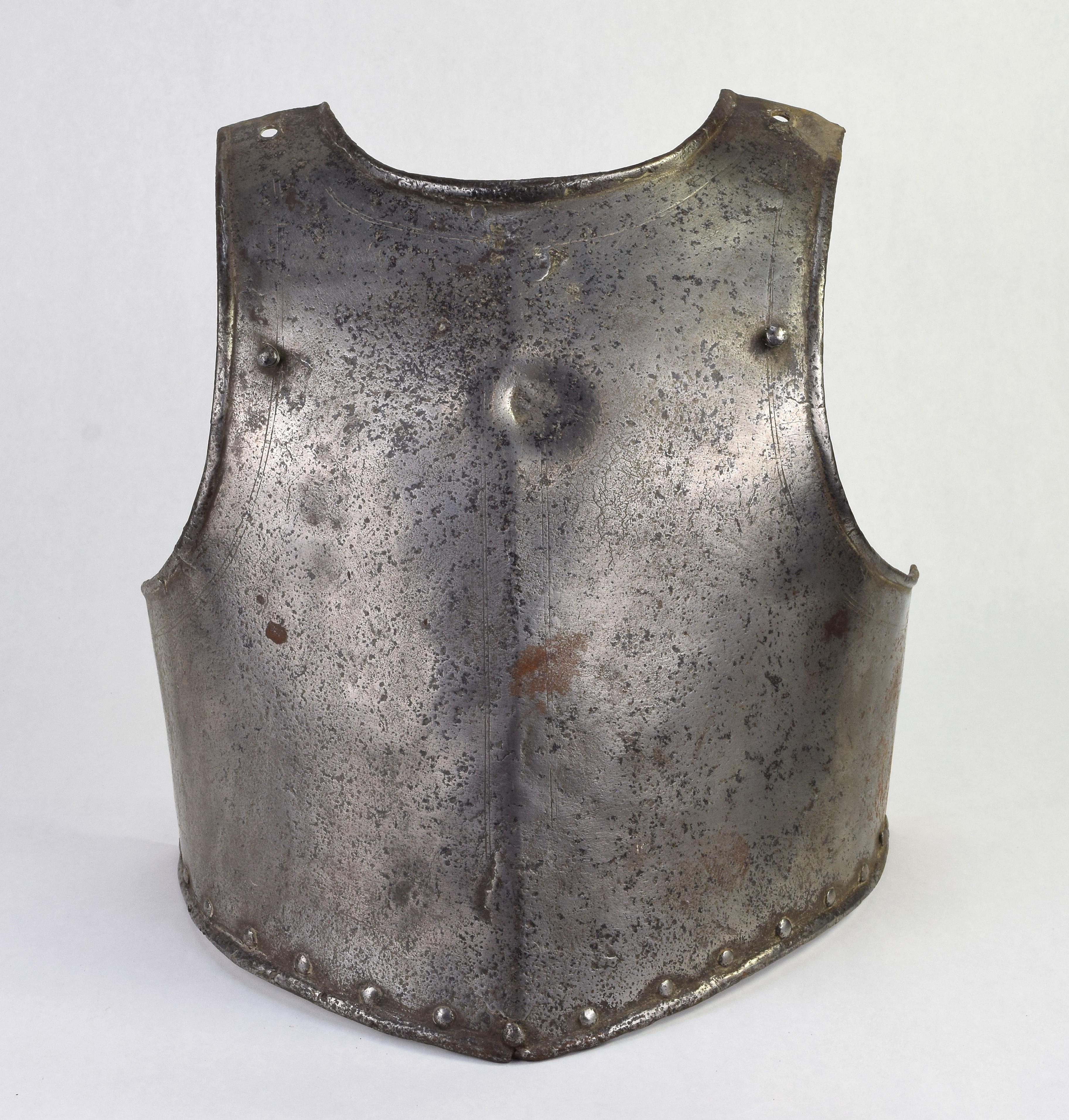
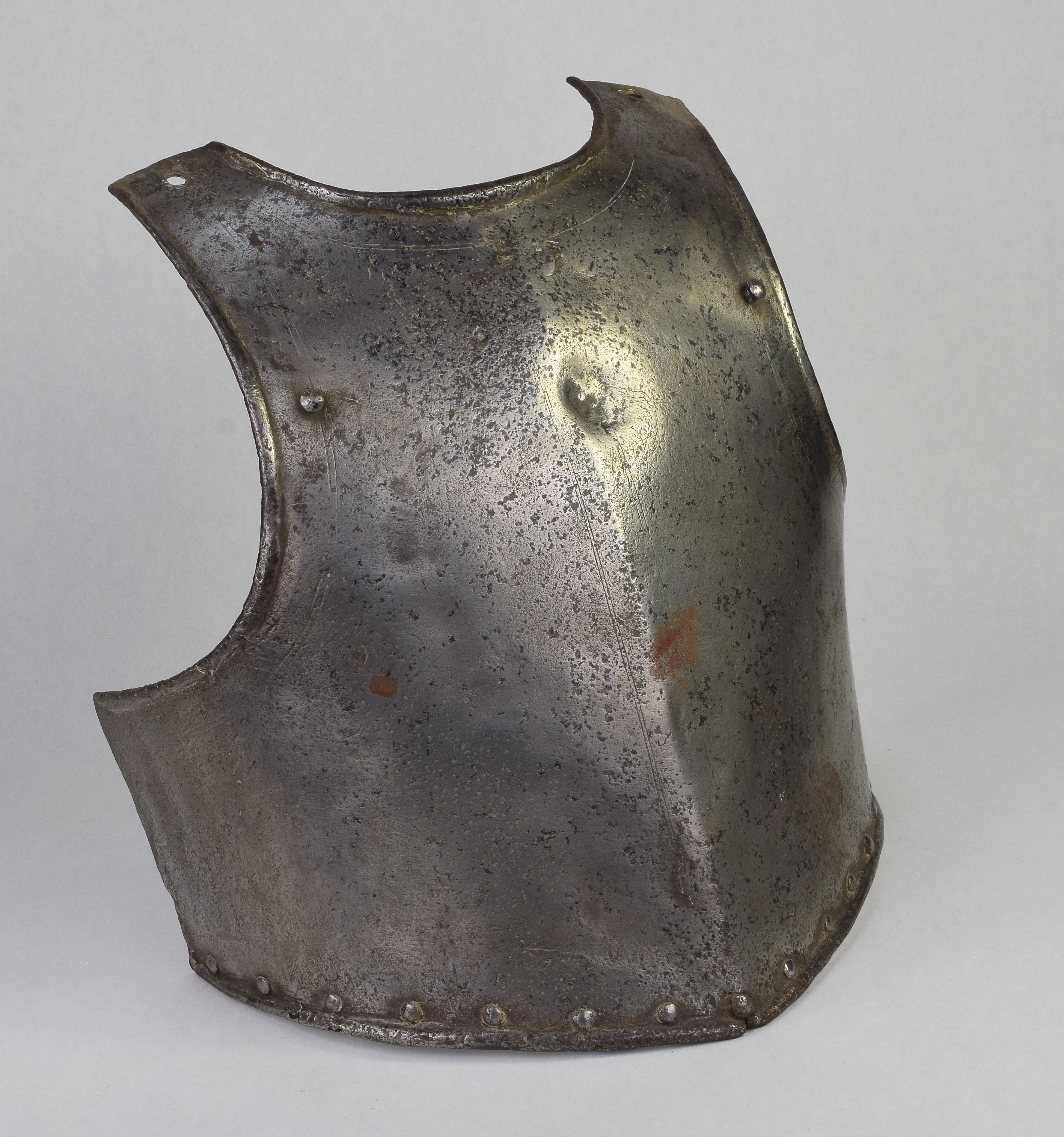
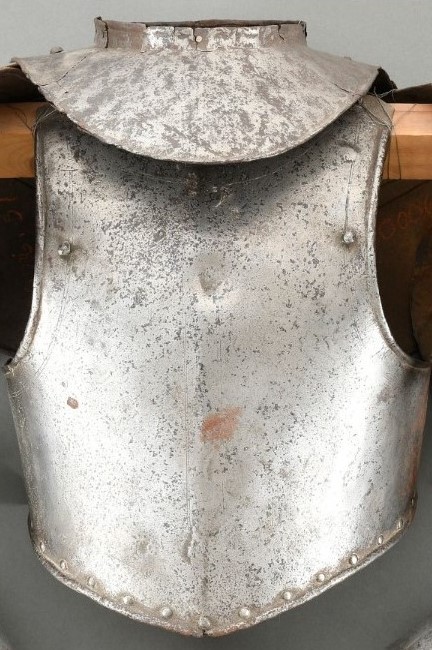
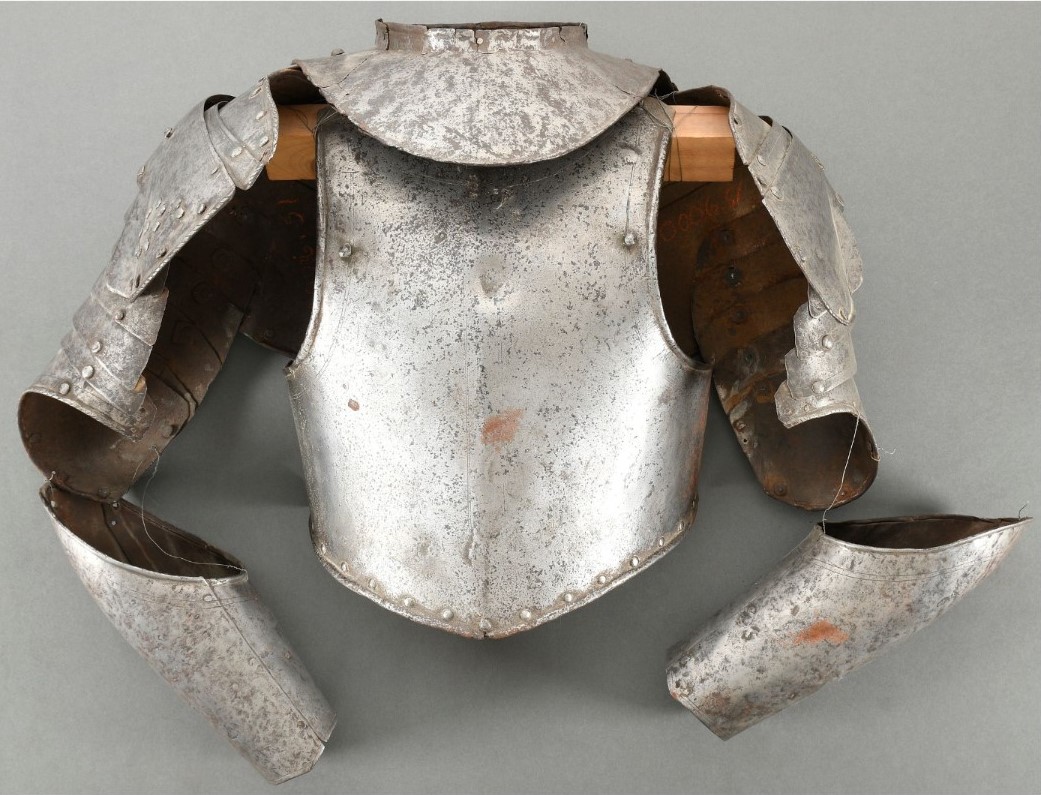
Breastplate late 17th c.
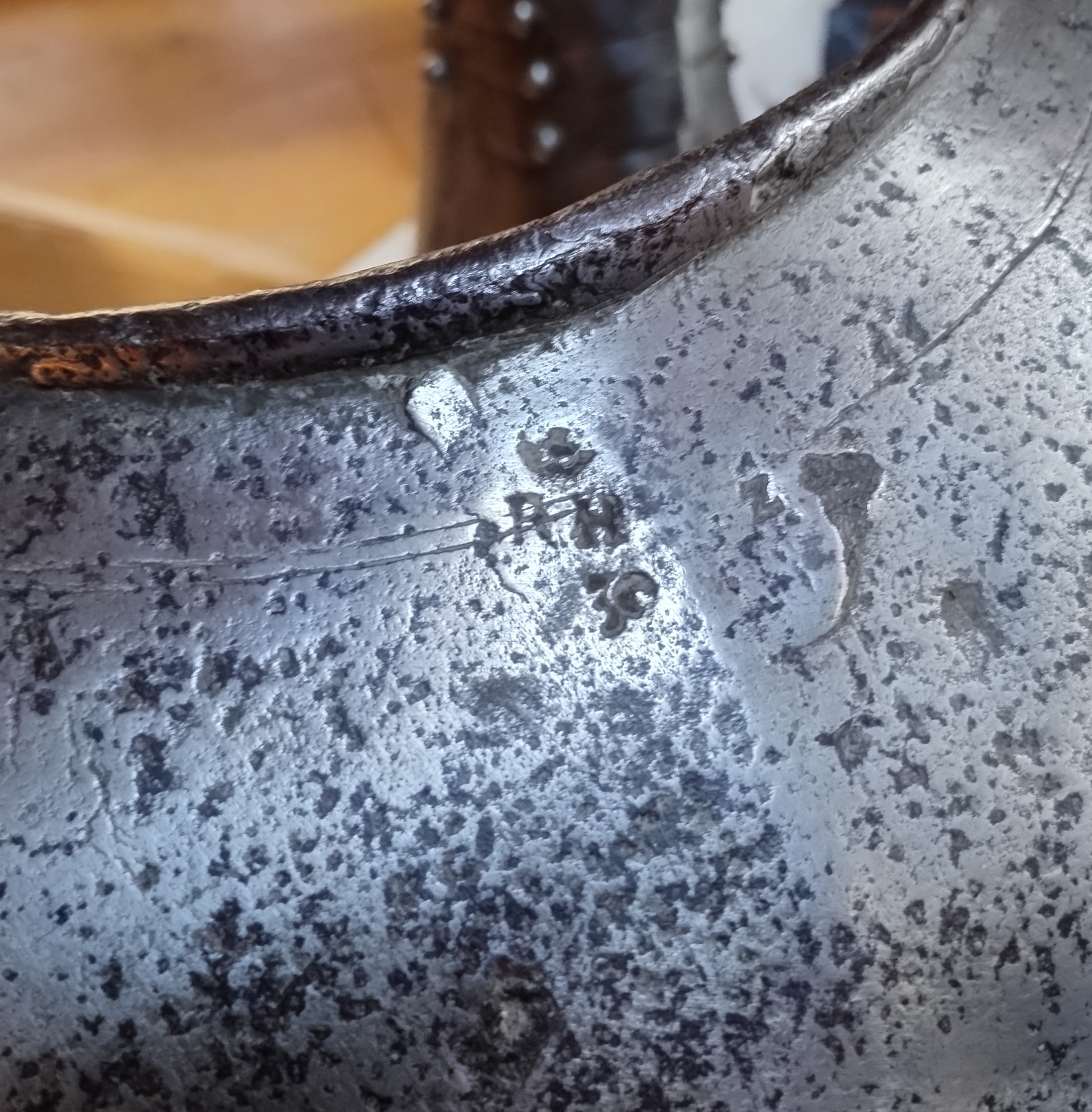
Nearly flat form with central crease. Rolls at the waist, arms and neck. The neck hole is relatively broad and not turned up to form an integral neck protection. The roll at the neck turned out, the rolls at the arms turned in and the roll at the waist turned in over a wire. Proof mark. Studs at the shoulders to secure shoulder straps. Additional pair of filled holes above the current studs. Double incised lines at the arms and neck and parallel to the center crease on each side. Line of rivets at the waist. This may have been made originally in this configuration, or it may have been adapted from a more typical breastplate with a flare at the waist. The neck line is similar to those on breastplates which are designed to be worn with a gorget. Marked near the neck with RH, 30 and a third less clear mark over the RH that appears to be the center and right arms of a crown, the left damaged by pitting. The RH mark (and possibly the crown) showing signs of a double strike. RH with a crown over it is described as the mark of Richard Holden (or Hoden) on page 44 of "The London Armourers of the 17th Century" by Thom Richardson. Atypically, there is a lot of information about him. Richard Holden was made free in 1665, indicating that this piece (if it is his) would have been made after that date. Richard Holden has been identified as the maker of the famous harquebus armour for James II made in 1686 which survives in the Royal Armouries (II. 123). Surface with heavy pitting. After aquisition very lightly cleaned to remove active rust (scalpel cleaned) and remove old varnish or wax coating.
Measurements: Weight: 9 pounds 11.2 ounces (4400g). Thickness: .195-.233 inch in the center tapering to .155 inch at the sides.
If you have any questions, please send them to Wade Allen
This site last updated Wed Dec 24 16:19:29 EST 2025